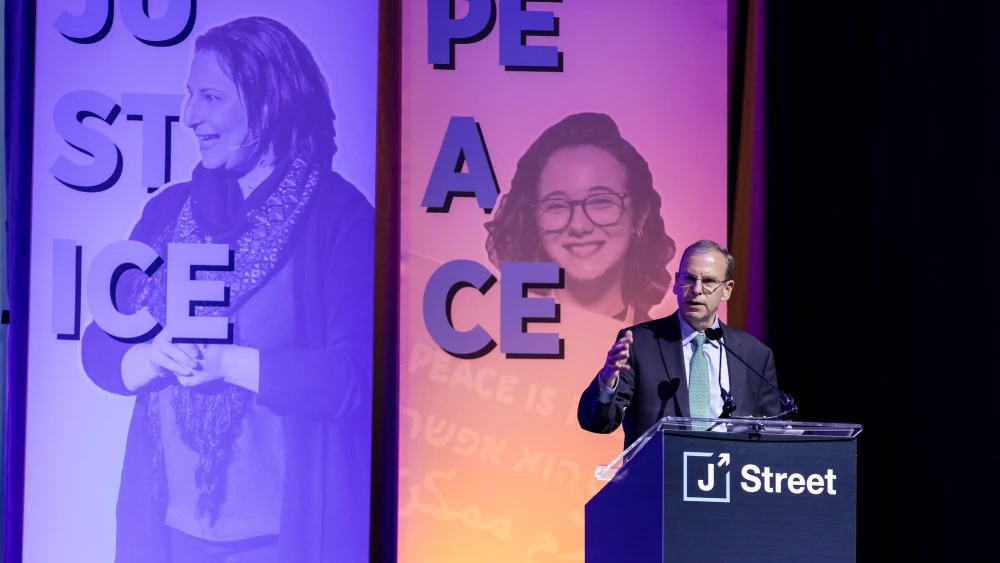
J Street, which self-identifies as “pro-Israel, pro-peace, pro-democracy,” and the Muslim Public Affairs Council released a joint statement decrying hatred against Jews and Muslims on Thursday.
The two, both of which have accused Israel of genocide in Gaza, said that they are “deeply concerned by rising antisemitism and anti-Muslim hate in the United States at a moment of escalating tensions in the Middle East, including the growing confrontation involving Iran.”
“Periods of heightened conflict abroad too often coincide with increased fear, discrimination and violence at home, putting both Jewish and Muslim Americans at risk,” they said.
The two also said that the United States should be engaging Iran diplomatically rather than through military action. (Iran has repeatedly turned down deals to resolve the conflict diplomatically.)
MPAC has accused Israel of “genocide,” and Jeremy Ben-Ami, the J Street president, stated last August that “until now, I have tried to deflect and defend when challenged to call this genocide,” but that “I have, however, been persuaded by legal and scholarly arguments that international courts will one day find Israel has broken the international genocide convention.”
“The personal pain of my own family from a crime that I believe has no parallel—and my association of the word genocide exclusively with that event—means I am unlikely to use the term myself,” Ben-Ami said at the time. “But I cannot and will not argue anymore against those using the term. I simply won’t defend the indefensible.”