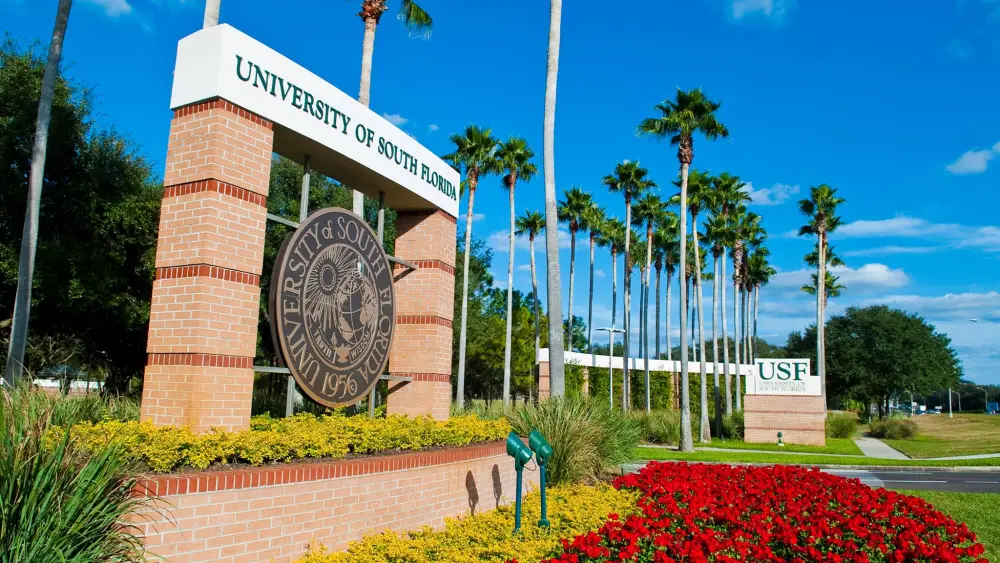
A federal judge dismissed claims of a Jewish conspiracy in a lawsuit brought by a banned pro-Palestinian student group against the University of South Florida and its officials.
The Tampa Bay chapter of Students for a Democratic Society filed suit after April 2024 demonstrations on the Tampa campus led to arrests and disciplinary action, including the expulsion of the group’s president. The protests, held during final exam week, were dispersed by law enforcement after participants refused orders to leave, and officers used tear gas and made multiple arrests, according to court records.
The group alleged the university violated its First Amendment and civil rights protections and imposed new rules to target pro-Palestinian activism. The university later permanently revoked SDS’s status as a registered student organization, citing repeated violations of the student code of conduct, including activity while under suspension.
In an April 10 order in response to the group’s second amended complaint, Judge Steven D. Merryday of the U.S. District Court’s Middle District of Florida dismissed the case, finding the plaintiffs failed to plausibly allege violations of their constitutional rights or support claims of a conspiracy.
Merryday also rejected as unsupported the plaintiffs’ assertion that Jewish organizations and donors influenced university decisions. The lawsuit pointed to a letter from the Tampa Jewish Community Centers & Federation praising the university’s response to anti-Israel activity, meetings with Jewish communal groups and the Israeli consulate, and fundraising by a campus Hillel chapter.
The judge said those allegations of a Jewish “conspiracy” did not plausibly show any agreement or conspiracy between outside groups and university officials.
“Whether properly characterized as paranoid, antisemitic, delusional or merely fantastical, the suggested ‘inference’ is illusory (and likely malignant) and warrants no consideration in a court of the United States,” Merryday stated.
Merryday further noted that the policies challenged by the plaintiffs—such as restrictions on protests during exam periods and requirements to reserve campus space—were longstanding, content-neutral rules intended to maintain campus operations, not measures designed to target a specific viewpoint.
The court dismissed the case with prejudice, which bars the plaintiffs from refiling the same claims.