


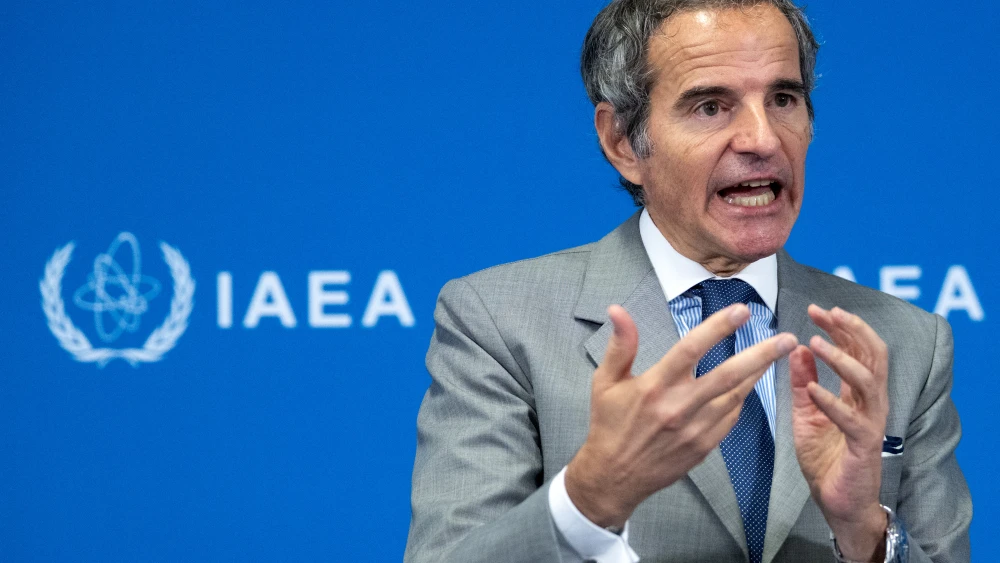
The International Atomic Energy Agency’s 35-nation Board of Governors on Wednesday approved a U.S.-backed resolution ordering the Iranian regime to account for its remaining enriched uranium and grant inspectors access to verify its stockpiles.
The board passed the text in Vienna with 21 votes in favor, and 10 abstentions, with Russia, China and Niger opposing. The United States, Britain, France and Germany submitted the resolution text.
“Not only do Iran’s actions raise urgent concerns regarding the nature of its nuclear program, they also threaten the very integrity of the global nuclear safeguards regime,” the four Western powers said in a statement to the board, according to Reuters.
The move follows Israeli and U.S. strikes last year that wrecked parts of Iran’s enrichment infrastructure but left unknown quantities of near-weapons-grade material unaccounted for, which the board now wants Iran to declare and place under verification.
Tehran condemned the resolution as “whitewashing” U.S. military action and warned it would decide how to respond, after previously reacting to such rebukes by expanding its nuclear activities or curbing cooperation with inspectors.
“Today, the IAEA Board of Governors voted on a resolution underlining the Iranian regime’s clear violation of its NPT commitments,” said Israeli Foreign Minister Gideon Sa’ar on Wednesday. “The Iranian regime’s refusal to cooperate, grant access, and address its non-compliance cannot continue. Referring this to the UN Security Council is necessary and long overdue.”
The move follows a November resolution demanding similar disclosures that Tehran has yet to make.
The proposal does not include a referral to the U.N. Security Council, despite earlier discussions among Western officials. Previous resolutions backed by the U.S. and European allies have passed by wide margins, though Russia and China have opposed them.
The IAEA reported that it has been unable to track Iran’s stockpiles of enriched uranium since the 12-day war (“Operation Rising Lion”) in June 2025, the Associated Press reported on June 4.
In a document circulated to U.N. member states and seen by AP, the IAEA wrote that it “cannot provide any information on the current size, composition or whereabouts of the stockpile of enriched uranium in Iran or whether Iran has suspended all enrichment-related activities.”
Previous IAEA estimates indicate Iran retained a significant stockpile of enriched uranium after airstrikes on its nuclear infrastructure, including about 440.9 kilograms (972 pounds) enriched to up to 60% purity—a short technical step from roughly 90% weapons-grade—which the agency says would be enough, if further refined, for about 10 nuclear weapons.



