


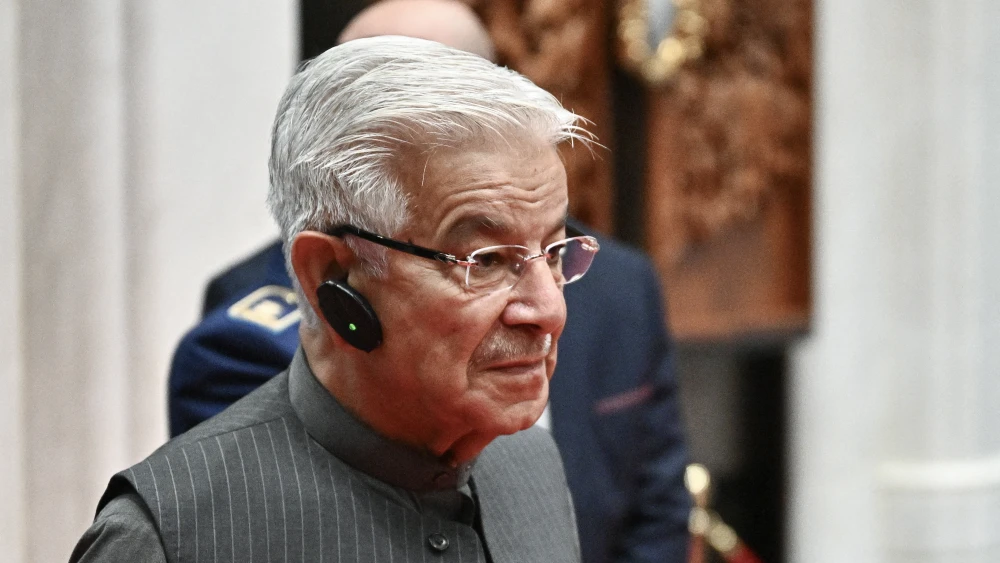
There are still “some chances” to reopen the negotiations between the United States and Iran in Islamabad, Pakistani Defense Minister Khawaja Asif told local media on Monday, hours before President Donald Trump’s naval blockade was set to take effect.
“According to my estimate, there are still some chances of another initiative of negotiations. Satisfaction is being expressed. I do not want to speculate anything, but the environment after the talks is fine—it is a pleasant environment,” Asif said in remarks reported by The Pakistan Daily and other local outlets.
The minister said “nothing negative” had surfaced following the talks over the weekend, adding that “positive things are emerging.”
“There is hope that by the next meeting, we will, inshallah [“God willing”], reach some conclusion,” Asif said.
U.S. Central Command said on Sunday that its forces will begin blockading all maritime traffic entering or leaving Iranian ports at 10 a.m. ET on Monday, in line with a presidential directive.
The operation will cover ports along Iran’s Arabian Gulf and Gulf of Oman coasts and apply to vessels of all nations. Freedom of navigation for ships transiting the Strait of Hormuz to non-Iranian ports will not be affected, according to CENTCOM.
U.S. President Donald Trump’s move follows the collapse on Sunday of marathon negotiations with the Islamic regime aimed at ending almost six weeks of war, placing a fragile two-week ceasefire at risk.
Washington has set out firm red lines in further talks with Tehran, including an end to all uranium enrichment, dismantling major enrichment facilities, recovering highly enriched material, fully reopening the Strait of Hormuz without tolls, securing a broader peace that covers regional allies and halting support for terrorist proxies such as Hezbollah in Lebanon and Yemen’s Houthi rebels, according to two U.S. officials briefed on the negotiations cited by The Wall Street Journal.



