Reza Pahlavi, Iran’s crown prince in exile, declined an invitation from the European Parliament to speak last week alongside other Iranian opposition representatives.
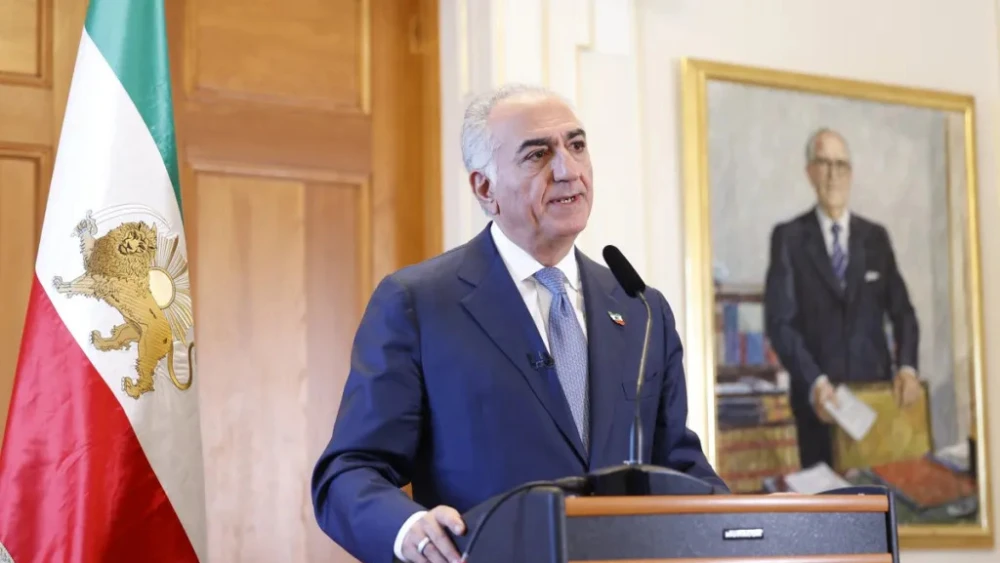
On April 13, Pahlavi addressed the Riksdag, Sweden’s Parliament in Stockholm, where he strongly criticized Europe. “For decades, Europe has appeased and encouraged this terrorist [Iranian] regime. A policy that has helped it survive and kill its own people,” he lamented.
Pahlavi, on a European tour, was invited to address the European Parliament’s Foreign Affairs Committee and the parliament’s Delegation for relations with Iran. Other Iranian parties and personalities opposed to the Islamist regime were also invited. These included 2003 Nobel Peace Prize laureate Shirin Ebadi; Mustafa Hijri, leader of the Democratic Party of Iranian Kurdistan; Abdullah Mohtadi, leader and secretary-general of the Komala Party of Iranian Kurdistan; and Saeed Bashirtash, leader of the 7 Aban Front political organization, as well as artist and journalist Sanaz Behzadi.
Pahlavi declined the invitation. “Due to previous commitments, he is not able to attend,” announced German Member of the European Parliament David McAllister, chairman of the Foreign Affairs Committee.
But Darya Safai, a Flemish right-wing member of the Belgian Parliament, who is of Iranian origin, was quoted by the Euractiv news website as saying that the E.U. invitation showed a lack of respect for Pahlavi as the legitimate leader of a transition to democracy.
“We accept everyone, but a revolution has only one leader,” Safai said in a statement of support for Pahlavi.
When Pahlavi addressed the Riksdag, he said, “When I look at Europe, I see ambivalence and a continued inability to see the reality of the street in Iran. I am disappointed yet not surprised.”
He described the Iranian regime as a direct threat, not only to its own people, but also to Europe and Sweden, and urged all European countries to stand with the Iranian people against the Islamic Republic.
“The Europe I believe in is supposed to defend human rights, equality and democracy,” he declared. “It has a glorious past—the fight against apartheid in South Africa, support for the Solidarity movement in Poland, backing for the Ukrainians in their struggle for sovereignty. Why should Iran be any different?”
Pahlavi also met with Italian MPs in Rome, saying, “Italy stands with the people of Iran.”
Originally published by the European Jewish Press.