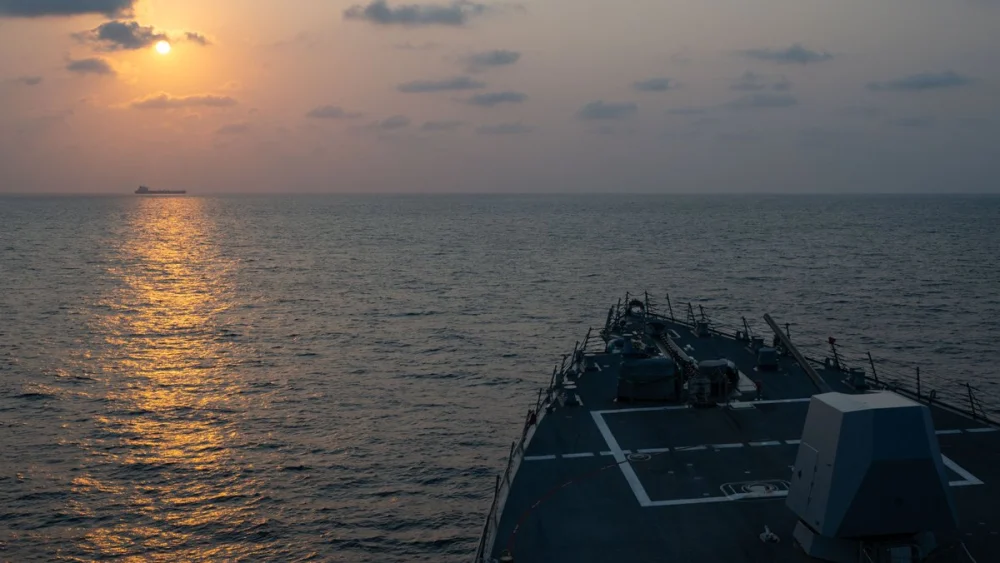
Shipping traffic through the Strait of Hormuz fell sharply on Sunday after Iran announced it had again closed the strategic waterway, citing alleged Israeli and U.S. violations of an interim peace agreement, according to a Reuters report.
Citing data from maritime analytics firm Kpler, the news agency reported that only five vessels passed through the strait on Sunday, compared to 26 the previous day.
The vessels included three “Very Large Crude Carriers” carrying approximately 2 million barrels each of Saudi crude oil and fuel oil, one of which was bound for Japan. The figures may not include ships that switched off their transponders while transiting the Gulf, Reuters noted.
The Strait of Hormuz is one of the world’s most important energy chokepoints, linking the Persian Gulf to international markets and carrying a significant portion of global oil exports.
Iran had lifted its effective blockade of the waterway last week after reaching an agreement with the United States to extend an April ceasefire by 60 days to allow for peace negotiations. However, Iran’s Islamic Revolutionary Guard Corps announced on Saturday that the strait had been closed again, citing Israeli military operations in Lebanon.
The U.S. military disputed the claim, saying commercial shipping continued to move through the waterway.
Reuters reported that 13 ships entered the strait on Saturday, including two “Very Large Crude Carriers,” while several other tankers carrying crude oil and refined petroleum products exited the passage.
The renewed uncertainty has prompted Gulf energy producers to adjust export arrangements. According to Reuters, Abu Dhabi National Oil Co. and Kuwait Petroleum Corp. have issued tenders allowing crude cargoes to be loaded either inside or outside the Strait of Hormuz.
The latest developments come as U.S. and Iranian officials continue diplomatic efforts aimed at preserving a fragile ceasefire and preventing a broader regional escalation.