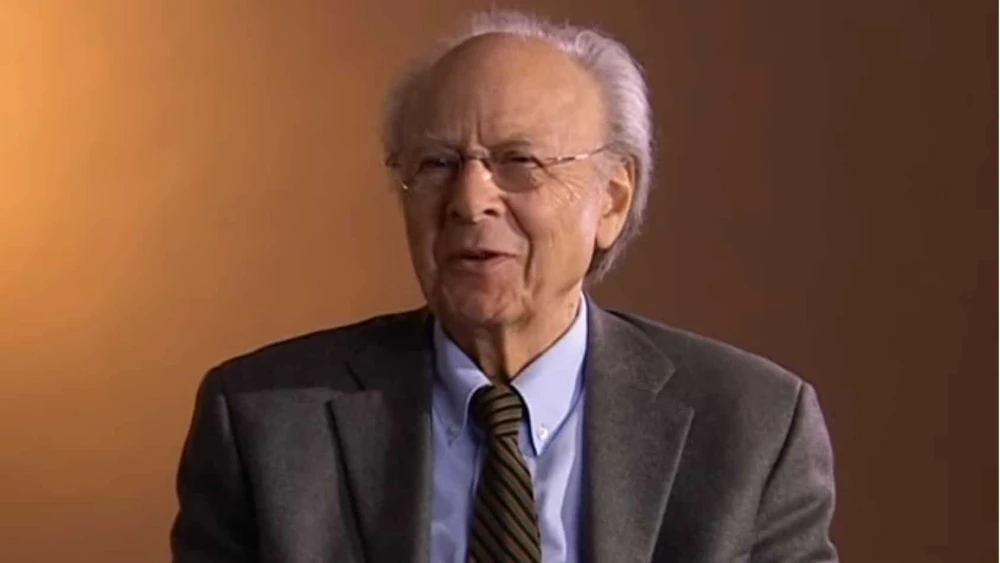
Henri Borlant, the sole survivor of the 6,000 Jewish children under the age of 16 who were deported from France to Auschwitz in 1942, died on Dec. 3 at the age of 97.
Borlant spoke often of his experiences to schools. In 2011, he published a book, Merci d’avoir survécu (“Thank you for surviving”). The title came from a note he received from a 15-year-old boy who heard the story of his deportation.
The Shoah Memorial saluted his memory in a tweet.
Le Mémorial de la Shoah présente ses sincères condoléances à son épouse Hella, à leurs filles et à l’ensemble de sa famille.
— Mémorial de la Shoah (@Shoah_Memorial) December 4, 2024
Le Mémorial de la Shoah salue la mémoire d’une figure de la mémoire de la Shoah en France, profondément humble et engagée.#hommage #temoin #shoah pic.twitter.com/LBqAPQIudF
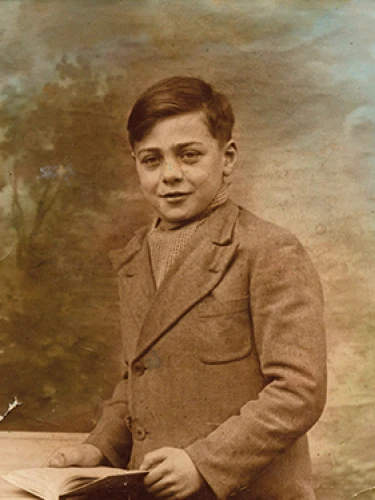
Born Hirsch Borlant in Paris on June 5, 1927, Henri was the fourth of 10 children. His parents were naturalized French citizens from Russia.
In 1939, the French authorities evacuated Paris’s 13th arrondissement and in August, his family fled to Maine-et-Loire in Anjou in Western France.
Borlant recounted that they were warmly welcomed by the locals and had no idea what lay in store for them. As a precaution, the children, who were educated at a Catholic school, were baptized. Borlant became a Catholic.
On July 15, 1942, his mother, brother Bernard, sister Denise and he were arrested by German soldiers. “They had a list and took everyone who was between 15 and 50 years old,” he said.
Two days later, his mother, Rachel, was released and replaced by his father, Aron. No explanation was given, according to an interview he gave to the Maine-et-Loire region website.
On July 20, 1942, Henri, his brother, sister and father were crammed into cattle cars with 824 others and deported in convoy No. 8 from Angers to Auschwitz-Birkenau, the Shoah Memorial said.
As he was transported, he tossed out a note: “Dear Mom, it seems that we are going to Ukraine to harvest.” The letter reached his mother thanks to a railway worker.
Upon arrival at Auschwitz, his sister was killed immediately. His father and brother also would not survive the camp.
“Our extermination was planned, programmed,” he wrote in his book. “We knew that we were living our last moments. The hope that all this would be known one day fueled our will to survive.”
As the Red Army closed in, he was transferred by train to the Sachsenhausen camp, then sent to the Oranienburg camp to work in the Heinkel aircraft factory. In November 1944, Henri was transferred to Ohrdruf-Buchenwald, a Buchenwald annex camp.
Borlant managed to escape from Ohrdruf-Buchenwald shortly before the Americans arrived, hiding with an anti-Nazi meat seller.
He was repatriated to France on April 16, 1945, and reunited with his mother and siblings, who were not deported and survived.

Borlant suffered from tuberculosis on his return but managed to study medicine and become a doctor.
Like many survivors, he kept his experiences secret, but in the 1990s, he began to speak of what he endured and collect testimonies within the association Témoignage pour mémoire. He was a member of the Foundation for the Memory of the Deportation and served on the educational commission of the Shoah Memorial.