


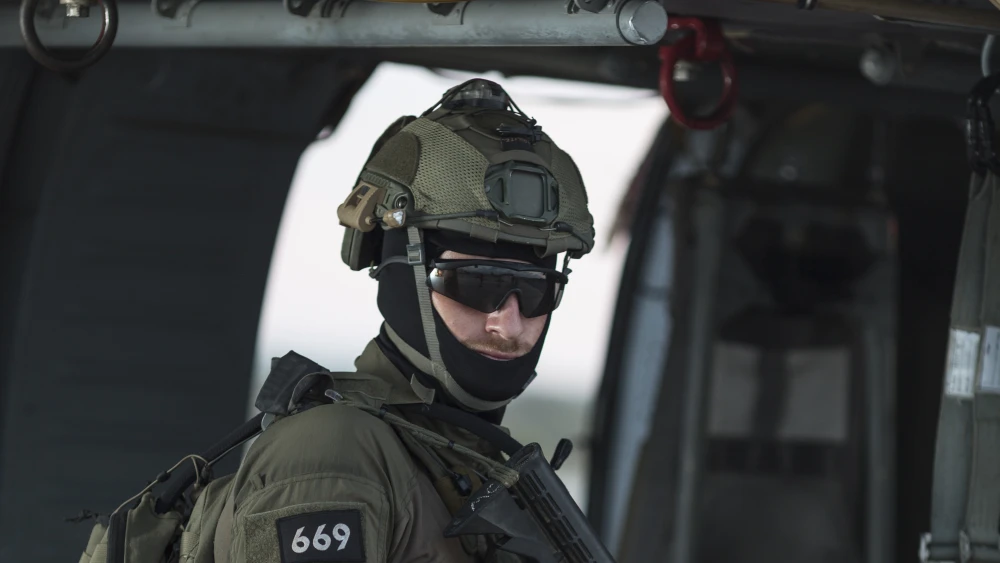
“In one hour on Oct. 7, I saw more casualties than I saw for five years,” Guy M., an Israel Defense Forces combat paramedic, told JNS.
Three years later, the memories require no anniversary reminder. “I don’t need a newspaper and headlines and the documentaries on TV to remember,” said Guy, who spoke to JNS on the condition that his full name wouldn’t be published due to security concerns, since he continues to serve in the Israeli military.
Guy is in his early 30s and grew up in a religious, Jewish community in northern Israel. He served in Unit 669, the military’s airborne rescue unit.
“My dream was to be a military doctor. That’s what I really wanted to do,” he told JNS. “I was a teenager, and I looked around and saw this unit—it was commando and special forces, but they also do medicine.”
“I didn’t really look at the training,” he said. “I had a fantasy of myself being a doctor in a helicopter. I didn’t realize it includes a year and a half of grueling training beforehand, so I drafted and was chosen by the team leader.”

Guy told JNS that he served as a combat paramedic in Unit 669 until 2018. On the morning of Oct. 7, 2023, he was at his fiancée’s home. A soldier called him back to base.
“He calls me up and says, ‘Any chance you are in the country and you could come in?’” Guy told JNS. “I said, ‘Yes.’”
He headed to his base and was ordered to head south with two other soldiers in a pickup truck. “We’re an airborne unit, so I thought they were joking,” he said. “Why wouldn’t we fly? We were told that the pilots didn’t arrive yet at the base, and the helicopters aren’t ready, so we need to drive down south.”
“The command of the unit and officers don’t understand what’s going on, and they wanted boots on the ground,” he told JNS.
He and two others took an “agricultural-style pickup truck” south.
“There’s fields on both sides of the road, and suddenly there’s vehicles on fire and multiple casualties all over the place,” he told JNS. “People screaming for help, running around.”
They began treating casualties and applying tourniquets. Guy said the people he was treating were “dressed up weird,” and he initially did not know the Nova music festival had been taking place nearby.
“We encountered sometimes dozens of casualties at the same time,” he told JNS.
His response took him to the kibbutzes of Nahal Oz, Kfar Aza and Be’eri. His brother was in a unit that lost many soldiers that morning, and his fiancée was also called to base and on her way south.
“For three days, the three of us in my family circle, we were in different areas,” he said. “It’s Oct. 7 and 8 and some extension of the 9th and 10th for those who have been there.”
Guy had already written about military service. “During my training, I had a diary. My parents didn’t have a TV in our house, so we read a lot as a child and my father encouraged me,” he told JNS.
That diary, which he continued during rescue missions, became his first book. The English edition, published by Wicked Son, is titled “Full Throttle: Against All Odds with Israel’s Elite Para-Rescue Commandos.”
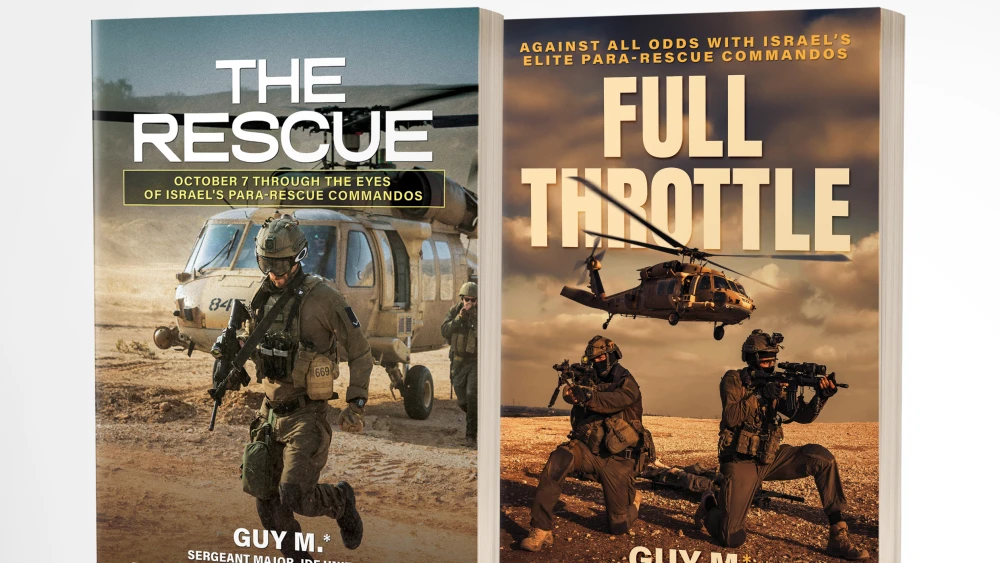
He was working on the English translation before the attacks. Afterward, a suggestion to add an Oct. 7 chapter developed into a separate book, drawing on accounts of other soldiers alongside his own.
“Some of the stuff I didn’t remember myself precisely, so I asked them out of curiosity,” he said. “Then people started sharing their stories.”
His second book, “The Rescue: Oct. 7 through the Eyes of Israel’s Para-Rescue Commandos,” was published in English by Wicked Son in March 2025 and translated by Eylon Levy, a former Israeli government spokesman.
Guy described writing the book as an “obligation to say clearly out loud what I saw” in the homes he entered in southern Israel while responding to the Hamas-led attacks.
“If I don’t do it as soon as possible, and fight for it to come out, I just will never go back there, and I will not want to go back there,” he said, recalling his thinking as he wrote the book.
“We had this mission to put the story out there in our way. For instance, to emphasize how little we knew. Everybody’s talking about the military failure. The soldiers didn’t arrive on time,” Guy told JNS. “Who are the soldiers? We are the soldiers. I’m the soldier. I didn’t get there in time.”
He wanted to show “how much we tried, regardless of our knowledge, and the bravery that so many of those who made it down there have shown.”
Ahead of the third anniversary of the attacks, Guy plans to be in the United States with his wife and 9-month-old daughter.
The self-described “adrenaline junkie” told JNS that fatherhood is “not limiting me. It’s grounding me. Reminding me what’s important and why I’m doing things.”
Asked what he plans to do to mark Oct. 7, he told JNS that “I’m in a dilemma between just pretending that it’s just another day and just kind of cut it out of my life.”
“It’s always there,” he said. “All year long.”


