
PBS recently aired a four-part docuseries written and narrated by Henry Louis Gates. “Black and Jewish America: An Interwoven History” is informative and entertaining, but it levels false accusations against a Jewish community, reminiscent of notorious Jewish blood libels from the past. Some background is needed.
The riots in the Crown Heights neighborhood of Brooklyn, N.Y., took place for three days—from Aug. 19 to Aug. 21, 1991—in retribution for a Jewish driver accidentally and tragically crashing into two 7-year-old black children, one of whom died, a boy named Gavin Cato. The driver was in the last car of a three-car procession carrying the Lubavitcher Rebbe—Rabbi Menachem Mendel Schneerson, leader of the Chabad-Lubavitch movement.
The pogrom that ensued has black residents attacking Orthodox Jewish residents, which resulted in the stabbing death of a visiting scholar from Australia, 29-year-old Yankel Rosenbaum. There were 225 incidents of robbery and burglary. Twenty-seven vehicles were destroyed.
The incident was extensively investigated. The results were presented to a grand jury composed of 10 blacks, eight whites and five Hispanics. The identified driver testified before the grand jury. On Sept. 5, 1991, the grand jury found no reason to indict him of any crime.
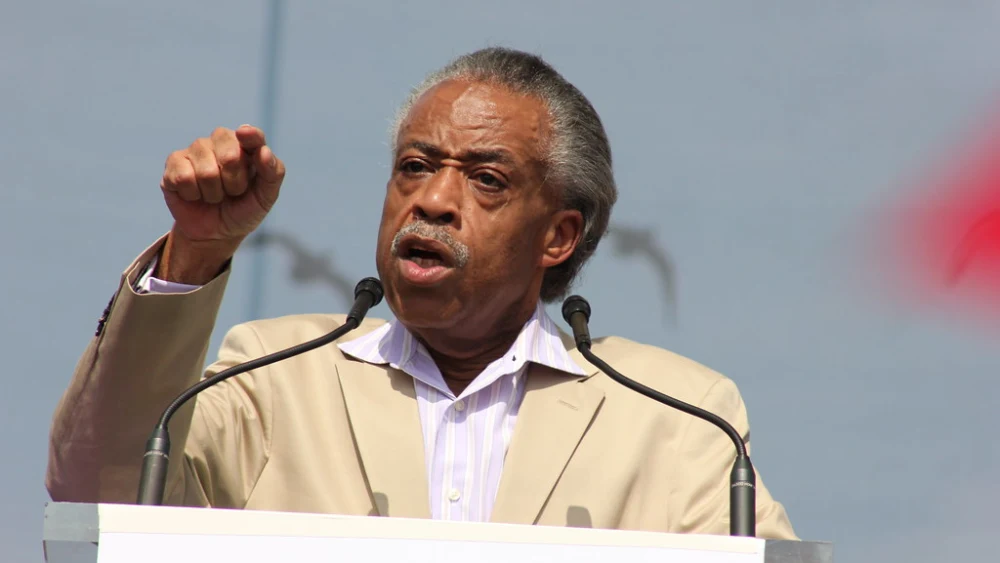
Despite this, a major perpetrator of what historian Edward S. Shapiro calls “the most serious antisemitic incident in American history” denounced the findings of the grand jury. Al Sharpton, the reverend and activist turned cable-TV commentator, insisted there would be “No Justice, no Peace!” until the driver was arrested and prosecuted. When the grand jury decided against bringing criminal charges, he called for renewed “protests.” Fortunately, no riots resumed.
Sharpton, 71, has instigated a long list of hate-inciting theatrics.
He led a protest march during the riot, where the chant “Kill the Jews” was heard, and an Israeli flag was burned. Excerpts from the eulogy he delivered at the funeral of Cato included: “The world will tell us he was killed by accident. Yes, it was a social accident. ... It’s an accident to allow an apartheid ambulance service in the middle of Crown Heights. ... Talk about how Oppenheimer in South Africa sends diamonds straight to Tel Aviv and deals with the diamond merchants right here in Crown Heights.”
The aspersion “apartheid ambulance service” is a reference to the Jewish volunteer ambulance service Hatzolah, which was directed by police to safely remove the Jewish driver from the scene of the accident after more than 250 black residents, many shouting “Jews!, Jews!, Jews!” jeered and some beat the driver of the car and turned their anger on police. Clearly, Sharpton knew he was grandstanding on a powder keg when he spoke at the funeral.
Perhaps his most egregious racial as well as antisemitic demagoguery occurred in 1995 in Harlem, when a rent dispute between the Jewish owner of Freddy’s Fashion Mart and his black sub-tenant became front-page news. Sharpton went on the radio, saying, “We will not stand by and allow them to move this brother so that some white interloper can expand his business on 125th Street.”
Sharpton’s National Action Network picketed outside the store day after day. Demonstrators were heard to refer to Jews as “bloodsuckers” and threatening that “we’re going to burn and loot the Jews.” After two months of picketing, one of the demonstrators stormed into the store armed with a gun and burned the place to the ground, killing seven people and then shooting himself. Sharpton denied any personal responsibility for the arson and mass shooting, claiming that he had no knowledge of what his demonstrators were saying.
Given Sharpton’s long history of very bad behavior in the 1990s and earlier, it is unbelievable that the creators and producers of “Black and Jewish America” allowed him to have the last word on the riots. In the fourth episode, Sharpton opined: “We lost a 7-year-old kid. Who was the driver, and how did he end up going on the curb? They would never produce the driver.”
The viewer is led to believe the Jews hid a killer, and there was some dastardly conspiracy. The docuseries does not mention the grand jury or the fact that Sharpton denounced its findings.
The entire Crown Heights segment more than hints at “fearsome animus” toward the Lubavitch community. It can be heard in statements like “there is inequality that is rampant” or “there is no justice because the Jewish people are very high up.”
Gates himself acknowledges that the camaraderie between blacks and Jews began to significantly rupture in 1948 after the birth of the State of Israel. For many American Jews, this was a watershed moment. The Holocaust had ended, and a new era for Jews had begun. This didn’t mean that they were dropping or rejecting the black civil-rights cause, though these sentiments may explain why some blacks resent Israel and those Jews who support it.
PBS and Henry Louis Gates need to understand and acknowledge the above asymmetry. This might begin by offering an apology to the Lubavitch community and reporting what actually occurred in Crown Heights during the frightful summer of 1991.