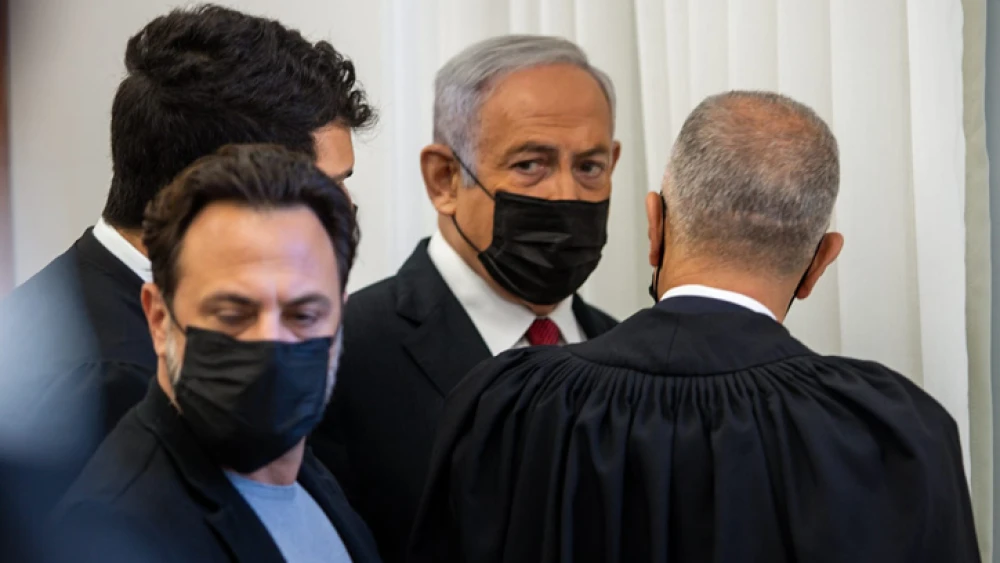

With the appointment of a new attorney general, now is the appropriate time to thoroughly, honestly investigate just what is going on with regard to the criminal indictment of former Israeli prime minister Benjamin Netanyahu.
Up until a few short months ago, claims that Netanyahu’s trial was part of a conspiracy seemed far-fetched. Not anymore. Since the very outset of the trial, Israelis’ jaws have been dropped almost daily due to the errors—let’s call them that—that have emerged from it. The accumulation of these errors pins numerous question marks over the system that incoming Attorney General Gali Baharav-Miara will start managing next week.
A brief, non-exhaustive synopsis of things that have emerged from the trial:
• State’s witnesses denied any bribery took place and generally helped the defense;
• The prosecution’s lack of any shred of evidence of bribery;
• Investigators admitted they didn’t run a comparative analysis to prove or disprove the claim that Netanyahu in fact received “positive news coverage” or “unprofessional accommodation";
• Proof that the head of the Walla news site agreed to cover Netanyahu’s political rivals positively;
• The prosecution’s illegal measures against those under interrogation;
• Inexplicable concessions afforded to former Knesset member Eitan Cabel, Yedioth Ahronoth and Walla;
Netanyahu’s indictment led to his election defeat. Even if he only lost two mandates, the outcome was a political upheaval that occurred because of controversial actions taken by senior law enforcement officials against the country’s most prominent politician.
No democrat can find this acceptable. No seeker of justice can come to terms with such an outrage. Therefore, the new attorney general’s first order of business must be to stop Netanyahu’s trial, reexamine the indictment and either annul or amend it in accordance with the findings.
Prosecutions enact such processes when trials hit snags, and this is the obvious course of action in the current case.
This is the only way to begin restoring the public’s trust in the legal system. As long as this doesn’t happen, Israel’s status as a democracy will be in question.
Ariel Kahana is a diplomatic correspondent for Israel Hayom.
This article first appeared in Israel Hayom.