
Recent reports of renewed Houthi rearmament should alarm every serious policymaker in Washington, Jerusalem and the Gulf. Instead, the current trajectory of American action in the Red Sea—coddling the Houthis while courting the Eritrean dictator, an Iranian proxy and ally—risks sending a dangerous message: Hostility toward the United States and Israel pays off.
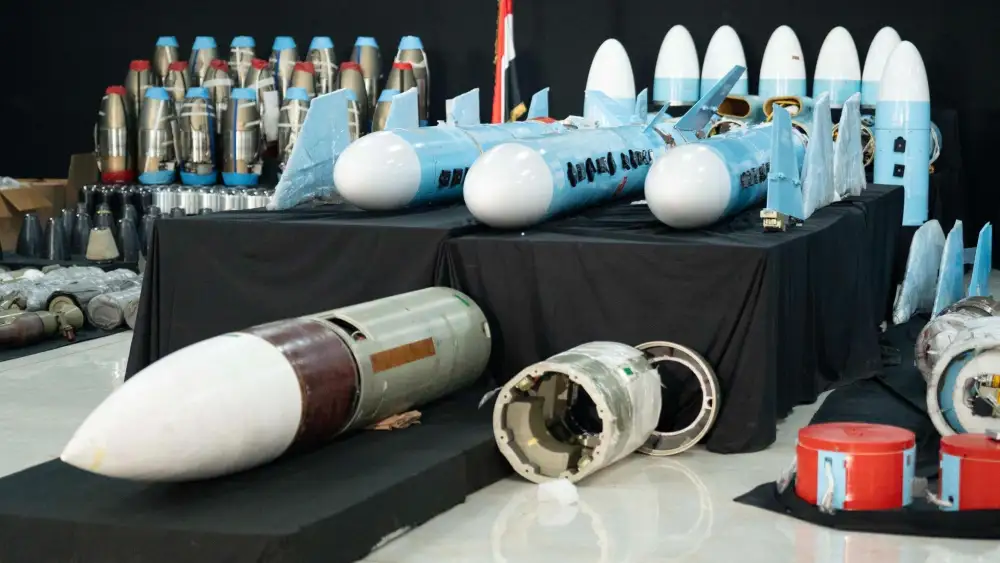
A May 2026 report by Conflict Armament Research (CAR) confirms that the Houthis are not weakening, but actively rearming and rebuilding. After documenting more than 800 missile and UAV components seized in the Red Sea, CAR traced a persistent, Iranian-facilitated supply chain fueling this expanding arsenal. While the West talks of de-escalation, Iran is methodically arming its proxy, ensuring that the Red Sea remains a theater of sustained aggression.
The Houthis launched missile and drone attacks against U.S. and Israeli targets in October 2023. Although Washington initially countered with “Operation Prosperity Guardian” and major strikes in early 2024, the strategy collapsed in May 2025. U.S. President Donald Trump’s ceasefire, which failed to demand an end to attacks on Israel, granted the group a reprieve, easing pressure while they cynically maintained their anti-Israel offensive.
The Houthis viewed the ceasefire as a confession of American defeat. By ignoring the group’s relentless Red Sea destabilization and aggression toward Israel, the agreement signaled that the United States was willing to trade regional security for a hollow, temporary peace. They saw this not as a settlement, but as a surrender. They do not see concessions as a pathway to stability; they see them as the ultimate opportunity to rearm, regroup and strike with even greater impunity.
The Houthis are no mere isolated militia; they are Iran’s frontline proxy for projecting power across the Red Sea. They serve as Tehran’s primary tool for strangling shipping lanes, bullying Gulf states, and striking the United States and Israel by proxy. The Houthis act as Iran’s escalation lever—a force deployed to raise or lower regional pressure without requiring direct Iranian involvement.
The Houthis were already emboldened by the Saudi-led coalition’s truce in April 2022. Riyadh’s pivot from eight years of relentless airstrikes to de-escalation sent a decisive signal: The Houthis interpreted it as proof that endurance—not defeat—would dictate the outcome.
The Houthis concluded that they were not being forced into retreat, but were being negotiated with from a position of rising power. Far from achieving deterrence, the lapse in pressure only confirmed their belief that both time and escalation were working in their favor.
A stronger and internationally recognized Somaliland would serve as a stabilizing anchor against piracy, Islamist terrorists, Iranian proxy expansion and Red Sea insecurity.
Consequently, rather than being neutralized, the Houthis gained strategic confidence. Saudi Arabia now faces persistent and heightened threats from the group. In contrast, Israel has consistently treated such entities as existential threats to be met with force rather than concessions. Perhaps Israel offers useful lessons.
This dangerous pattern now extends beyond the Houthis to the Iranian Islamist regime. Throughout the ongoing war, Iran has escalated pressure on the Strait of Hormuz and launched drone and missile operations against U.S. maritime assets. Despite these provocations, the U.S. response remains limited to interceptions, naval posturing and localized strikes.
Applying the lessons learned from the Houthis, Tehran—under the Islamic Revolutionary Guard Corps’ military junta—believes that endurance will dictate the outcome. The current negotiations, which reportedly provide Iran access to billions in frozen assets, will effectively reward aggression with concessions. Ultimately, the Islamist regime interprets this caution as a critical lack of resolve.
This dangerous pattern also extends to Iran’s close ally, Eritrea dictator Isaias Afwerki.
Despite years of hostility toward the United States and its allies, coupled with persistent destabilization across Ethiopia and Sudan, Washington is reportedly considering lifting sanctions on Eritrea. This has only emboldened its brutal leader. In a recent Independence Day speech, Afwerki framed America as a power in decline, defended Iran’s nuclear program and criticized the military campaign against Tehran—rhetoric clearly designed to antagonize both the United States and Israel.
This is the fundamental flaw in appeasement toward Iran, its Islamist proxies and its Eritrean ally: All three view their mere survival as a victory, regardless of the suffering they inflict upon their own people. Concessions are interpreted not as opportunities for reconciliation, but as evidence that they have successfully outlasted Western pressure.
Following the Saudi truce in April 2022, the Houthis concluded that they were not being forced into retreat, but were being negotiated with from a position of rising power.
At the very moment that America appears willing to accommodate this “Axis of Chaos,” it continues to fail to fully support the one genuinely pro-Western and stable partner in the region: Somaliland.
Despite decades of stability, democratic governance, counterterrorism cooperation and immense strategic importance along the Gulf of Aden, Somaliland remains unrecognized by the United States. This hesitation persists, even as Somaliland confronts escalating threats from the same anti-U.S. destabilizing actors: Al-Shabaab, the Houthis and Afwerki.
The strategic implications are enormous. Recognition of Somaliland would not merely be symbolic. A stronger and internationally recognized Somaliland would serve as a stabilizing anchor against piracy, Islamist terrorists, Iranian proxy expansion and Red Sea insecurity.
Removing Eritrea’s dictator is a strategic imperative for the Bab el-Mandeb corridor and the Horn of Africa. Partnering with a peaceful, stable Eritrea—the de facto nation-state of the pro-Western indigenous Tigrinya nation—would solidify a security axis between the United States, Israel, the United Arab Emirates, Ethiopia and Somaliland, transforming a volatile chokepoint into a bastion against extremist threats.
Whether dealing with the Houthis, the Iranian Islamist regime or the brutal Eritrean dictator, the principle remains the same: They survive through coercion, terrorism, destabilization and chaos, and rarely abandon those tools voluntarily.
America must stop rewarding dangerous, anti-U.S. actors that thrive on chaos while simultaneously undermining allies seeking stability. To restore order, Washington should strengthen forces resisting the Houthis in Yemen, the Iranian Islamist regime and the Eritrean dictator to remove them and formally recognize Somaliland.
Stability will not come from accommodating Iran, its proxies and its rogue allies. It will come from defeating them. The logic of peace through strength is the only way to deal with such adversaries.