
That may sound melodramatic. It is not.
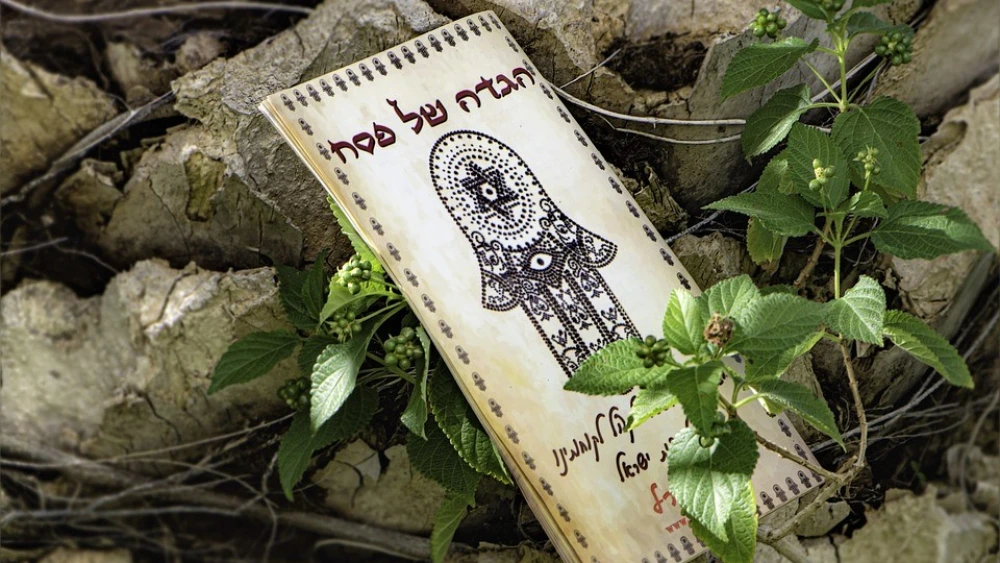
In recent years, anti-Zionist Jewish groups have advanced beyond op-eds, protests and campus encampments to something far more enduring: ritual itself.
Jewish Voice for Peace now issues annual anti-Zionist Haggadahs—titles such as “Exodus From Zionism” (2024) and “Next Year in Liberation” (2025)—explicitly calling on Jews to “reclaim Judaism itself from Zionism” and to build it beyond. The International Jewish Anti-Zionist Network offers its longstanding “Legacies of Resistance: An Anti-Zionist Haggadah for a Liberation Seder.” A queer activist project called Making Mensches presents “Pillar of Fire: Queer, Anti-Zionist Haggadah,” designed to guide Jews in honoring Passover amid the events following Oct. 7, 2023.
This is no mere liturgical tinkering at the edges. It is a direct contest over one of the most potent instruments of Jewish continuity ever devised.
If one wished to reprogram Jewish identity from within, this would be precisely where to begin. And that is exactly what these groups are attempting to do.
Their aim is straightforward: Sever the Exodus from its promised destination. Transform Passover from a narrative of national rebirth into a moral indictment of Jewish power. Substitute Jerusalem with vague universalism. Replace sovereignty with contrition. Condition younger Jews to view the true scandal of Jewish history not as exile, helplessness or millennia of persecution, but as Jewish statehood itself.
Jewish Voice for Peace states this with unapologetic clarity. Its 2024 Haggadah proclaims the effort to “reclaim our holiday of liberation as part of reclaiming Judaism from and building it beyond Zionism.” The 2025 edition echoes the sentiment almost verbatim. These are not fleeting slogans; they are theological assertions.
Earlier JVP materials were even more forthright. The 2018 Haggadah dedicated the third cup to “Boycott, Divestment and Sanctions,” converting a classic moment of redemption into a political curse against the Jewish state. The latest editions frame the entire observance as resistance to “fascism and genocide,” collapsing Jewish liberation into anti-Israel activism.
IJAN’s “Legacies of Resistance” Haggadah is equally explicit, rooting itself in the “history of Jewish anti-Zionism.” “Pillar of Fire” declares its purpose without evasion: a “Queer, Anti-Zionist Haggadah” for those seeking to navigate Passover through an anti-Zionist lens.
The anti-Zionists grasp a truth that eludes many mainstream Jewish institutions: Politics flow downstream from liturgy. A people endures not through policy papers or press releases, but through the stories it tells its children and the meaning it imparts to those stories. For centuries, the Haggadah has performed that function. The anti-Zionist endeavor is to invert it—to make the text teach the opposite of its original intent.
In my own analysis, set forth in “The Haggadah: Zionism’s Drama of Destiny,: the text was never simply a chronicle of memory. It was constructed as an affirmation that Jewish history could not terminate in exile; it must culminate in sovereignty.
From the collapse of Jewish independence after Bar Kokhba, through the centuries of Christendom, Crusades, expulsions and pogroms, the Jewish condition was never merely a question of when redemption might arrive. It was how Jews could endure in a world where hostility to them had become a structural feature of rival civilizations. The Haggadah responded by centering the self-governing Jewish nation as the fulfillment of redemption. Year after year, it reminded Jews that the Exodus remains unfinished so long as exile is the norm.
Today’s anti-Zionist Haggadahs work to undermine that message—to weaken moral deterrence by portraying Jewish sovereignty as inherently suspect; erode communal cohesion by detaching Jewish identity from peoplehood, land and self-defense; and instill shame by recasting statehood not as redemption’s instrument but as its betrayal.
Rabbi Akiva stands at the heart of the traditional Haggadah as the decisive reply to the wicked son, the archetypal figure who rejects the collective story. In Bnei Brak, he turns the seder into a form of liturgical warfare. Memory becomes strategy. The Shema becomes a rallying cry. Dawn signals mobilization. He insists that redemption is not passively awaited; it is actively pursued through discipline, solidarity and national purpose.
The anti-Zionist Haggadah inverts this: It converts the Passover seder from an academy of Jewish peoplehood into a seminar in Jewish self-dissolution. It invites Jews to regard their own state as the chief impediment to true redemption.
Mainstream Jewish institutions have yet to reckon with the gravity of this assault. Too many continue to regard the Haggadah as mere nostalgia, family custom or seasonal sentimentality. The anti-Zionists, however, take it with deadly seriousness. They understand that whoever controls ritual controls formation, and whoever controls formation controls the future.
The issue, therefore, is not whether a handful of ideological Haggadahs exist. They do. The real question is whether those committed to Jewish continuity will reclaim the original context, terminology and grammar before their adversaries succeed in rewriting it entirely.
The battle has moved beyond just Israel. It is now over whether Judaism will remain a civilization defined by peoplehood, covenant, land and return—or be reimagined as a religion estranged from, even opposed to, its own sovereignty.
That is why the anti-Zionists have come for the Haggadah.
And that is why the struggle for the Jewish future will be decided—or forfeited—at the seder table.