
U.S. President Donald Trump’s announcement about ending approximately $4 billion in annual U.S. military aid to Israel has people worried, as though Israel just suffered a terrible financial loss.
My reaction is exactly the opposite: Thank You, Hashem! It’s all for the best.
For decades, Israel has been giving America extraordinary strategic, technological, intelligence and economic value while being portrayed as the country standing with its hand out.
In fact, American aid to Israel was also Israel providing extraordinary value to America.
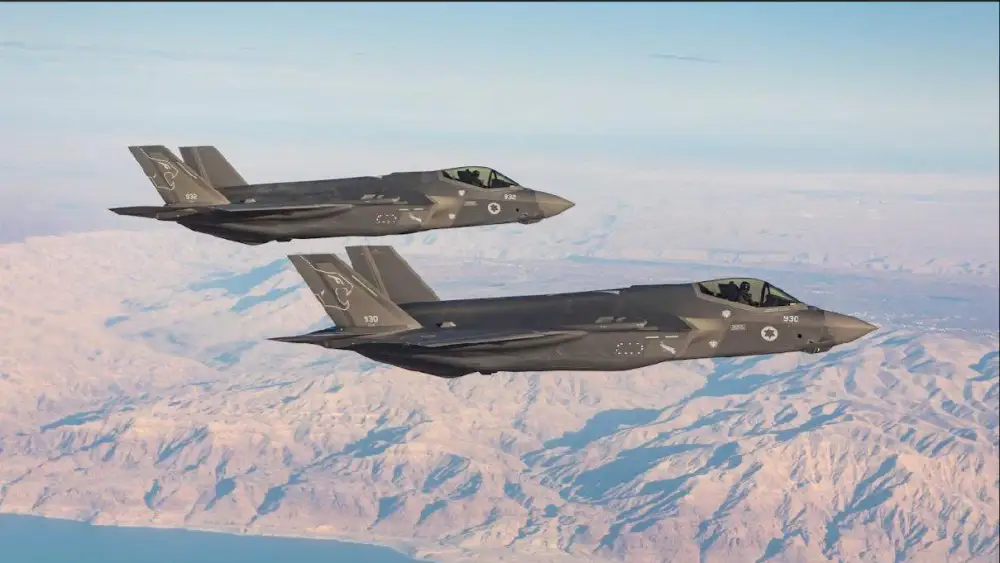
Look at Lockheed Martin’s F-35 program alone. In February 2026, Israel’s Ambassador to Washington, Yechiel Leiter, revealed that Lockheed Martin’s CEO had told him that Israeli operational information and technological developments were worth many billions of dollars to the company.
Think about that: One American company. One aircraft program. Billions in value.
That does not even begin to account for Israel’s contributions to Arrow missile defense, Iron Dome, David’s Sling, intelligence cooperation, cybersecurity, medical breakthroughs, scientific research and countless other innovations benefiting America.
How many billions are all those contributions worth? How much has American research and development benefited from Israeli expertise? How many American lives and military resources have been protected through Israeli intelligence and defense technology?
The full value has never been publicly calculated. Yet Israel is repeatedly portrayed as the recipient of American generosity.
Moreover, most of the $4 billion in aid must be spent on American military equipment, benefiting American manufacturers, American workers and American industries. Israel cannot simply bring that money home and freely invest it wherever its own economy and industries would benefit most.
In August 2025, I was hosted by Israeli President Isaac Herzog at his residence in Jerusalem, together with a delegation of more than 50 media moguls and leaders whom I had brought to Israel to help strengthen its public relations. Alan Dershowitz was right by my side.
I raised my argument directly in front of Herzog and the delegation: America was receiving extraordinary value from Israel, yet Israel was constantly being portrayed as the taker. Herzog repeated what I said, expanded on my argument and publicly took my side.
That brings me to another question: Where was everyone else?
Where were the congressional leaders, political organizations, advocates and influential voices who understood the extraordinary value Israel provides to America? Why was the conversation always about what America gave Israel rather than what America received in return?
Why is the money America sends Israel so visible while the value Israel contributes to America receives so little recognition?
Congress understands business. Congress understands return on investment. Congress knows how to calculate the value of an economic relationship. So why did this one continue to be portrayed almost entirely as American generosity?
I am asking these questions because the public narrative has consequences.
When Israel is constantly portrayed as receiving American assistance, people begin to believe that Israel is a financial burden rather than an extraordinary strategic partner. That portrayal diminishes Israel’s contributions and exposes it to criticism without acknowledging what America receives.
Meanwhile, the United States provides billions in assistance to countries around the world for humanitarian, development and security purposes. Those expenditures are not all equivalent, but they demonstrate how extensive American foreign assistance is.
Yet Israel, which contributes extraordinary defense, intelligence and technological value to America, is repeatedly singled out over its approximately $4 billion annual package. Why is the money America sends Israel so visible while the value Israel contributes to America receives so little recognition?
It is time to challenge that imbalance.
Think about what Israel could accomplish with greater economic independence. Instead of being defined by a fixed annual aid package, Israel could negotiate commercial agreements based on the actual value of its intelligence capabilities, defense technology, research and innovation.
It could develop more of its own industries, attract additional investments, expand technological partnerships and have greater freedom to invest resources at home.
Israel should have the opportunity to be compensated for the value it contributes, rather than remain publicly defined by the assistance it receives.
Of course, ending military aid would create financial and procurement challenges that Israel would need to address. New revenue would require new agreements. Economic independence does not happen automatically.
But that does not diminish the larger opportunity.
The $4 billion was never a measure of Israel’s worth. And removing the aid-based label could help open the door to a relationship in which Israel is recognized as an economic, technological and strategic powerhouse rather than a dependent recipient.
This is not about weakening America’s relationship with Israel. It is about strengthening that relationship through mutual recognition, economic opportunity and independence.
Perhaps Trump’s announcement will finally force a conversation that should have happened long ago. Perhaps what looks like a financial loss will become the beginning of greater economic independence, more opportunities for Israeli industries and a partnership that better recognizes Israel’s true contributions.
Instead of mourning the possible loss of $4 billion, we should be examining the opportunities that could emerge when Israel is no longer defined by that figure.