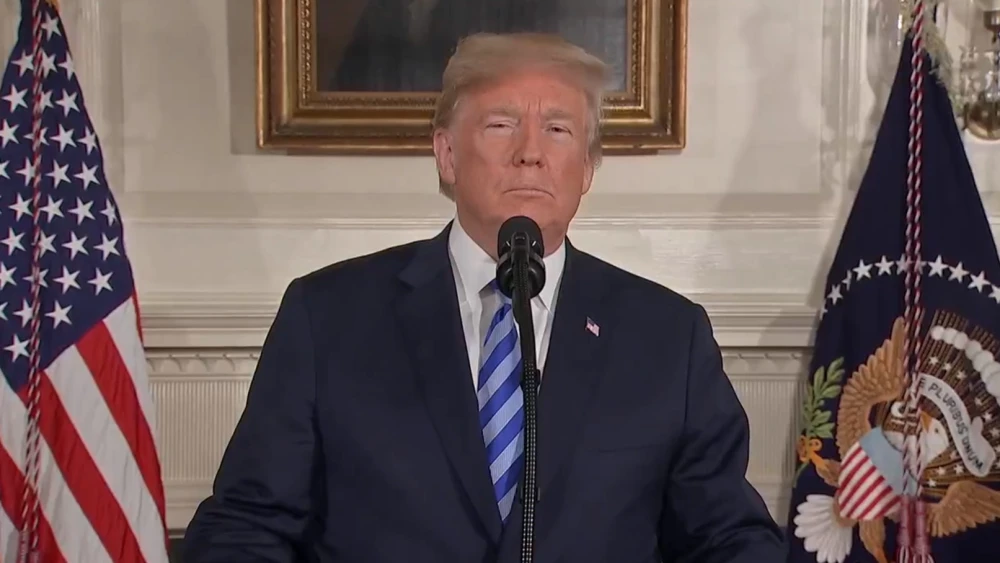

On May 8, President Donald Trump announced that the United States would withdraw from the Joint Comprehensive Plan of Action (JCPOA), the so-called Iran nuclear deal. While pundits and diplomats make Trump’s announcement out to be some great watershed in U.S. credibility and its relations with allies, the reality is that Trump’s actions will not change things much.
Within Iran, diplomats talk about staying the course while the Islamic Revolutionary Guard Corps responds with threats and bluster. That good cop, bad cop approach is exactly what occurred before Trump’s announcement. And despite the lionization of the deal by some diplomats, the agreement did not fully constrain Iran’s nuclear program.
Unlike in South Africa and Libya, the international community allowed Iran to maintain an industrial-scale nuclear program. And the IAEA abided by the Supreme Leader’s prohibition on the inspection of military sites in order to maintain the fiction of compliance.
There are three main components to a nuclear weapons program: enrichment, warhead design and delivery. Iran had mastered the first before agreeing to the nuclear deal, and the exposure of a secret Iranian nuclear archive showed that Iran’s warhead work was also well-advanced. U.S. Secretary of State John Kerry’s concession to Iran on ballistic-missile work enabled Iran to continue to develop missiles capable of delivering nuclear missiles regardless of the JCPOA.
As for U.S. relations with the rest of the world, Trump’s decision may be irrelevant. Many European officials, especially those motivated more by mercantile than strategic concerns, may be angry. But they were equally angry when President Bill Clinton imposed extraterritorial sanctions on their companies two decades ago. Then, however, European officials came into compliance, much as they are doing now.
Trump’s announcement opened a new chapter in diplomatic posturing, but in terms of substance it was simply a recognition of reality.
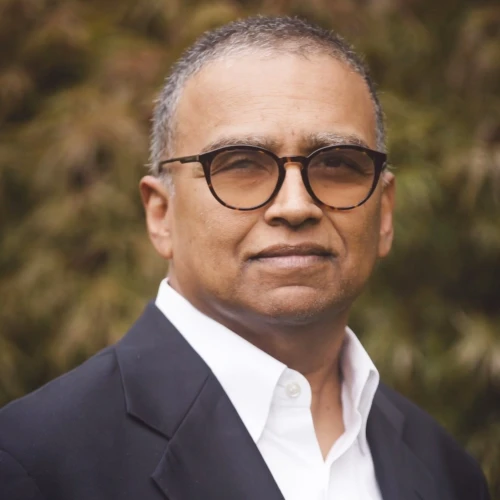
Michael Rubin, Resident Scholar, American Enterprise Institute (AEI), Washington, D.C.
Published as part of an article by Dr. George N. Tzogopoulos for BESA Center.