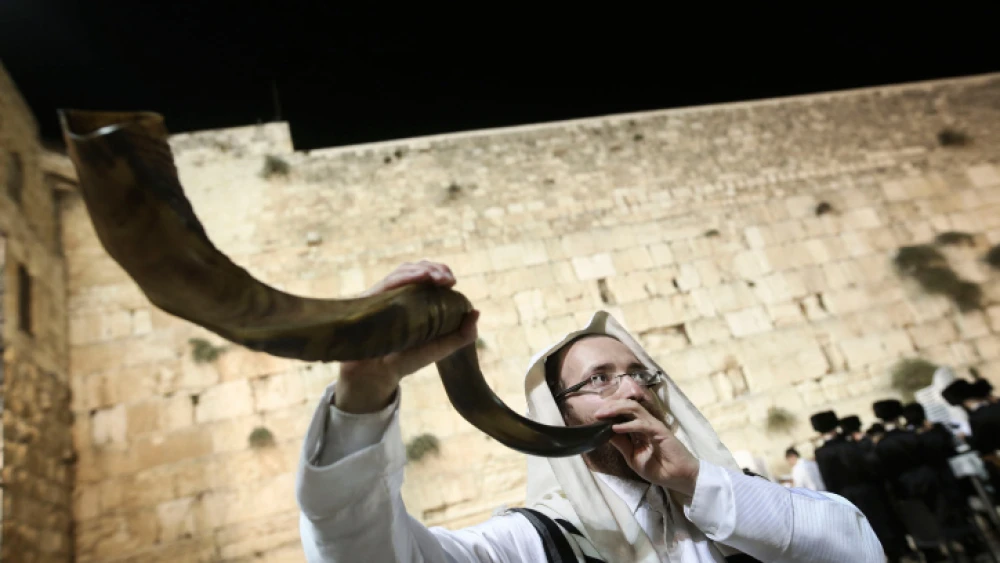
The Palestinian Authority on Monday condemned attempts by Jewish activist groups to sound the shofar on Jerusalem’s Temple Mount, calling the ram’s horn a “dangerous tool” used by Israel to assert sovereignty.
The P.A.'s Jerusalem Governorate warned in a statement that the Jewish tradition of sounding the shofar throughout the Hebrew month of Elul is “no longer a passing religious ritual, but has become one of the most dangerous tools of the occupation to impose its alleged sovereignty.”
The statement denounced attempts to sound the shofar on the Temple Mount as a “direct assault” on the Al-Aqsa Mosque, and said it held Israel’s government “fully responsible for repercussions.”
Ramallah claimed that the shofar-blowing carries “deep political symbolism in the Jewish faith, as it has historically been linked to declaring victory and control,” accusing Jerusalem of seeking to transform Al-Aqsa Mosque into a “center for Talmudic rituals.”
The governorate concluded its statement by urging the United Nations to take immediate steps to “halt these attacks and provide international protection for Islamic and Christian holy sites” in Judaism’s holiest city.
In a separate statement cited by the Jordan News Agency, a spokesman for Amman’s Foreign Ministry condemned what it described as “provocations, including blowing the shofar,” at the holy site.
Ministry spokesperson Sufian Qudah slammed “ongoing breaches” by “extremists with the approval and facilitation of the Israeli occupation authorities,” denouncing it as a “dangerous sign of the extremist Israeli government’s gambles against the stability and security of the region.”
The shofar, a ram’s horn used in Jewish rituals for thousands of years, is closely associated with the holidays of Rosh Hashanah and Yom Kippur, which are this year marked on Sept. 22-24 and Oct. 1-2, respectively.
Its blasts are intended as a call to repentance and spiritual renewal. In many Jewish communities, it is also sounded during weekday morning prayers in the month of Elul, which precedes the High Holiday season.