Newsletter
Newsletter Support JNS

Palestinian official says salaries for terrorists will continue; gives opposite message to US media

Director of PLO Commission of Prisoners’ Affairs Qadri Abu Bakr tells U.S. media that the Palestinian Authority is changing its “pay for slay” policy after conveying the opposite message in Arabic.

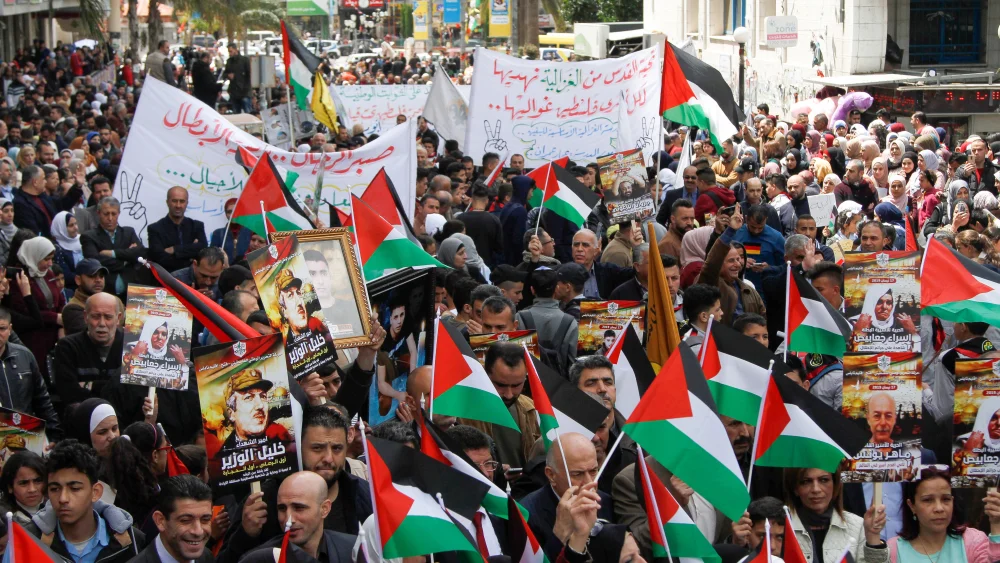
A rally marking Palestinian Prisoners Day in Nablus on April 17, 2019. Photo by Nasser Ishtayeh/Flash90.

A Palestinian Authority official told The New York Times on Nov. 21 that the P.A. would be changing its policy of rewarding terrorists with salaries based on the length of their prison sentence and instead provide money on the basis of the needs of each individual terrorist’s family.

However, Palestinian Media Watch reported on Sunday that the same official—director of Palestinian [PLO] Commission of Prisoners’ Affairs Qadri Abu Bakr—had expressed the opposite sentiment two days earlier in Arabic in the U.K.-based publication Al-Araby Al-Jadeed.

In the news outlet, he asserted that the practice of paying salaries to imprisoned and released terrorists, as well as to the families of dead terrorist “martyrs,” will continue unabated regardless of outside pressure.

According to PMW, a similar message about the P.A. “pay for slay” policy—that the salaries to terrorist families “are non-negotiable”—was quoted on Fatah’s Facebook page on Nov. 19.

“The Constitution is clear that the states do not have to subsidize antisemitic speech on their college campuses,” the Kentucky attorney general said.
The joint move “shows the strength of our relationship and its ability to adapt to changing circumstances,” the PMO said.
“You couldn’t measure on a Richter scale the concern about El-Sayed,” the Jewish Federations of North America CEO said of the senator-elect from Michigan.
City Hall held invitation-only roundtable discussions in other communities, but both listening sessions near the city’s main Jewish neighborhood fell on Shabbat.