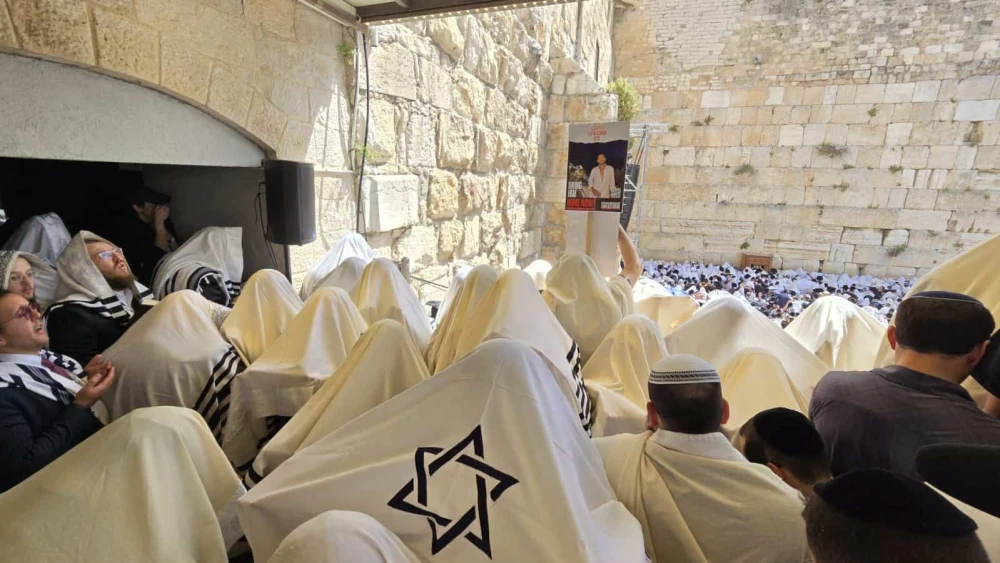

Many in Israel are focusing their Passover thoughts on the 59 Israelis still languishing in Hamas captivity. Unsurprisingly, the Hostages and Missing Families Forum recently published a new Haggadah that tells the holiday story through the lens of the hostages: those who have been released and those still yearning for their freedom. It is fittingly titled “The Haggadah of Freedom.”
There is nothing new about employing the biblical redemption from Egyptian bondage in the context of individual liberty. In a piece emphasizing the individual liberties that the Passover story teaches, Tel Aviv University ended with a blessing that “we all be liberated from our personal, social, physical and psychological enslavements.”
But while this blessing of individual self-realization may be worthy, it is hardly a Passover one.
Passover is where we begin our national journey. It is the national birthday of the Jewish people, who were created on Passover by Divine hand: “This nation I have created for Myself, they shall tell My glory” (Yeshayahu 43:21). Befitting the nature of the festival, it is also the time when we recalibrate the relationship between individuals and nation. This is what the seder night is all about.
Like the original eating of the Passover offering, the seder is celebrated in family gatherings. Families—the wondrous force multipliers of individuals—are the building blocks of nations. As families, we gather on seder night to declare that our national identity transcends the individual and familial. We internalize that first and foremost, we are Jews—members of the Jewish nation under God.
“Send out My nation,” Moses instructs Pharaoh in the name of God, “and they shall serve Me.” We were not redeemed from Egypt as individuals. Indeed, the Haggadah makes no mention of any family or individual in Egypt; even Moses is omitted from the text. The message of Passover is that while we cherish individual identities in their richness and variety, they only reach a full realization through belonging to the Jewish people.
This core insight leads me to two messages: One relates to legitimate attempts to secure the release of our hostages; the second relates to the Haredi draft in Israel.
On the plight of our hostages, seder night gives us a perspective you probably won’t find in “The Haggadah of Freedom.” While continually striving to achieve their personal freedom, we must never overlook the national context of this effort. Individual identities—personal, familial, communal—are secondary to the national identity, and this insight ought to determine the strategies we employ for hostage release.
On the Haredi draft issue, Passover reminds us that we are first Jews and only second Haredi (or any other denomination). The Haredi identity is legitimate only as it strengthens the greater Jewish people, which it seeks to achieve by shunning elements of modern society that can undermine religious observance. When that identity conflicts with the broader Jewish one—an identity that has, like it or not, become synonymous with the State of Israel—tactics need to be reconsidered.
The ever-growing, yet sorely insufficient, number of Haredi men joining the ranks of the Israel Defense Forces appreciates this insight. They realize that army service has become a principal expression of Jewish belonging, and that absence is, therefore, a repudiation of belonging. As I recently mentioned to a group of some 200 wives of Haredi reservists, they spread the light of seder night into new reaches.
The deeper message of Passover is a merging of holy and mundane, unnatural and the natural. Thus, the month of Nisan is sanctified as the first Jewish month. (The natural solar year begins in the month of Tishrei, usually in late September or early October.) Our natural diet of leavened bread is prohibited, switching to matzah. Even our ingrained individuality, which we so cultivate during the year, surrenders before a Divinely ordained national belonging, which is anything but natural.
In Israel, we live a natural-unnatural reality that far surpasses anything we have known in many centuries. Passover, the place where we begin, reminds us of the core insight on which it stands.
May we defeat our bitter enemies, achieve lasting peace and security, and bring every hostage back home. And may we all experience a chag kosher v’sameach, a Passover filled with light.