


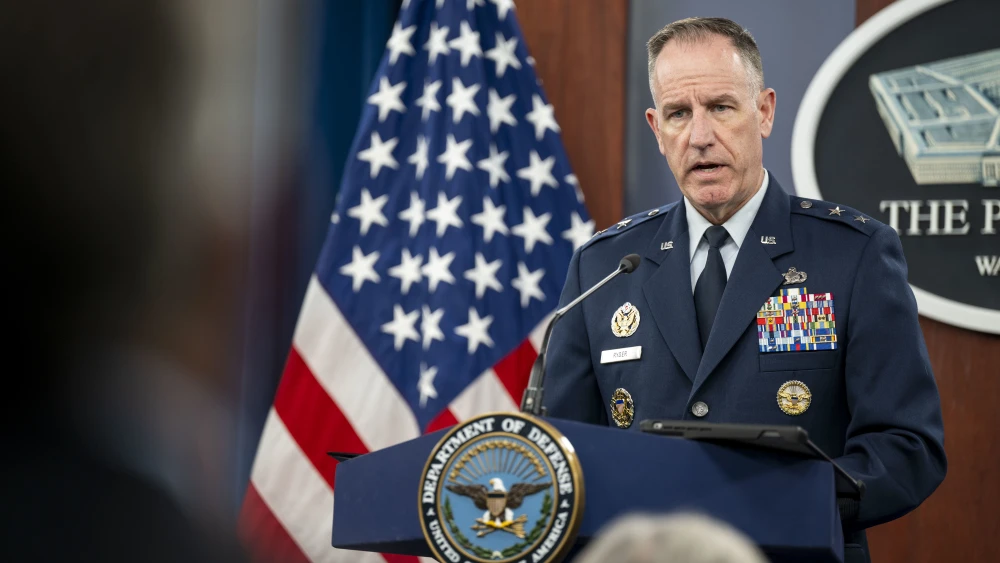
The Biden administration has impressed upon the Jewish state how important it is to protect Palestinian civilians in Gaza, but the Hamas terror organization bears “some responsibility” for civilian deaths, a U.S. Department of Defense spokesman said on Tuesday.
“We’ve been very clear to our Israeli partners on our view as it relates to mitigating civilian harm, and I think there’s something I would hope we could all agree on,” Pentagon press secretary U.S. Air Force Maj. Gen. Pat Ryder told reporters. “This war is undoubtedly tragic, way too many civilians have died.”
Ryder added that the United States urges the Israel Defense Forces “both publicly and privately to take civilian harm mitigation into account,” and “we know that they need to do more on this front and we’re going to continue to communicate that to them.”
The Pentagon spokesman added that “Hamas bears some responsibility for this as well, in the sense that they continue to embed among the civilian population,” and if they “truly cared about the Palestinian population, one has to ask why they continue to build command and control nodes, barracks, armories, tunnels underneath the city and put themselves in places where there’s active military operations.”
Israel and some international law experts have said that Hamas bears all responsibility for civilian deaths in Gaza, since it operates deliberately in public spaces, including hospitals and schools.


