Newsletter
Newsletter Support JNS

Rappers Tyga, Fat Joe cause cancellation of music festival in Israel, citing ‘security’ issue

The sudden loss of the two top performers led to scrapping the whole things. Ticket-holders were told that they could get refunds.

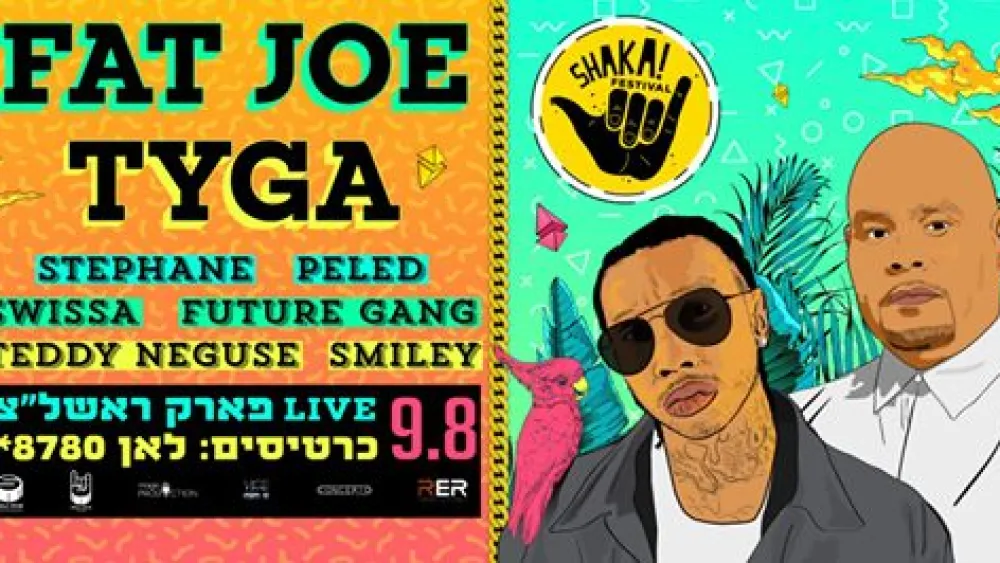
Shaka festival promotional graphic

American celebrity rappers Fat Joe and Tyga, who were slated to headline the Shaka music festival in Rishon Letzion on Thursday, cancelled suddenly on Sunday, citing the “security situation.”

The pair were set to be joined by a lineup of Israeli hip-hop artists.

The sudden loss of the two top performers led to the cancellation of the entire festival. Ticket-holders were informed that they would be able to secure refunds.

Shocked fans expressed their disappointment on social media, with many asking “what security situation?”

Over the past several years, many musicians and other artists have come under pressure from the BDS movement to not perform in the Jewish state. It was unclear if the BDS movement played a role in this case.

The performance was to be the first in Israel for Tyga and Fat Joe, both Grammy-nominated performers in the rap category.

Last year’s Shaka Festival featured rapper Sean Paul, who performed for 15,000 attendees.

Many major performers have played in Israel this summer, including Alanis Morissette, Enrique Iglesias, Ozzy Osbourne, Ringo Starr, Maluma, Flo Rida and Jason Derulo.

“These attacks come amid a broader rise in violent extremism across Canada and other Western democracies—a toxic brew of anti-Zionist rhetoric, local criminal elements, Iranian-backed proxies and ISIS-inspired terrorism,” CIJA stated.
“Iran and Israel are the only two countries on this planet that have a biblical relationship,” the exiled Iranian Crown Prince Reza Pahlavi said.
“We discussed the friendship and relations between Israel and Bahrain, as well as the importance of the U.S.-led Abraham Accords,” Isaac Herzog said.
The cause of the blaze near the grave of Rabbi Shneur Zalman of Liadi was not immediately clear.
The Japanese Red Army member, who helped kill 26 people, lived in Lebanon since his release in a 1985 prisoner exchange.
The suspect’s writing about the deadly Samaria shooting prompted an investigation and the seizure of ammunition, cash and fireworks.