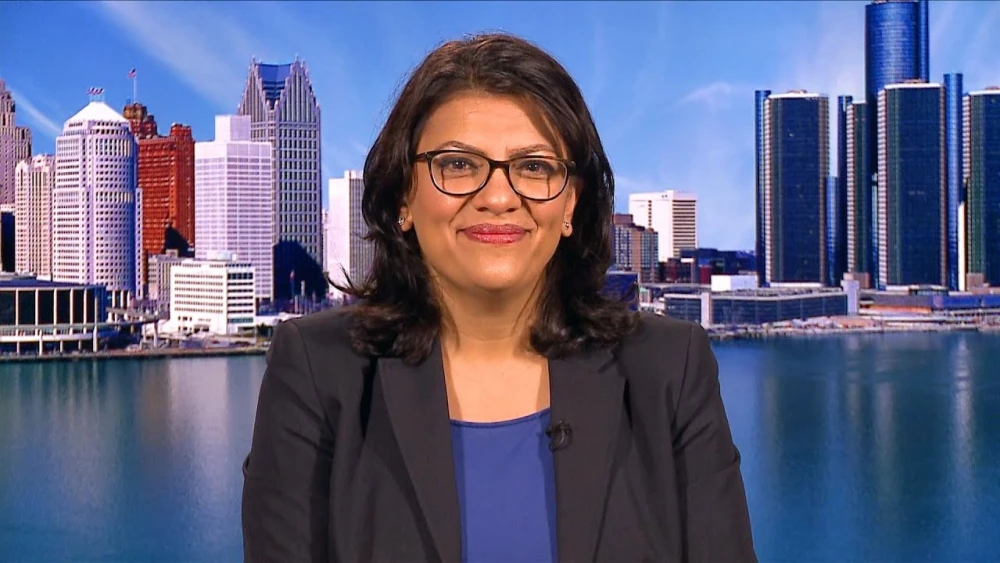
U.S. Rep. Rashida Tlaib (D-Mich.) compared Israel’s “dehumanization and racist policies” to 19th-century segregation in the United States.
“There is continued dehumanization and racist policies by the State of Israel that violate international human rights, but also violate my core values of who I am as an American,” the freshman congresswoman told the left-wing outlet Jacobin, which published a Q&A with her on June 13.
“ ‘Separate but equal’ doesn’t work. I know that my ancestors were killed, died, uprooted from their land,” she continued. “That’s something that no one even wants to acknowledge that had to happen to create the State of Israel.”
“We’re not just a country that’s divided, we’re also connected. As Americans, we appreciate these values, and it gives us hope,” added Tlaib. “I see more Americans understanding the plight of Palestinians in a way that doesn’t dehumanize or degrade Israelis either, but does hold the leadership of the Israeli government accountable. They see Israel is proceeding in a way that is a direct violation of Palestinians’ core right to human dignity. The defenders of the status quo are right to be worried.”
Since entering Congress in January, when she displayed a map with a note posted over Israel that reads “Palestine,” Tlaib has made controversial, anti-Israel remarks.
Shortly thereafter, she attacked Republican lawmakers and opponents of the anti-Israel BDS movement by saying “they forgot what country they represent.”
Moreover, Tlaib met with Hezbollah supporter Abbas Hamideh, who has said that Israel is a “terrorist entity,” even though the congresswoman said that “I do not agree with the statements brought to my attention.”
In May, she said that Palestinians enabled a “safe haven” for Jews after the Holocaust, thereby reiterating her support for a one-state solution.