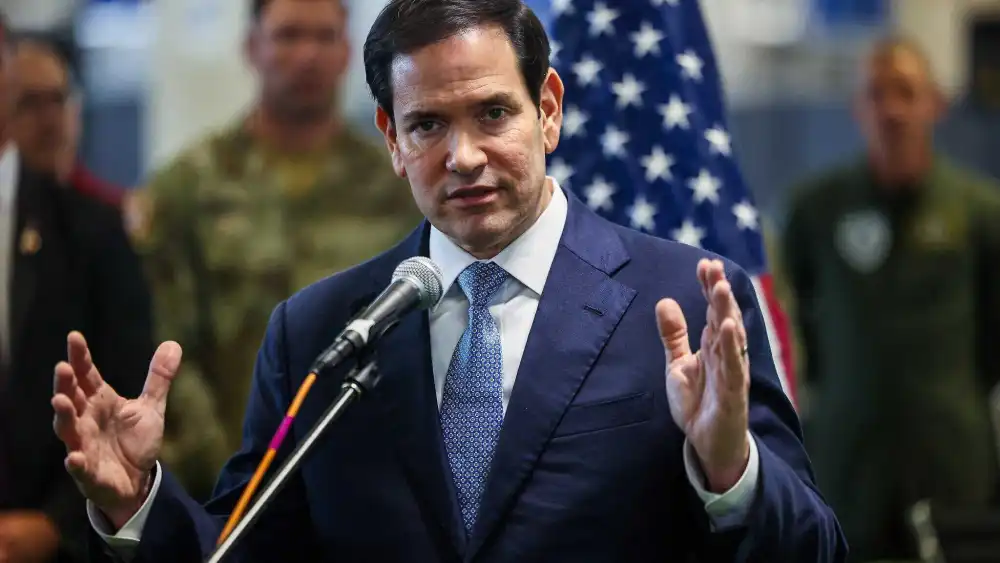
U.S. Secretary of State Marco Rubio has instructed American diplomats to urge foreign governments to take swift action against Iran and its proxy networks, citing an increased threat environment.
In a cable sent Monday to all diplomatic and consular posts, titled “Elevated Concern of IRGC Activity,” officials were directed to push their host countries to “move expeditiously to diminish the capabilities of Iran and Iran-aligned terrorist groups from attacking our respective nations and citizens” amid an “elevated risk of attack.”
The message, marked sensitive but unclassified, was to be delivered “at the highest appropriate level” by March 20, reported ABC News, which obtained a copy of the missive.
The directive emphasized coordinated international pressure, stating: “We assess that the Iranian regime is more sensitive to collective action than unilateral action, and that joint pressure is more likely to compel behavior change by the regime than unilateral actions alone.”
“We must act while international attention is focused now to end the Iranian campaign of terror in the Middle East and globally. Do not allow this critical movement to pass,” it added.
The cable further advised that “at post’s discretion, advocacy efforts should be coordinated with Israeli diplomatic counterparts,” while noting that the talking points “may not be left behind.”
Diplomats were also instructed to highlight Iran’s longstanding destabilizing activities, including support for groups such as Hezbollah, Hamas and Iraqi militias. And to explain the goals of “Operation Epic Fury,” which are to “neutralize Iran’s nuclear program, destroy its
ballistic missile program, disrupt its proxy networks, and diminish its naval capabilities.”
In addition, U.S. officials were told to press countries that have not designated the Islamic Revolutionary Guard Corps and Hezbollah as
terrorist organizations to “swiftly” do so.
“Such a designation will intensify the pressure on the Iranian regime and limit its ability to sponsor terror activities across the globe that jeopardizes the safety and security of your populations,” the cable stated.
The cable comes as U.S. President Donald Trump attempts to build a broader coalition against Iran. The Military Times reported he has requested seven countries to send warships to help open the Strait of Hormuz.
“Some are very enthusiastic, and some are less than enthusiastic,” Trump told reporters on Monday. He said he would soon release a list of countries that have agreed to do so.
“Numerous countries have told me they’re on the way,” said Trump.