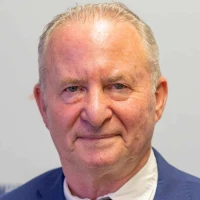
South Africa declared Israel’s chargé d’affaires and top diplomat, Ariel Seidman, persona non grata on Jan. 30 and ordered him to leave the country within 72 hours, according to an official government statement.
South Africa’s foreign ministry, the Department of International Relations and Cooperation (DIRCO), said it had informed the Israeli government of its decision.
Media Statement
— Chrispin Phiri 🇿🇦 (@Chrispin_JPhiri) January 30, 2026
30 January 2026
The Department of International Relations and Cooperation has informed the Government of the State of Israel of its decision to declare Mr. Ariel Seidman, the Chargé d’Affaires of the Israeli Embassy, persona non grata.https://t.co/KjaW20UKQc
South African officials stated that the development was based on what they described as “violations of diplomatic norms,” including the alleged use of official Israeli platforms to criticize South African leadership and a failure to notify authorities about visits by senior Israeli officials.
“These violations include the repeated use of official Israeli social media platforms to launch insulting attacks against His Excellency President Cyril Ramaphosa, and a deliberate failure to inform DIRCO of purported visits by senior Israeli officials,” said the statement.
In response, the Israeli Foreign Ministry designated South Africa’s top diplomat in the country, Shaun Edward Byneveldt, persona non grata, saying he must leave Israel within 72 hours, and that “additional steps will be considered in due course.”
Prime Minister Benjamin Netanyahu and Foreign Minister Gideon Sa’ar decided - following South Africa’s false attacks against Israel in the international arena and the unilateral, baseless step taken against the Chargé d’Affaires of Israel in South Africa - that South Africa’s…
— Israel Foreign Ministry (@IsraelMFA) January 30, 2026
Strained relations
South Africa’s action further strains its tense relations with Jerusalem, particularly following Pretoria’s legal campaign against Israel in the International Criminal Court and International Court of Justice, both in The Hague, and its broader diplomatic criticism of Israel’s war against Hamas in the Gaza Strip.
Both South Africa and Israel recalled their ambassadors in the weeks following the Hamas-led terrorist attacks on Oct. 7, 2023, as relations between the two countries sharply deteriorated.
The United States strongly objected to South Africa’s high-profile genocide case against Israel at the ICJ, a move viewed in Washington as targeting a close American ally.
U.S. President Donald Trump last year froze most U.S. aid to Pretoria, citing what he described as the country’s “aggressive positions” toward Washington, including its close ties with Russia and Iran as well as the ICJ case against Israel.
Newly appointed U.S. Ambassador to South Africa Leo Brent Bozell pledged that defending American policy on Israel would be a “top priority” when he assumes the post this year.
Federation condemns ANC government’s decision
The South African Zionist Federation (SAZF) condemned the ANC government’s decision to declare Israel’s chargé d’affaires persona non grata, accusing the ruling party of prioritizing ideology over the needs of South African citizens.
“The ANC government’s decision to expel Israel’s chargé d’affaires is an act of staggering moral bankruptcy and exposes a leadership more committed to ideological hostility than to the welfare of the people it has failed,” it said in a statement Friday. “A diplomat was declared persona non grata not for espionage, not for misconduct, not for breaching protocol, but for helping South Africans access clean water.”
The SAZF noted that the Israeli embassy had partnered “openly and transparently” with recognized traditional leadership in the Eastern Cape, “to do what the government has spectacularly failed to do: provide basic human necessities.”
Blocking such cooperation would ultimately harm vulnerable communities, the SAZF said, warning that essential services such as access to clean water should not become entangled in geopolitical disputes.
“When a government blocks water to make a political point, it forfeits any claim to moral authority. When humanitarian assistance is rejected because it exposes failure, the rot is complete,” it said.
“South Africans deserve water. They deserve dignity. They deserve solutions. They do not deserve a government so brittle, so cynical and so morally bankrupt that compassion itself becomes a political threat. Our beautiful South Africa deserves better than this.”
“Cry, the Thirsty Country,” the SAZF statement concluded in a reference to South African writer Alan Paton’s landmark 1948 novel, Cry, the Beloved Country.