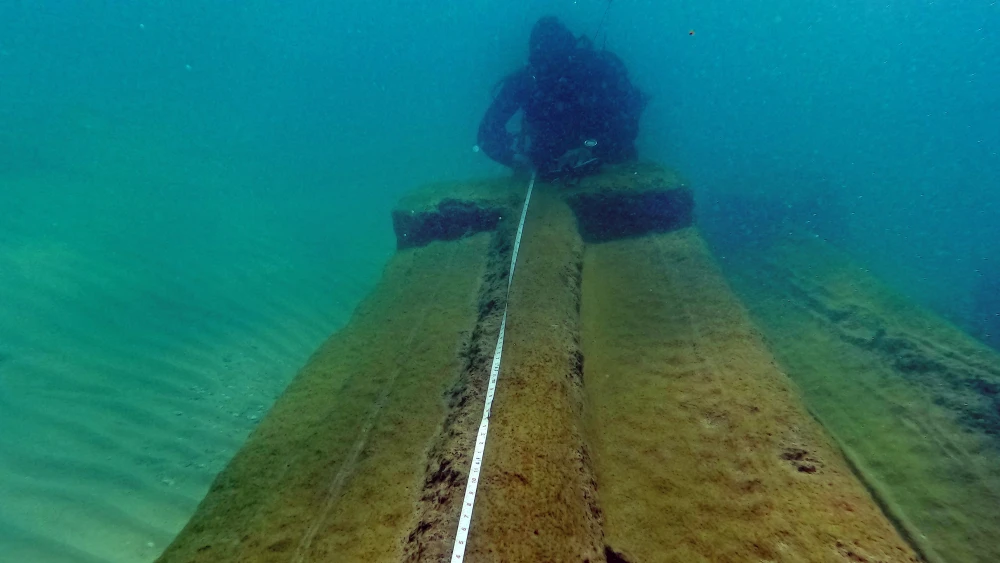
An enormous cargo of marble artifacts, borne in a merchant ship that was shipwrecked in a storm during the Roman Empire period, was uncovered in the coastal waters north of Netanya, the Israel Antiquities Authority announced on Monday.
The find, which was discovered by an experienced sea swimmer, is the first known cargo of its kind from the Eastern Mediterranean, the state-run archaeological body said.
The artifacts, including huge 1,800-year-old marble architectural elements, were discovered about 220 yards offshore from Moshav Beit Yanai, some 3.7 miles north of Netanya.
The swimmer, Gideon Harris, contacted the Israel Antiquities Authority to report ancient columns that he observed while swimming in the sea at the Beit Yanai beach last month.
“We have been aware of the existence of this shipwrecked cargo for a long time, but we didn’t know its exact whereabouts as it was covered over by sand, and we could not investigate it,” said Koby Sharvit, director of the underwater archaeology unit at IAA.
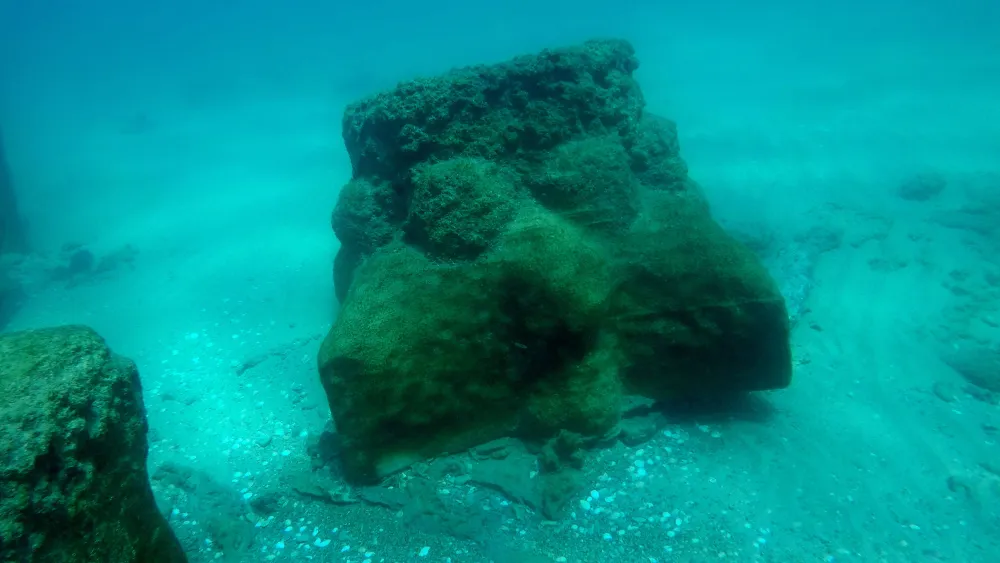
He reported that the spring storms must have exposed the cargo.
The cargo, weighing about 44 tons, includes Corinthian capitals adorned with vegetal patterns, partially carved capitals, and marble columns up to 20 feet long. It seems that these valuable architectural elements were intended to adorn a magnificently elaborate public building—a temple or theater.
“Since it is probable that this marble cargo came from the Aegean or Black Sea region, in Turkey or Greece, and since it was discovered south of the port of Caesarea, it seems that it was destined for one of the ports along the southern Levantine coast, Ashkelon or Gaza, or possibly even Alexandria in Egypt,” said Sharvit.
Harris was awarded a certificate of appreciation for good citizenship.
“Harris’s report epitomizes the value of a citizen’s awareness regarding antiquities and even more the importance of reporting them to the Israel Antiquities Authority,” said IAA director Eli Escusido. “The cooperation of the community plays an important role in archaeological research. This provides invaluable information contributing to the history and cultural heritage of the country.”