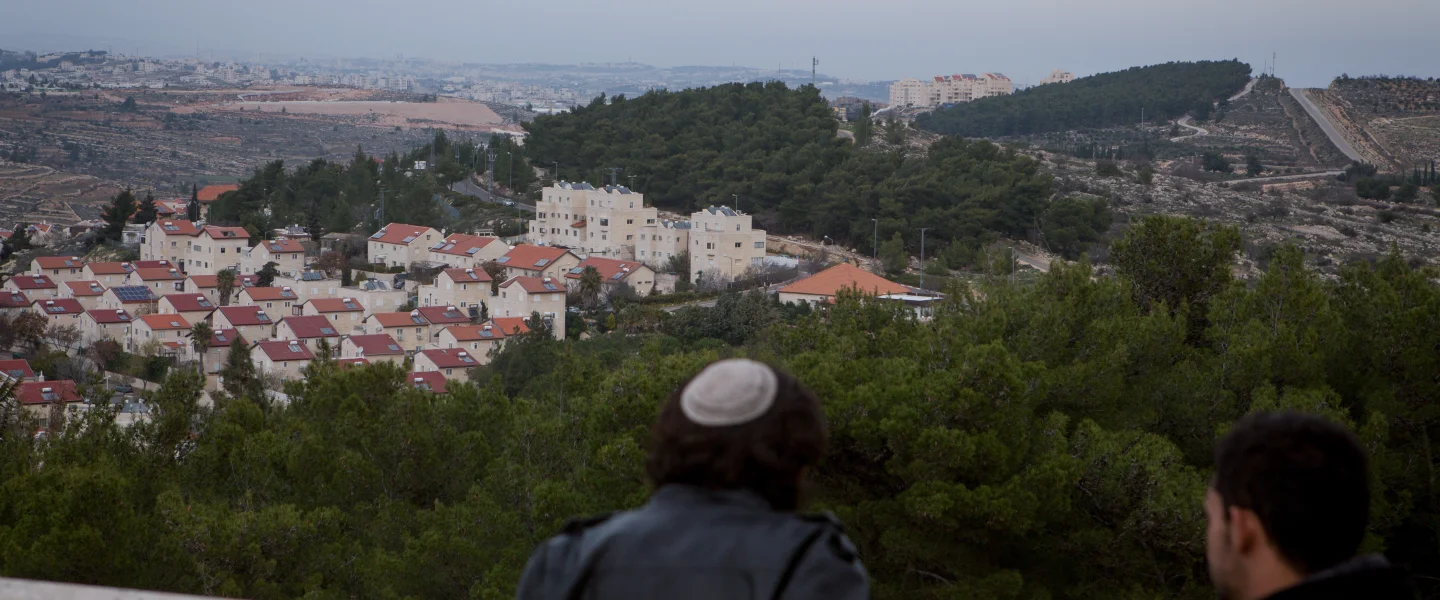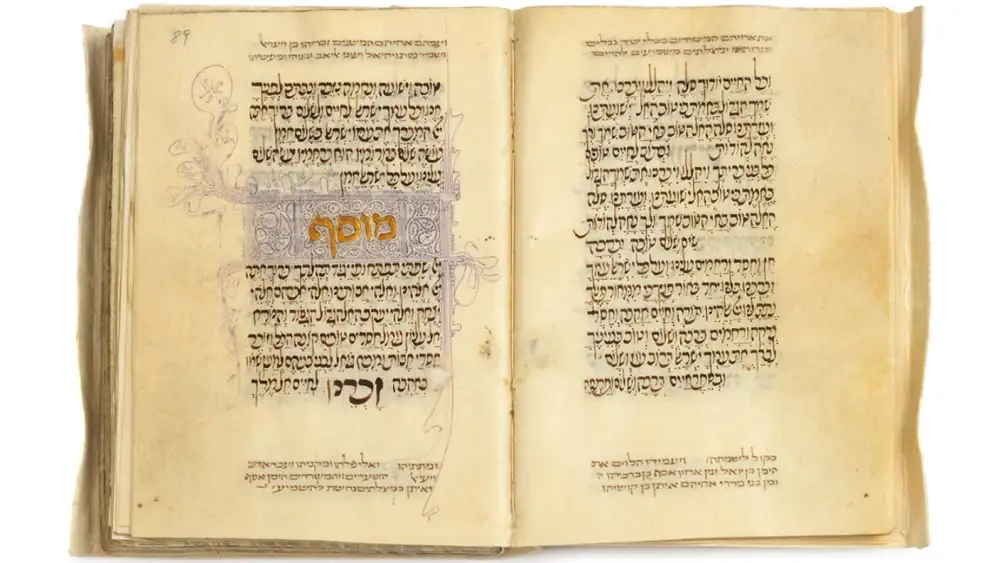
A rare 15th-century Portuguese manuscript, once divided into three parts, has come home to Jerusalem, so to speak, the National Library of Israel in Jerusalem says.
The Lisbon Mahzor—a decorated small-format manuscript on parchment—was most likely written and illustrated in Lisbon, Portugal, in the second half of the 15th century.
It includes prayers and piyyutim (“liturgical poems”) for the High Holidays, the Three Festivals and more, according to the Sephardic rite. It features artistic decorations throughout—typical of Portuguese manuscript illumination—with lace or filigree-like frames, and enriched with geometric and floral motifs.
The mahzor was produced by the Lisbon school, which created masterpieces in the final days of Portuguese Jewry. During this period, the Jews of Spain had already been expelled from that country in 1492; some migrated to Portugal, where, for a short time, they were able to practice Judaism. In 1496, all Jews in Portugal were forced either to convert or be expelled.
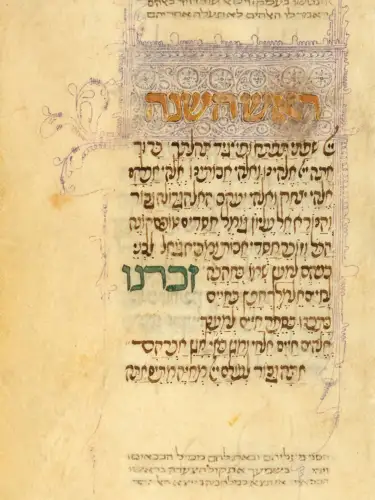
Chaim Neria, curator of the library’s Haim and Hanna Solomon Judaica Collection, explained that “among the monumental works created during that period was the world-famous Lisbon Bible [now at the British Library] and other manuscripts, including the Mahzor Lisbon. It appears that even in their most difficult moments, the Portuguese Jewish community did not give up its books; they took these cultural treasures along to their next destination.”
At some unknown point in time, the mahzor was split into three parts. The first, containing Sabbath prayers, arrived in Jerusalem in 1957. This volume, along with the famed Aleppo Codex, was given as a gift from the Aleppo Jewish community to Israeli President Yitzhak Ben-Zvi.
The whereabouts of the other two volumes remained a mystery until recently, when they came up for auction. Due to their historical value, they were withdrawn from auction at the request of the library and purchased on its behalf with the assistance of the Zukier family, in addition to support from the Haim and Hanna Solomon Bequest.
“Through electronic means, the library will be able to reunite the digital versions of the three volumes for study and research,” Neria said. “The acquisition of this manuscript is an act of cultural preservation and historical rectification.”
He added that “this treasure has ‘come home’ just at the time of Rosh Hashanah is especially meaningful, as the Jewish New Year is one of the most important liturgical moments in the Jewish calendar, a time of prayer, reflection and renewal.”