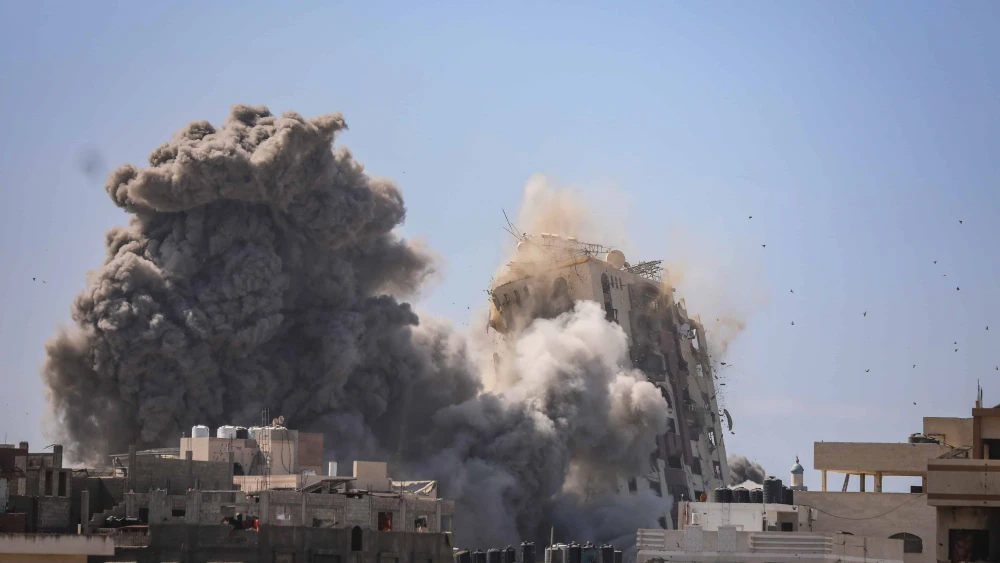
The Conference of Presidents of Major American Jewish Organizations welcomed U.S. President Donald Trump’s plan to end Israel’s war against Hamas in Gaza following the terrorist attacks on Oct. 7, 2023, stating it “offers a credible path forward and the prospect of a new reality in Gaza and the broader Middle East.”
In a statement from Betsy Berns Korn and William Daroff, chair and CEO, respectively, the group also called on Hamas to accept the deal, saying “the burden now rests squarely” on the terror group.
“If Hamas rejects the plan, Israel will act decisively with the full backing of the United States,” read the statement. “The framework, which includes placing Gaza under a transitional international authority and securing the hostages’ release, has the support of the United States, Israel and key regional partners.”
“Israel’s soldiers made this moment of hope possible,” the statement continued. “Now the international community must hold Hamas to account, sustain pressure and enforce compliance. Peace will come only when Hamas disarms, frees the hostages and releases Gaza from its grip, opening the way to the day after.”