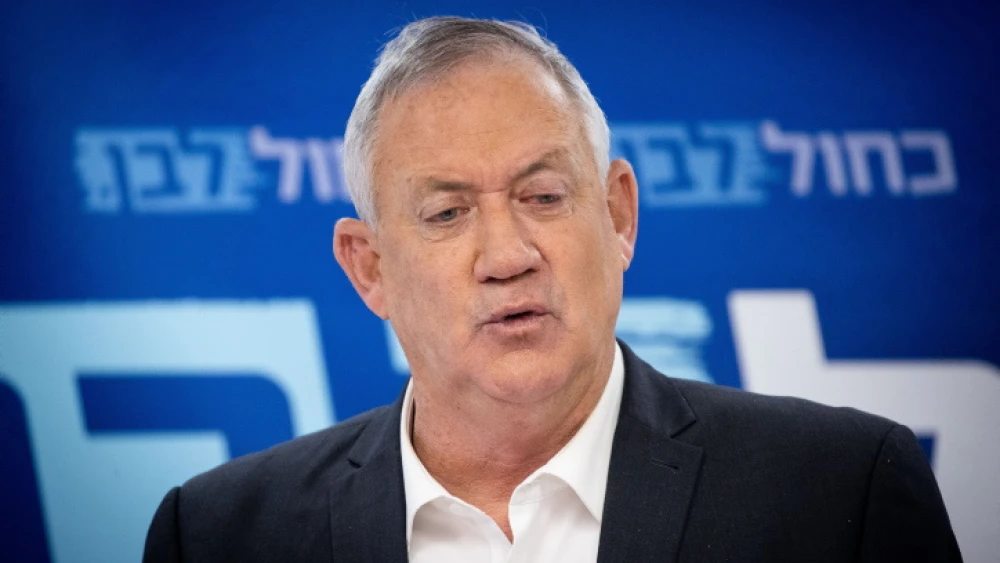
Iran’s precarious domestic situation offers an opportunity for the international community to pressure the regime in negotiations over its nuclear program, Israeli Defense Minister Benny Gantz said on Monday.
Speaking at a meeting of the Knesset’s Foreign Affairs and Defense Committee, Gantz said, “Iran is not a leading power—its citizens are suffering as a result of the poor economic situation, investments and development have been slashed by 50 percent in the last decade, and the country faces a variety of internal and external challenges.”
The Iranian regime is well-aware of its precarious situation, said Gantz, “and as such, Iran is coming into negotiations without real bargaining chips.”
It is both possible and necessary to put an end to Iran’s “foot-dragging strategy,” said Gantz, referring to the seventh round of negotiations in Vienna between Iran and the other signatories to the 2015 Joint Comprehensive Plan of Action (JCPOA). Progress in the talks has reportedly stalled after Iran has made demands for more concessions.
“We are deepening international cooperation, and I am certain that soon, both overt and covert actions will be expanded, by a variety of means,” said Gantz.
“At the same time, for the past year-and-a-half, we have been engaged in force buildup, procuring new means that will ensure Israel’s security superiority in the region in the face of all threats,” he added.
Gantz recently returned from a trip to the United States, where he held a series of meetings in Washington, D.C., with U.S. officials, including Secretary of State Anthony Blinken and Secretary of Defense Lloyd Austin.