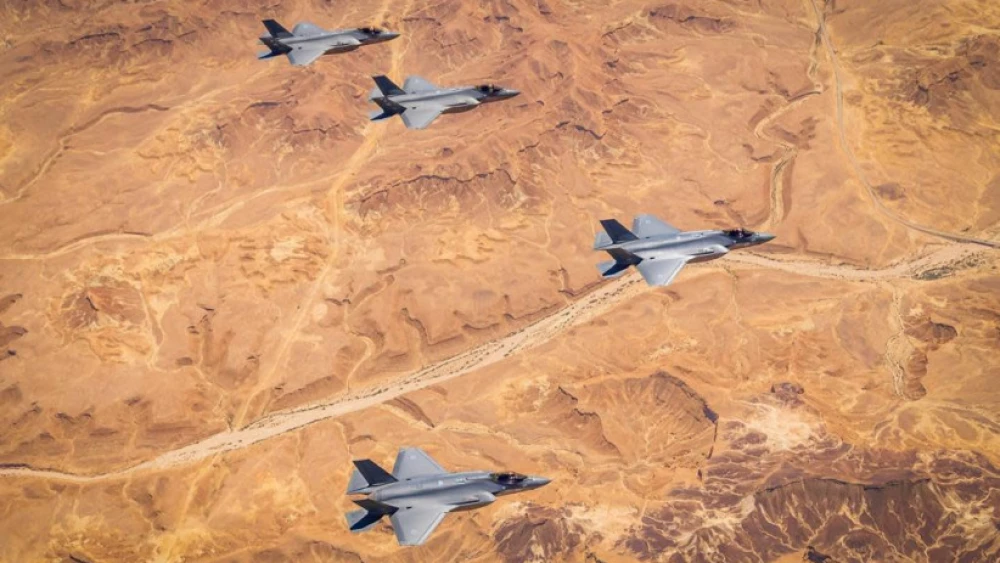
The United States and Israel conducted a joint F-35 exercise on Sunday in the Jewish state.
The Enduring Lightening training exercise consisted of “a wide variety of operational theaters while strengthening the cooperation between the forces,” said the Israeli Air Force in a statement.
The drill consisted of F-35s from the USAF’s 34th fighter squadron training alongside Israeli Adir F-35s aircraft from the IAF’s 140 Golden Eagle Squadron, in addition to the IAF’s 122 squadron, which manages the Nahshon Gulfstream G-500 aircraft.
The leader of the exercise, Maj. M, was quoted on IAF’s website as stating that “this will be the second time we’ll fly alongside an American F-35. We aspire to stay as connected as possible to countries involved in its development project, and training with the Americans presents an excellent opportunity to do so since they have a lot of knowledge and expertise on the matter. The exercise we conducted was intimate. The forces flew in two formations of four and communicated directly, as opposed to through an indirect channel.”
There was no person-to-person contact due to the coronavirus pandemic.
Instead, according to the statement, “the IAF and the USAF teams engaged only in the air, and briefed and debriefed all parties via remote video conference.”