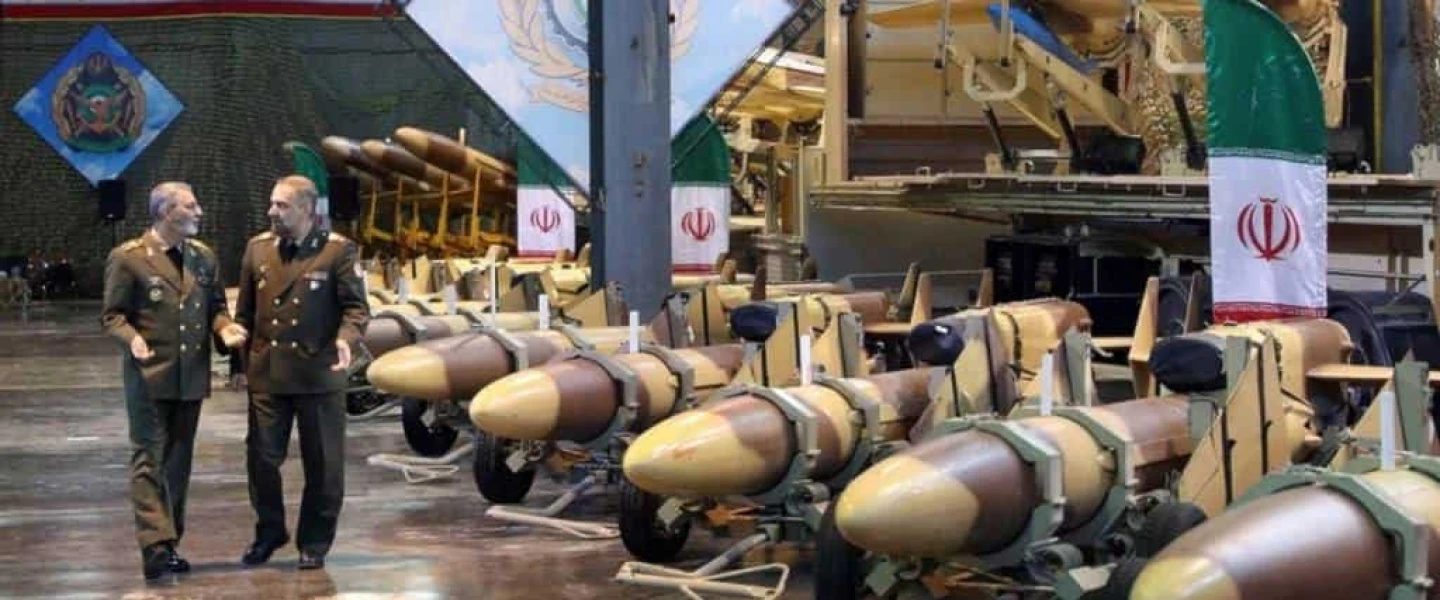
With another round of dialogue between the United States and Iran on the horizon, a spokeswoman for the U.S. State Department Tammy Bruce said that talks about reviving a nuclear pact between the two sides “continue to be positive and constructive.”
She told reporters on April 24 that “we’ve made good progress, and we have a long way to go,” reiterating that Iran obtaining a nuclear weapon is “the one bright line that has been feeding all of the activity.”
Talks are slated to resume in Oman on April 26 with the first meeting of technical teams. Bruce would not confirm if the Trump administration would be amenable to an interim agreement, as Tehran has reportedly suggested, or if Washington is opposed to a civilian nuclear program for Tehran.
Bruce confirmed reports that Michael Anton, the State Department’s director of policy planning, will lead the U.S. delegation. She announced that Steve Witkoff, the U.S. special envoy for the Middle East, will be present, although the State Department later said Witkoff’s travel for that part of the week had yet to be confirmed.
Asked about reported comments from Itamar Ben-Gvir, Israel’s national security minister, during a visit to U.S. President Donald Trump’s Mar-a-Lago resort in Florida—that Washington approves bombing food and aid depots in the Gaza Strip—Bruce said the Trump administration had discussed no such action.
“It was something that he said on his own. That has not been confirmed or discussed or anything that is relevant for me to be able to comment on that,” Bruce said. “It is, of course, in complete contradiction to the nature of our commitment to getting food aid and assistance” to that area.
Israel has blocked the entry of aid to pressure Hamas to release the remaining hostages. The terror group rejected a ceasefire and hostage release deal, which the Trump administration had brokered, in January.
“What I will do is reiterate certainly our commitment to Israel, our commitment to creating a better framework in Gaza, stopping the slaughter, getting aid and food in,” Bruce said. “We continue, despite the resistance to the continuation of that ceasefire, to work on that so that that kind of carnage that has been generational can come to an end.”
“The United States supports the flow of humanitarian aid with safeguards to ensure assistance is not diverted, looted or misused by terrorist groups such as Hamas and the Palestinian Islamic Jihad,” Bruce added. “It’s difficult when we have such a horrible framework on the ground that all of us want to—well, all of us, of course, except apparently Hamas—want to have changed.”
She added that “there is something very clear in our efforts. That just our efforts alone indicate a willingness to hinge all of that—the Trump administration’s legacy, the results in what is a four-year term—that this is the thing that Trump decided mattered the most.”