Who will go and retrieve the 480 kilograms of Iranian uranium enriched to 60 percent that, if weaponized, could become 11 atomic bombs?
As Israel and the United States intensify their pressure on Iran in “Operation Epic Fury/Roaring Lion,” the question has become urgent.
The military campaign against Tehran’s nuclear ambitions is moving faster than many expected, striking at military infrastructure and weakening the power centers of the regime. Yet even if the leadership in Tehran falters, victory will remain incomplete as long as the nuclear program remains in the hands of the Islamic Revolutionary Guard Corps (IRGC).
According to assessments circulating among analysts and officials, the enriched uranium is believed to be largely hidden underground near Isfahan. Entrances may be covered with debris and earth, and the material may be sealed in containers or storage tanks.
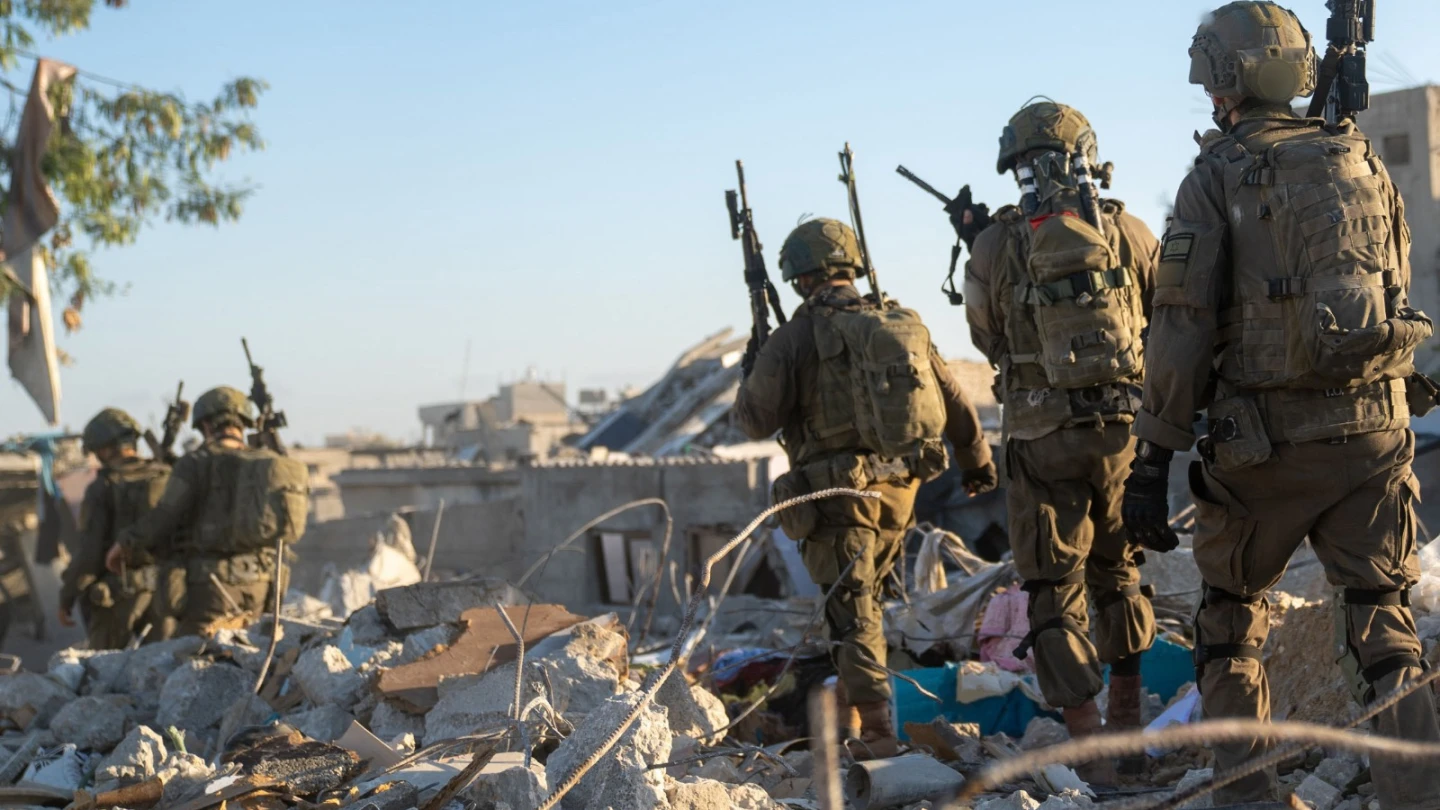
Retrieving it would require a massive effort on the ground: digging with heavy machinery, loading the material onto trucks and then deciding how to neutralize or remove it. Several possibilities are being discussed.
One option could involve destroying the material in large tanks transported on a convoy of trucks. Another would see experts from the International Atomic Energy Agency dilute the uranium on site so that it can no longer be used for weapons. A third possibility would be removing the material entirely.
The central question remains: Who would carry out such an operation—and who has the greatest interest in ensuring that Iran’s atomic ambitions are finally brought to an end?
The answer may well be both Israel and the United States, acting together.
The two allies have already demonstrated close coordination. Israeli intelligence has helped expose and target key elements of Iran’s leadership structure. At the same time, American capabilities have struck major military installations, missile systems and warning networks tied to the Revolutionary Guards.
For Israel, the struggle against hostile nuclear programs is not new. In 1981, the Israeli Air Force destroyed Saddam Hussein’s Osirak nuclear reactor in Iraq during Operation Opera. In 2007, Israel carried out a similar mission against the Al-Kibar reactor in Syria.
More recently, Israeli Prime Minister Benjamin Netanyahu has made the Iranian nuclear threat a central issue of international diplomacy and security, from his address to the U.S. Congress in 2015 to the dramatic Mossad operation that removed a vast archive of nuclear documents from Iran.
Today, coordination between Washington and Jerusalem appears closer than ever. Officials on both sides are exploring options for dealing with the enriched uranium and preventing it from becoming a weapon in the hands of the regime or its military elite.
Any such operation would need to avoid the kind of large-scale ground conflict that characterized battles such as Fallujah in Iraq. Instead, analysts suggest that more limited options could be considered—from covert intelligence operations to cooperation with internal dissident networks or other local actors.
The objective would be narrow but decisive: securing or neutralizing the material before it could ever be turned into a weapon.
In recent years, unexpected developments have repeatedly reshaped the strategic landscape of the Middle East. Removing the threat posed by Iran’s enriched uranium stockpile could prove to be another such turning point.
For many Iranians who oppose the regime, it could also open the possibility of a different future—one in which the country returns to the streets not in fear, but in the hope of reclaiming its freedom.