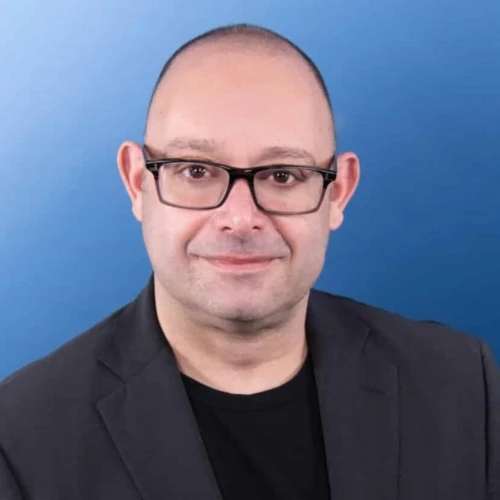
Israeli President Isaac Herzog met with Sheikh Muwaffaq Tarif, the spiritual leader of Israel’s Druze community, at the president’s residence in Jerusalem on Tuesday evening.
During their meeting, Herzog and Tarif discussed recent violence against Druze in Syria’s Sweida region. Herzog expressed deep concern for the Druze, describing the community as an inseparable part of Israel and Israeli society.
Herzog called for solidarity with the Druze community, emphasizing the need to protect its members and urging all parties to act to prevent further escalation and violence.
I met this evening, with Sheikh Muwaffaq Tarif, the spiritual leader of the Druze community in Israel, together with his team. We discussed the horrific massacre and the vile attacks against the Druze in the As-Suwayda region of Syria.
— יצחק הרצוג Isaac Herzog (@Isaac_Herzog) July 22, 2025
The Druze community is an inseparable part… pic.twitter.com/mayShp4EI0
The Druze are an Arabic-speaking ethnoreligious community, distinct from Islam, numbering about 150,000 in Israel—mostly in the Galilee, Carmel and Golan Heights—where they are recognized as a unique religious group and play a prominent role in military and public service. Significant Druze populations also live in Syria and Lebanon, with families often split across borders.
During the recent surge in violence in southern Syria, about 1,000 Israeli Druze civilians reportedly breached the border after reports of mass killings of their relatives by forces allied with the regime in Damascus.
On July 13, clashes erupted in Sweida province between Druze residents, Sunni Bedouin tribes and Syrian government forces. Reports of mass killings, public executions and abuses against Druze civilians prompted Israeli airstrikes. Over 1,000 people were reportedly killed and more than 100,000 displaced, with the region remaining tense despite a tentative ceasefire.
In a Tuesday interview with Reuters, U.S. envoy to Syria Thomas Barrack urged Syrian President Ahmed al-Sharaa to urgently reform his government following the sectarian bloodshed. Barrack called on Sharaa to reduce Islamist influence, restore elements of Syria’s former army structure and include minorities in governance—or risk fragmentation and the loss of international support.
Al-Sharaa—also known as Abu Mohammed al-Jolani—is a former leader of Al-Qaeda’s Syrian affiliate.
While acknowledging Sharaa’s promise to protect minorities, Barrack warned that recent violence in Sweida, where hundreds were killed, has severely tested that pledge. He rejected claims that Syrian regime troops committed atrocities there, suggesting Islamic State extremists may have been wearing official uniforms.
“The Syrian troops haven’t gone into the city. These atrocities that are happening are not happening by the Syrian regime troops. They’re not even in the city because they agreed with Israel that they would not go in,” he told Reuters.
Barrack said that the United States helped broker the ceasefire between Druze and Bedouin factions and stressed that Syria has no clear alternative leadership if Sharaa fails.
He also urged Israel to pursue dialogue, saying the United States could serve as an honest intermediary, and noted that Sharaa has signaled openness to normalized ties. The United States, he added, does not dictate Syria’s political model but insists on stability, unity and inclusion.