


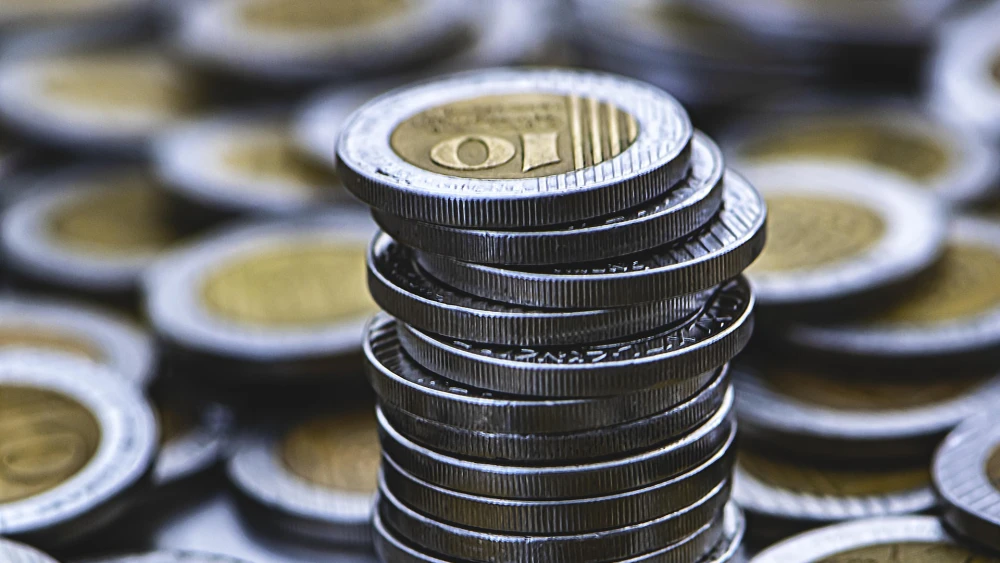

When the Bank of Israel disclosed last week that it had purchased approximately $800 million in May to control the dollar’s slide, the announcement pointed to something more fundamental about the economy Israel has spent two decades building.
The dollar had fallen to 2.799 NIS, a level that alarmed exporters and high-tech companies whose revenues arrive in dollars but whose costs are denominated in shekels. The Bank of Israel, acting under its market-function mandate rather than its monetary policy one, stepped in and bought. By last weekend, the dollar had recovered to around 2.94 NIS, aided partly by Wall Street declines that prompted Israeli institutional investors to unwind currency hedges.
Ronen Menachem, chief economist at Mizrahi Tefahot Bank, noted that the purchase was almost entirely offset by government activity, meaning that without the intervention, the shekel would have strengthened even further. He described it as a targeted, non-recurring action, contrasting it with the Bank’s COVID-era interventions worth roughly $30 billion and its moves at the outbreak of war in October 2023.
“This is a moderate amount that must be taken with limited liability,” he said, according to Globes, adding that the July 6 interest rate decision, which will include new economic forecasts, remains the next meaningful inflection point.
The engine that built its own obstacle
The cause of the shekel’s appreciation is not a mystery, particularly within concerned tech corners. A recent report by the Israel Innovation Authority found that the high-tech sector accounted for roughly half of Israel’s goods and services exports in 2025, a figure that reflects both the sector’s scale and its resilience through a period of sustained conflict. Foreign capital has continued flowing in; dollar revenues have kept arriving. The shekel strengthened because Israel’s economy performed historically well, despite pressure from almost three years of war.
But the IIA report contained a less comfortable observation alongside the headline number. Israeli tech is succeeding globally while gradually “de-Israelizing” operationally, raising capital in San Francisco, hiring engineers in Eastern Europe, or managing sales from New York City. The revenues that strengthen the shekel are increasingly generated by companies that are Israeli in birth, but become more global as they grow.
Who pays the price for a strong shekel?
A high-tech company with dollar revenues and global operations can absorb a stronger shekel in its Israeli cost base, particularly with local salaries or office space. But for the portion of the ecosystem that remains anchored in Israel (early-stage startups, mid-size companies with large Israeli workforces, or defense tech firms tied to domestic supply chains), a dollar worth 2.80 shekels is a different operating reality than the 3.60 shekel that prevailed during wartime. One estimate suggests that currency strength adds 21 billion shekels in annual labor costs to the industry.
The Bank of Israel can smooth disorderly market moves but cannot resolve the structural tension between an economy whose flagship sector, Startup Nation, earns in dollars but pays in shekels, especially, as previously reported, that sector’s center of gravity is increasingly drifting offshore.
What comes next?
Bank of Israel Governor Amir Yaron has been careful to frame the intervention as narrow and situational, not a precedent for change. He spoke at the Eli Horowitz Conference, saying: “As inflation expectations decline and approach the lower bound, this justifies a more expansionary monetary policy and at faster rates.”
If inflation continues declining toward the lower 1% bound, the calculus changes, and a more sustained response becomes harder to avoid.
For now, the Bank has done what it set out to do. The market is functioning, and the dollar has recovered ground. What remains unresolved is whether Israel’s economy, one that owes half its export base to a sector that is becoming “less Israeli,” can rely on that sector to anchor the shekel into the future.



