Dr. James M. Dorsey, a non-resident senior associate at the BESA Center, is a senior fellow at the S. Rajaratnam School of International Studies at Singapore’s Nanyang Technological University and co-director of the University of Würzburg’s Institute for Fan Culture.
 Jerusalem compiled thousands of names of terrorists tied to the massacre and has been bringing them to justice worldwide ever since, ‘The Wall Street Journal’ reports.
 The first such legal move on behalf of a Palestinian against the terror group at the International Criminal Court has gone unanswered since December.
 Yitzhak Ben-Hebron escaped Arab riots as a child and later returned to rebuild the Jewish community in the holy city.
 Sgt. Noam Hamburger, 23, was a technology and maintenance specialist in the IDF’s 401st Brigade.
 Tehran would rather send its funds to terrorist groups across the world than caring for its own people, the U.S. Secretary of State said.
 The U.N. rapporteur for the Palestinian territories had been sanctioned by U.S. Secretary of State Marco Rubio.
 “I have informed my representatives not to rush into a deal in that time is on our side,” the U.S. president said.
 The prominent Jewish Democrat says she will use her “seniority and clout” in a district that has long elected Black representatives.
 “We demand an explanation from the Spanish government regarding its treatment of the flotilla anarchists,” the Foreign Ministry wrote.
 Netanyahu says operational freedom includes in Lebanon, as the American president vows no Tehran deal without dismantling its nuclear program and removing enriched uranium.
The first such legal move on behalf of a Palestinian against the terror group at the International Criminal Court has gone unanswered since December.
Netanyahu says operational freedom includes in Lebanon, as the American president vows no Tehran deal without dismantling its nuclear program and removing enriched uranium.
The first such legal move on behalf of a Palestinian against the terror group at the International Criminal Court has gone unanswered since December. Construction of the West-East Pipeline is about half complete and being pushed toward 2027, according to the head of state oil giant ADNOC.
 The high-security prison has since removed the offensive images, according to a report from the U.S. Department of Justice’s office of the inspector general.
 The Iraqi militia commander was extradited to the U.S. from Turkey over connection to terrorist attacks on Jewish targets.
 “The Trumbull Republican Town Committee owes every Trumbull citizen an apology,” the town’s chief elected official stated.
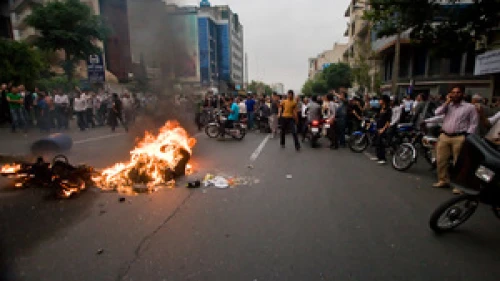
 Using this phrase against Israel is no less absurd than labeling sport-hooliganism and violence at mass demonstrations in the West as officially sponsored, government-sanctioned violence.
 Groups like J Street and Jews who support New York Mayor Zohran Mamdani aren’t just criticizing Jerusalem. They are assisting a globalized intifada against their own people.
 Police arrest a suspect with a history of mental illness.
Yitzhak Ben-Hebron escaped Arab riots as a child and later returned to rebuild the Jewish community in the holy city.
Police arrest a suspect with a history of mental illness.
Yitzhak Ben-Hebron escaped Arab riots as a child and later returned to rebuild the Jewish community in the holy city. The airline may have concluded that the operational friction in Canada—potential complaints, work-to-rule slowdowns or worse—outweighs any revenue.
 Oscar-winning filmmaker László Nemes said his Holocaust films would likely be ignored in today’s “shameless orgy of antisemitism.”
 The groups most opposed to the current government no longer see the external enemy as the principal danger; they see it inside the country itself.
 Mayor Moshe Lion says this year’s honorees represent “the human, moral and professional mosaic of Jerusalem.”
 Israeli singer says the national unity he felt during the contest in Vienna made his “soul come back home.”
 A new policy paper published by the Center for Medical Integrity shows that Israel-related incidents are disproportionately reflected in WHO’s conflict health database.
 A Shavuot benefit at Jerusalem’s Tower of David raised funds for HaGal Sheli’s surfing-based rehabilitation programs.
 New initiative matches English-speaking lone soldiers and IDF recruits with mentors and small support groups.
 From Basque-style creations to classic Israeli dairy cakes, a seven-stop tasting tour showcased the capital’s growing cheesecake culture ahead of the holiday.
-
Groups like J Street and Jews who support New York Mayor Zohran Mamdani aren’t just criticizing Jerusalem. They are assisting a globalized intifada against their own people.
 A U.S.-Iran deal may delay Tehran’s nuclear ambitions, but it leaves unresolved the regime’s missile arsenal, regional proxies and long-term intentions.
 Today, we are witnessing a coordinated effort to collapse distinctions of law and language when it comes to the State of Israel.
 For some reason, the West cannot get its collective head around the fact that the Iranian regime’s mindset is not one of mutual existence.
  “Think Twice” with Jonathan Tobin with guest Jonathan Turley, Ep. 223

-
Jerusalem compiled thousands of names of terrorists tied to the massacre and has been bringing them to justice worldwide ever since, ‘The Wall Street Journal’ reports.
The first such legal move on behalf of a Palestinian against the terror group at the International Criminal Court has gone unanswered since December.
Yitzhak Ben-Hebron escaped Arab riots as a child and later returned to rebuild the Jewish community in the holy city.
Sgt. Noam Hamburger, 23, was a technology and maintenance specialist in the IDF’s 401st Brigade.
-
Tehran would rather send its funds to terrorist groups across the world than caring for its own people, the U.S. Secretary of State said.
The U.N. rapporteur for the Palestinian territories had been sanctioned by U.S. Secretary of State Marco Rubio.
“I have informed my representatives not to rush into a deal in that time is on our side,” the U.S. president said.
The prominent Jewish Democrat says she will use her “seniority and clout” in a district that has long elected Black representatives.
-
“We demand an explanation from the Spanish government regarding its treatment of the flotilla anarchists,” the Foreign Ministry wrote.
Netanyahu says operational freedom includes in Lebanon, as the American president vows no Tehran deal without dismantling its nuclear program and removing enriched uranium.
The first such legal move on behalf of a Palestinian against the terror group at the International Criminal Court has gone unanswered since December.
Construction of the West-East Pipeline is about half complete and being pushed toward 2027, according to the head of state oil giant ADNOC.
-
The high-security prison has since removed the offensive images, according to a report from the U.S. Department of Justice’s office of the inspector general.
The Iraqi militia commander was extradited to the U.S. from Turkey over connection to terrorist attacks on Jewish targets.
“The Trumbull Republican Town Committee owes every Trumbull citizen an apology,” the town’s chief elected official stated.
Using this phrase against Israel is no less absurd than labeling sport-hooliganism and violence at mass demonstrations in the West as officially sponsored, government-sanctioned violence.
-
Groups like J Street and Jews who support New York Mayor Zohran Mamdani aren’t just criticizing Jerusalem. They are assisting a globalized intifada against their own people.
Police arrest a suspect with a history of mental illness.
Yitzhak Ben-Hebron escaped Arab riots as a child and later returned to rebuild the Jewish community in the holy city.
The airline may have concluded that the operational friction in Canada—potential complaints, work-to-rule slowdowns or worse—outweighs any revenue.
-
Oscar-winning filmmaker László Nemes said his Holocaust films would likely be ignored in today’s “shameless orgy of antisemitism.”
The groups most opposed to the current government no longer see the external enemy as the principal danger; they see it inside the country itself.
Mayor Moshe Lion says this year’s honorees represent “the human, moral and professional mosaic of Jerusalem.”
Israeli singer says the national unity he felt during the contest in Vienna made his “soul come back home.”
-
A new policy paper published by the Center for Medical Integrity shows that Israel-related incidents are disproportionately reflected in WHO’s conflict health database.
A Shavuot benefit at Jerusalem’s Tower of David raised funds for HaGal Sheli’s surfing-based rehabilitation programs.
New initiative matches English-speaking lone soldiers and IDF recruits with mentors and small support groups.
From Basque-style creations to classic Israeli dairy cakes, a seven-stop tasting tour showcased the capital’s growing cheesecake culture ahead of the holiday.
-
Groups like J Street and Jews who support New York Mayor Zohran Mamdani aren’t just criticizing Jerusalem. They are assisting a globalized intifada against their own people.
A U.S.-Iran deal may delay Tehran’s nuclear ambitions, but it leaves unresolved the regime’s missile arsenal, regional proxies and long-term intentions.
Today, we are witnessing a coordinated effort to collapse distinctions of law and language when it comes to the State of Israel.
For some reason, the West cannot get its collective head around the fact that the Iranian regime’s mindset is not one of mutual existence.
-
“Think Twice” with Jonathan Tobin with guest Jonathan Turley, Ep. 223