Newsletter
Newsletter Support JNS

Researchers at Tel Aviv University discover potential new treatment for epilepsy

The discovery is particularly encouraging for those suffering from Dravet syndrome, an epileptic condition with a 15 percent to 20 percent mortality rate that causes frequent and prolonged seizures.

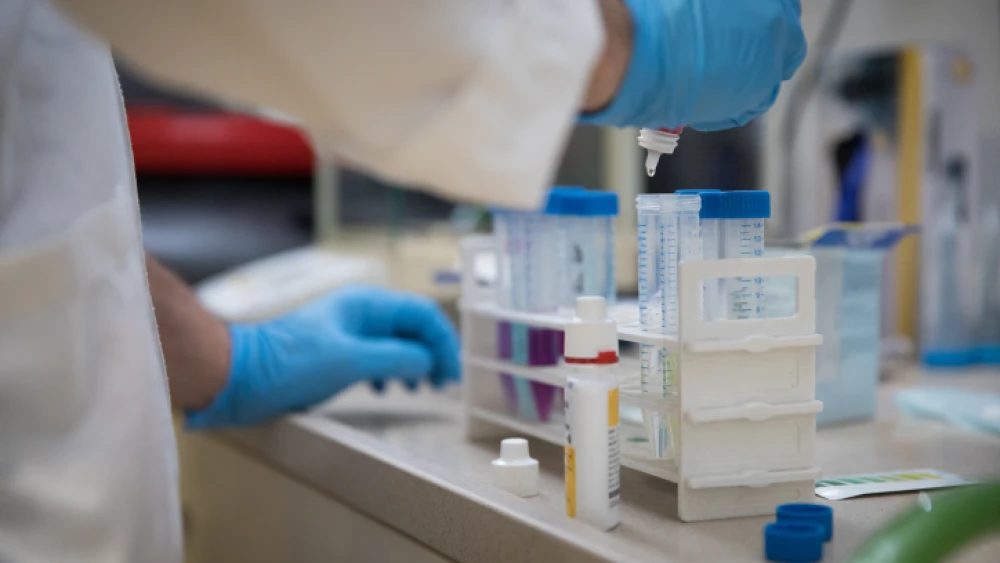
A researcher at the Technion-Israel Institute of Technology in Haifa on Feb. 19, 2019. Credit: Hadas Parush/Flash90.

Researchers at Tel Aviv University have discovered that a drug used to treat multiple sclerosis may help epilepsy patients.

Published in the scientific journal Neuron, the findings of Professor Inna Slutsky of the university’s faculty of medicine and school of neuroscience center around the mechanism that regulates neural activity.

The team found that the DHODH gene is key to triggering neural activity, and that the drug Terflunomide—used to treat multiple sclerosis—inhibited such activity. The reduction in neural activity became permanent when brain cells were exposed to the drug for long periods of time.

Now, researchers say they believe that their findings will help develop drugs focusing on neural stability.

“We discovered a new mechanism responsible for regulating brain activity in the hippocampus, which may serve as a basis for the future development of effective drugs for epilepsy,” said Slutsky.

The discovery is particularly encouraging for those suffering from Dravet syndrome, an epileptic condition with a 15 percent to 20 percent mortality rate that causes frequent and prolonged seizures, and has thus far been resistant to pharmaceutical treatment.

“It’s yet another example of the Wikipedia editors’ anti-Israel bias,” Alyza Lewin of the Combat Antisemitism Movement told JNS.
“We feel that we made one huge achievement and that is to move the conversation from whether these crimes happened to what are their consequences,” Israeli legal scholar Cochav Elkayam-Levy told JNS.
“I hate injustice,” Catherine Hanaway told JNS. “That’s a big part of why I’m attracted to public service, and to law enforcement specifically.”
“The fact that Newsom chose to sign the Eid law before the law that protected other religious observance speaks volumes about the direction he is moving as he eyes a 2028 run for the presidency,” the chair of Jewish engagement for the California Republican Party told JNS.