


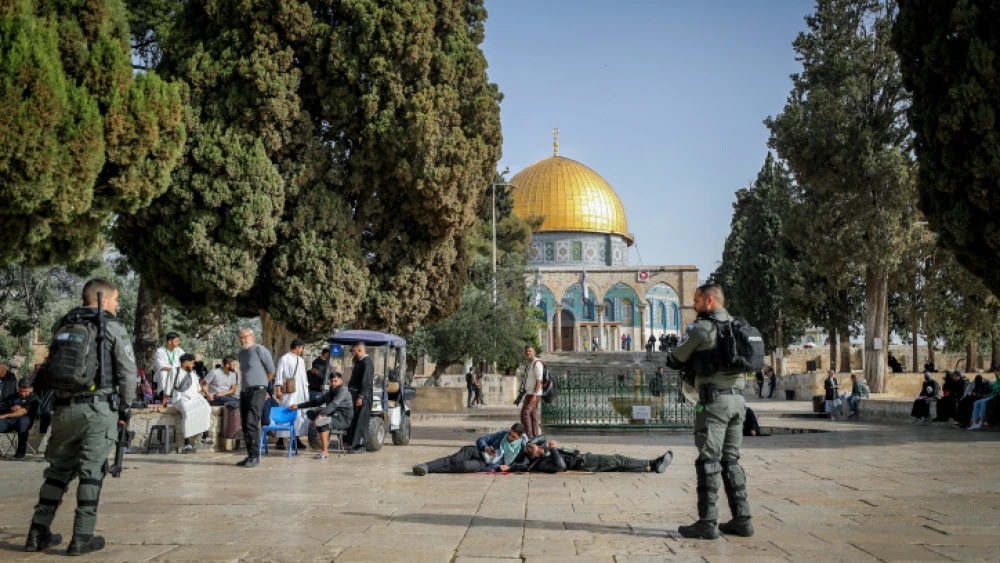
Jews on Monday morning were permitted to ascend the Temple Mount for the first time in 12 days.
The Israeli government had barred Jews from visiting their holiest site for the last 10 days of the monthlong Muslim holiday of Ramadan, which ended on Thursday.
On April 5, Israeli police arrested more than 350 Muslim rioters who barricaded themselves inside the Al-Aqsa mosque. Three days later, hundreds of Muslims again barricaded themselves inside the mosque, attempting to provoke a response from Israeli security services. However, police did not enter the building to clear out the extremists.
The Jordanian government has publicly blamed Israel for the escalation with Israel’s Foreign Ministry shooting back by calling on Amman, through the Waqf Islamic trust tasked with safeguarding Muslim sites on the Temple Mount, to take action against the rioters.
Nevertheless, thousands of Jewish worshippers packed the Western Wall Plaza on April 9 for the Passover priestly blessing. More than 2,200 Jews ascended the Temple Mount during Passover.
In 2022, 51,483 Jews visited the Temple Mount, up from 34,651 in 2021 and 20,684 in 2020, according to statistics compiled by Beyadenu, an NGO dedicated to strengthening the Jewish connection to the site.


