“When you first enlist in the IDF, they ask you to search for your ‘why,’ why you endure and fight. ‘Never Again’ is my why. I don’t want anything like that happening to my family or anyone in my country ever again,” Israeli Navy Seaman Apprentice D. told JNS on Wednesday as Israel prepared to mark Holocaust Remembrance Day.
Israel’s Holocaust Martyrs’ and Heroes’ Remembrance Day this year begins on the evening of Wednesday, April 23, and continues until nightfall on Thursday, April 24.
The state opening ceremony will take place at 8 p.m. on April 23 in Yad Vashem’s Warsaw Ghetto Square on the Mount of Remembrance in Jerusalem.
Israeli President Isaac Herzog and Prime Minister Benjamin Netanyahu will deliver remarks at the ceremony.
“The hardships that my grandmother endured as a little kid and how she managed to come here and build this great life for herself from nothing, that’s my why. We are stronger than we think, and we need to keep fighting for what we deserve,” added Seaman Apprentice D., whose rank is the equivalent of a corporal in the other branches of the IDF.
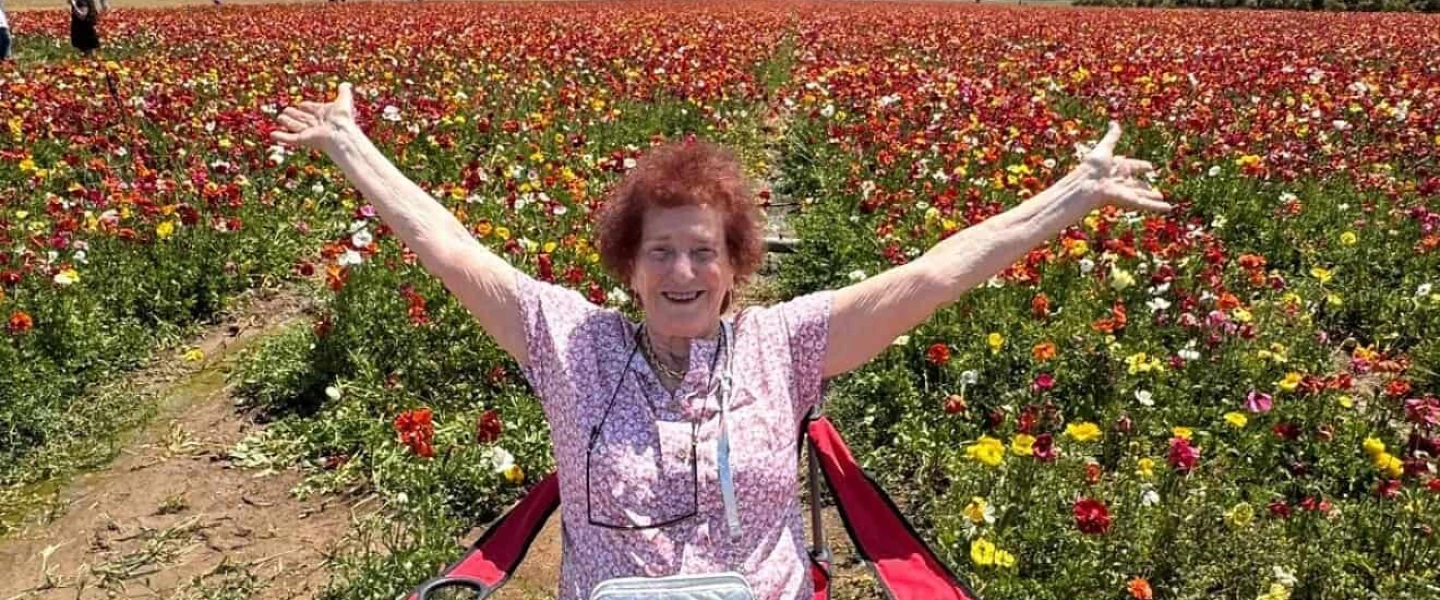
His grandmother, Sara Milgram, was born in Košice, Slovakia, on July 6, 1939. Her father, Avraham Vitzman, owned a stationery shop.
“When it started to be very dangerous for Jewish people, my parents decided to run away at night. They went to the border and arrived in Budapest [in 1944], passing for Christians. I was 5. I could not go downstairs and play with other kids because they were afraid I would tell my true name,” Milgram told JNS.

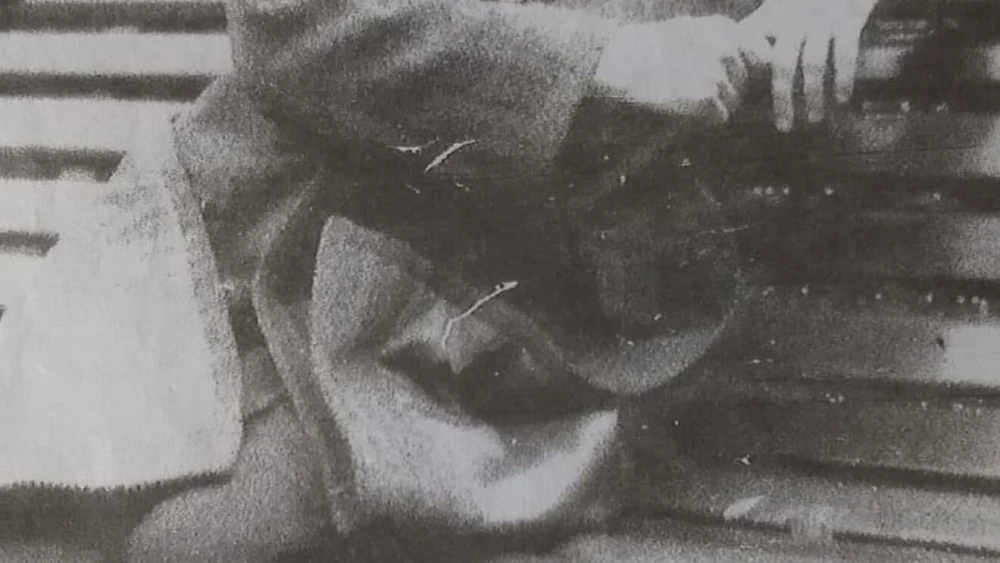
Milgram’s father tried to arrange for them to escape to Switzerland when he and her mother, Alice, were arrested by the Gestapo and sent to Auschwitz.
Milgram stayed in a children’s home in Budapest until it became too dangerous, and her aunt Madga arranged for her to stay with a Christian family and pass for their daughter.
“They took me in, and I would go to church with them. It was like that for a year. I stayed there until my aunt came one day, took me out to the garden and ran away with me back to Košice. In Košice, nobody knew who I really was except for my aunt. I would stay with a family, and she’d go to work,” she said.
After spending a year in Auschwitz, Milgram’s mother, who had run away from the January 1945 death march, a forced evacuation of camps to prevent survivors from being rescued by the Allies, came to Košice looking for her.
“She opened the door, and I immediately recognized her. She was very happy she found me. She looked for my father’s name on the survivors’ list but could not find him. He was wounded and died in Auschwitz,” Milgram said.
‘It’s my mission’
Milgram and her mother arrived in Israel in February 1949. The girl was put in a children’s home in Kiryat Bialik called Moshav Ahava, where she spent four years, while her mother was sent to Beit Halutzot, a hostel in nearby Haifa designed to integrate new immigrants into Israeli society.
“They were four women from four different countries in one room; they didn’t know Hebrew and spoke four different languages. I would go and sleep there close to her during my vacations in Haifa,” Milgram said.
Milgram’s mother was subsequently given a small house in Nahariya by the Jewish Agency.
“I came for a vacation in Nahariya, and I met my husband there when I was 16 years old. I married him a year and a half later. I married very young. I wanted to build a home because I didn’t have one. I had my daughter when I was 19,” she said.
Today, Milgram has three children, nine grandchildren and nine great-grandchildren.
“I didn’t serve in the army because I married very young, but all my children have, and I believe all my grandchildren will, because without the army, we cannot live here. Around us are many Arab countries looking to destroy us. We need our soldiers to protect us,” she said.
“When I hear ‘Hatikvah’”—Israel’s national anthem, meaning “The Hope” in English—I always think of my father, who never made it to Israel though he really wanted to. This is our home, and we have to protect it,” she continued.
Every year, Milgram tells her story to schoolchildren. Today, she will tell it to 200 soldiers. As she states clearly, “it’s my mission to tell my story so that they can understand why they need to protect our country.”