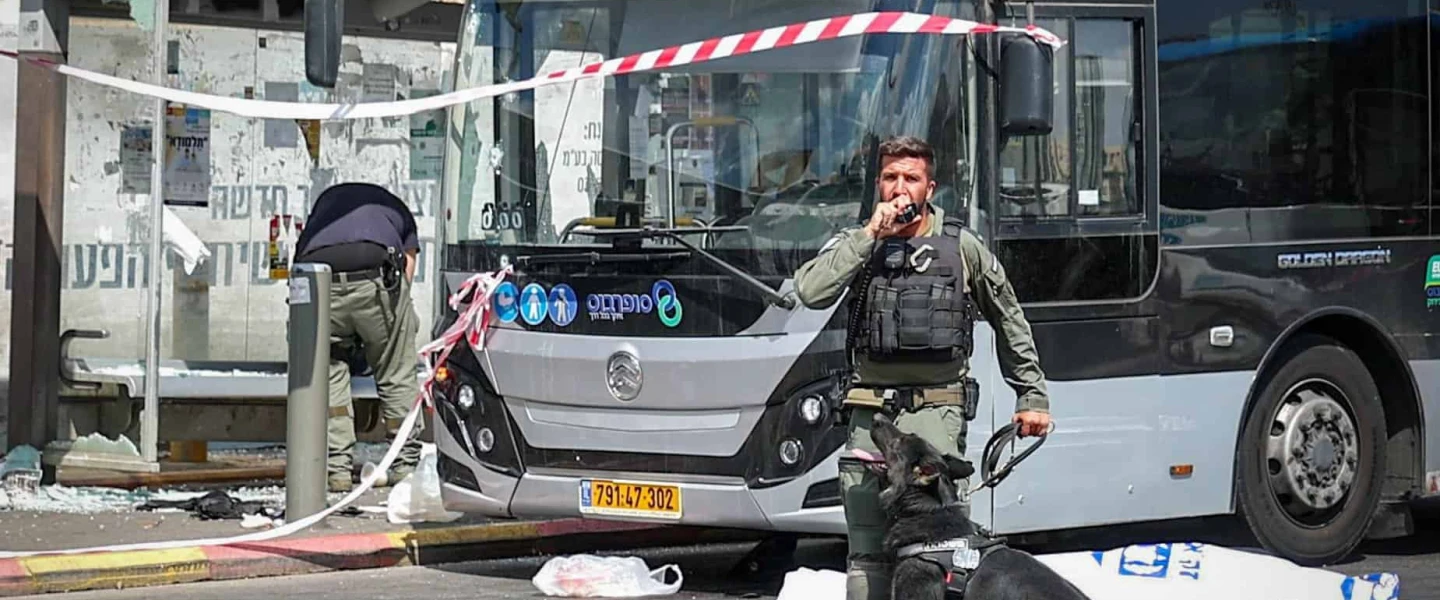
On Dec. 26, a Palestinian from the Jenin area who was illegally employed in Israel carried out a terrorist attack that claimed the lives of two Israelis in northern Israel.
Ahmad Abu al-Rub, from Qabatiya near Jenin, had reportedly entered the country via a known breach in the security fence near A-Ram, in the Jerusalem envelope.
The attack occurred days after a scathing new audit by Israel’s State Comptroller exposed a chaotic, porous and poorly managed security reality in Israel’s capital, warning that the failure to fix 20-year-old operational gaps has created conditions ripe for a coordinated, Oct. 7-style terror attack in Jerusalem.
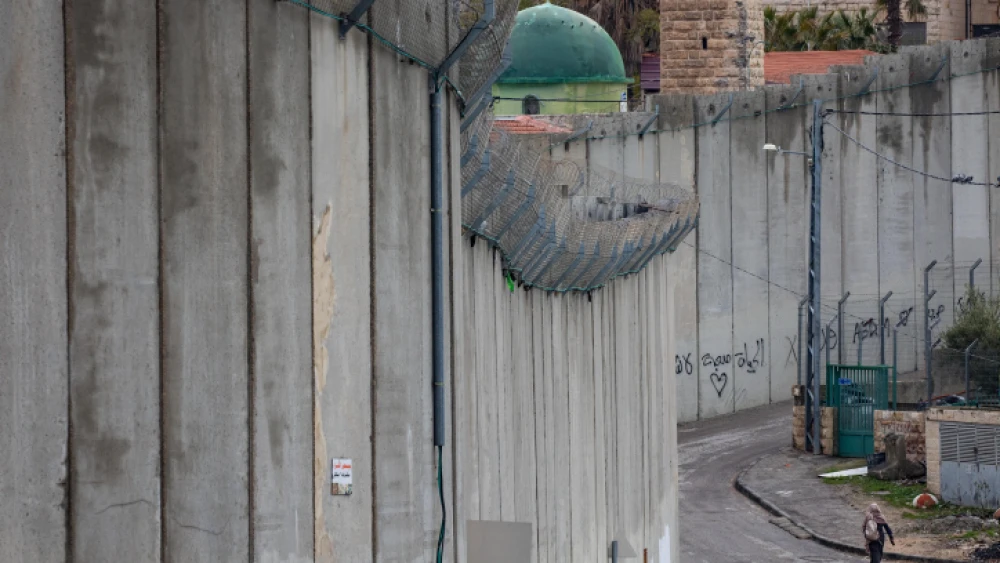
The report, released on Dec. 23 by State Comptroller Matanyahu Englman, portrayed a system paralyzed by bureaucratic infighting, where Palestinians cross freely into Israel without inspection, Israeli military observers sit in danger near hostile territory and government decisions regarding the security barrier remain unimplemented.
According to Amit Assa, who held a senior position in the Israel Security Agency (Shin Bet) and has more than 30 years of experience in counter-terrorism, while economic migrants look for convenient gaps in the Jerusalem envelope fence, terrorists look for the same unguarded breaches, creating a tangible security threat.
“The problem is with those who want to arrive and carry out attacks,” Assa told JNS. “When there are such people, they will find this breach in the envelope to enter. There are no police forces deployed, there are insufficient personnel, and a lack of [security] activity. Hence, there is a type of neglect of the area.”
However, Assa said the problem runs even deeper. “In east Jerusalem, there is a problem that does not exist in other places,” he told JNS. “There are residents who have a blue ID card; they are residents. These are essentially Palestinians who define themselves as Palestinians, who have the right of entry into Israel by virtue of having a blue ID card, due to where they live,” he said.
Assa described the current situation as a deeply flawed arrangement that creates a serious security loophole. “These people are not illegally in Israel. They can move freely from place to place.... They are not required to have stay permits or work permits. They are not required to have anything,” he said.
This status creates a secondary market for identity theft that bypasses the security barrier entirely, with residents of the Palestinian Authority “borrowing” these blue ID cards from eastern Jerusalem residents, he explained.
“Many times, you meet illegal aliens who identify with a blue ID card,” he said. “At checkpoints, in work areas... and it turns out it is a borrowed ID. They take someone who looks similar in the picture, and say, ‘This is me.’”
Assa proposed ending the ambiguity, calling the ID cards a vector for attacks. Residents of eastern Jerusalem who continue to define themselves as Palestinians, with affinity to the Palestinian Authority, should be stripped of Israeli ID, and Israel should determine the location of the security fence based on this parameter, he said.
“If you are Palestinians, then I make a border here. If you are Israelis, I will make the border behind you,” said Assa.
He warned that the current situation allows the Palestinian Authority to “bite into” Jerusalem’s municipal sovereignty, through its ability to control the population there. “In this way, diplomatically, politically, they act to ‘cash in’ on more and more ‘coupons’ and eventually claim, ' ‘This is ours,’” he said.

Comptroller’s warning
The State Comptroller’s audit, conducted between 2024 and 2025, focused on the effectiveness of the operational response in the Jerusalem envelope—the so-called “seam line” separating the capital from Judea and Samaria.
Englman’s conclusion was stark: The lessons of the Hamas massacre in the south have not been applied to the center of the country.
“There is a danger of terror incidents because threats can infiltrate through the openings into Israeli territory and Jerusalem. The barrier does not manage to provide the required defensive response, and the lack of agreement between the Defense Ministry and the National Security Ministry regarding the party bearing budgetary responsibility for upgrading the barrier perpetuates the problem and endangers Israeli residents,” the report states.
The report details a fundamental breakdown in command and control. For over 20 years, the Israel Police has managed various crossings without formulating a relevant operational concept that establishes the rules, principles and methods of operation, according to the report.
Furthermore, the audit found a dangerous lack of clarity regarding the subordination of the Border Police Jerusalem periphery unit. This force operates, de facto, under four different commands: the IDF Central Command, the Police Jerusalem District, the Police Judea and Samaria District and the Border Police command itself. This tangled hierarchy has not been examined for 22 years, creating “confusion and difficulty in operating forces in the sector,” the report added.
The comptroller also found that the Border Police forces are often diverted from their primary defensive mission. During 30% of the audit time, the Jerusalem periphery unit’s order of battle was allocated to tasks “not directly related” to routine security along the barrier, such as handling disturbances in Judea and Samaria or escorting detainees.
“This fact, alongside the 11.5% gap in the police roster compared to the standard, raises concern regarding the ability of the Border Police Jerusalem periphery unit to meet the tasks assigned to it... continued failure to meet routine security tasks endangers the residents of Jerusalem and allows threats to enter Israeli territory,” warned Englman.
A significant intelligence gap was also revealed by the report. Over a period of five months, IDF observation soldiers recorded hundreds of infiltration alerts in the sector, while Border Police systems recorded only dozens. This discrepancy raises serious concerns regarding the method of intelligence collection and the synchronization between the bodies.
Additionally, the report found that there is no barrier at all in certain areas. “Palestinians can enter Israeli territory without any control or inspection, risking Israeli residents,” the report stated.
The Israel Police said in response to the State Comptroller’s report that it raises significant issues, most of which directly affect the security of all Israeli citizens, and which will receive extensive organizational attention throughout the year.
“In this context, the Israel Police operates in full cooperation with all relevant bodies in the Jerusalem envelope sector—through outstanding officers, commanders, and Border Police fighters who are trained to carry out the missions entrusted to them, in accordance with their areas of responsibility,” it said. “As for the division of responsibilities, there is a clear distinction between the responsibility of the IDF and that of the Israel Police—the IDF is responsible for defending the country’s borders against the infiltration of enemy forces.”
The IDF issued a statement noting that under Israel law, the seam line area is the responsibility of the Israel Police.
“The seam line area in the Jerusalem envelope is under the responsibility of the Israel Police in all security aspects, in accordance with a 2006 government decision (Decision 4784),” according to the statement. “The defense establishment, which operates in the Judea and Samaria sector, maintains intelligence and collection deployment, and when operationally necessary, also deploys combat forces in the seam area.”
However, it emphasized that “all of the defense establishment’s activities and conclusions are continually shared with the Israel Police, including the regular participation of representatives from the Shai District, the Jerusalem District and the Border Police Jerusalem Envelope in the weekly situation assessments at Central Command, as well as in joint meetings and field tours held from time to time to establish an effective operating mechanism in the area.”
‘Jerusalem is the preferred target for attacks’
Reuven Berko, a former adviser on Arab affairs to the Jerusalem District Police, noted that Jerusalem is especially significant for Palestinian terrorists.
“Jerusalem is the preferred diplomatic, political and religious target for riots and terror attacks by Hamas, the Palestinian Authority and the rest of the Palestinian terror organizations,” he said.
“The Palestinians demand to establish their capital in the east of the city, despite the fact that they have no reference for their claim—not religious, not historical and not political,” he added.
The Palestinians have anchored their claim with the Al-Aqsa Mosque, using the “Al-Aqsa is in danger” narrative to rally Islamic support globally, he said. “The very unification and renewed establishment of Jerusalem as the capital of Israel is a thorn in their side, since the rebirth of Israel contradicts the relevance of their religious concept,” he continued.
For this reason, the city is “a main target for attacks, riots and political, criminal and diplomatic incitement, including encouraging Palestinian migration into it, to undermine the very symbolic existence of Israel and to strengthen the Palestinian claims.”
This effort, he said, includes the exploitation of the combined demographic structure (Palestinians with Israeli ID cards), the geographic mountainous terrain, which is difficult to secure, and the urban mixed structure of Jewish-Arab neighborhoods “to carry out riots and terror attacks in the capital, take over sites and power centers as a preferred goal, which brings together Muslims in the area and globally around the Palestinian question, such as Turkey and Qatar.”
Despite the reality of the Israeli ID cards pointed out by Assa, Berko said that the fragmented command structure identified by the comptroller’s report is a critical vulnerability that requires attention.
“In light of the unique threats to the city of Jerusalem, it would have been appropriate to establish a unified operational headquarters,” he told JNS. “This is apparently the main weak point and the central challenge for the future.”
Joshua Marks contributed to this report.