


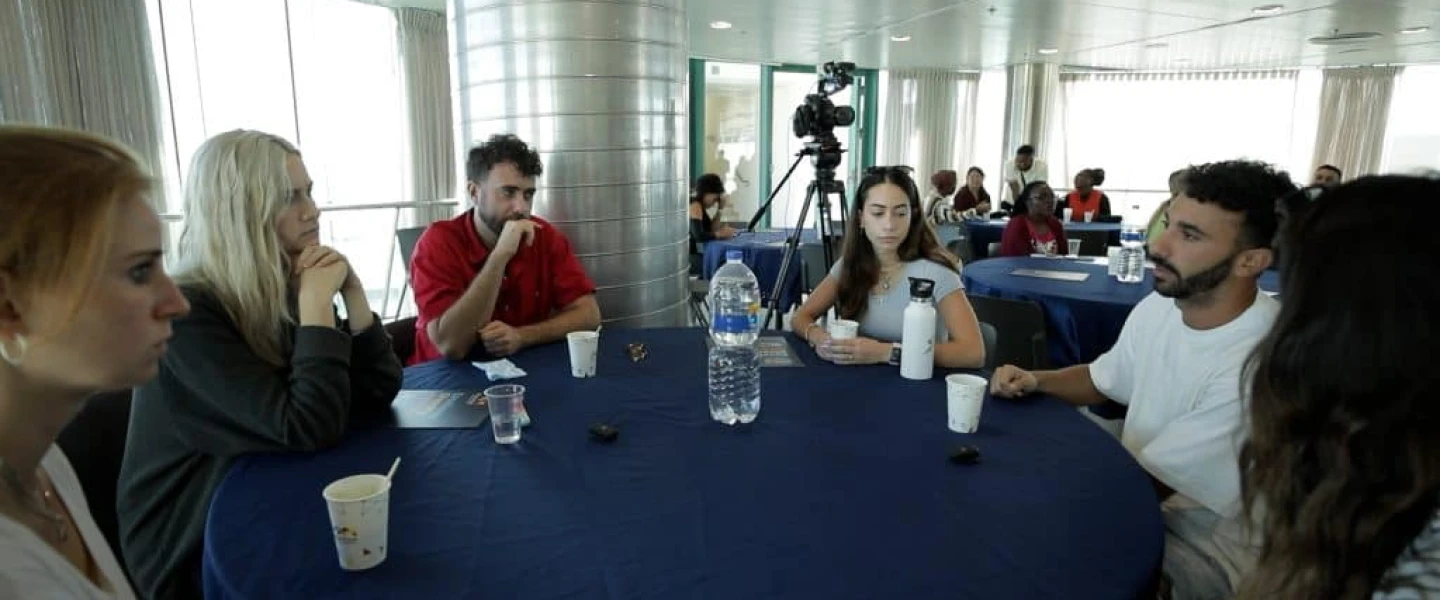
Survivors of the Hamas music festival massacre met on Monday with students from the International School of the University of Haifa, with the aim of relating their chilling experiences to the foreign students.
“You can’t imagine that people my age went through this hell. I tried to imagine myself in the same situation and I just couldn’t,” said Gina Rihanna from Honduras.
About 20 students from countries such as Cameroon, China, Germany, Ghana, Honduras, Myanmar, the United States and Venezuela listened to survivors of the attack.
The Supernova Sukkot Music Festival, an all-night rave, was attended by some 3,000 people near Kibbutz Re’im and the Gaza Strip. The event was well-advertised on social media, likely drawing Hamas’s attention. At least 260 people were killed at the music festival while others were taken to Gaza as hostages.
The University of Haifa event also included smaller roundtable discussions where students could ask questions of the survivors.
“They wanted to know how it was and what happened …, and a recurring question was how they can help me,” said Tamir, a 23-year-old survivor from Rehovot.
“So on a personal level, they can’t help me, but what they can do is get as close as possible to understanding the truth, and spread this truth, that people will get an idea of what is really happening here.”
Sang Lat-Ja, a student from Myanmar, said she thought she would understand Israel’s situation because her Southeast Asian homeland has also been through war. But the account of Hamas’s atrocities made it clear that the conflicts of Israel and Myanmar are more different than she imagined.
“What I learned at today’s meeting is the importance of telling the true story. People in the world will not understand what is really happening to the people here unless they share and tell it. Of course, I will also make my contribution by telling the story to those I know,” Lat-Ja said.


