


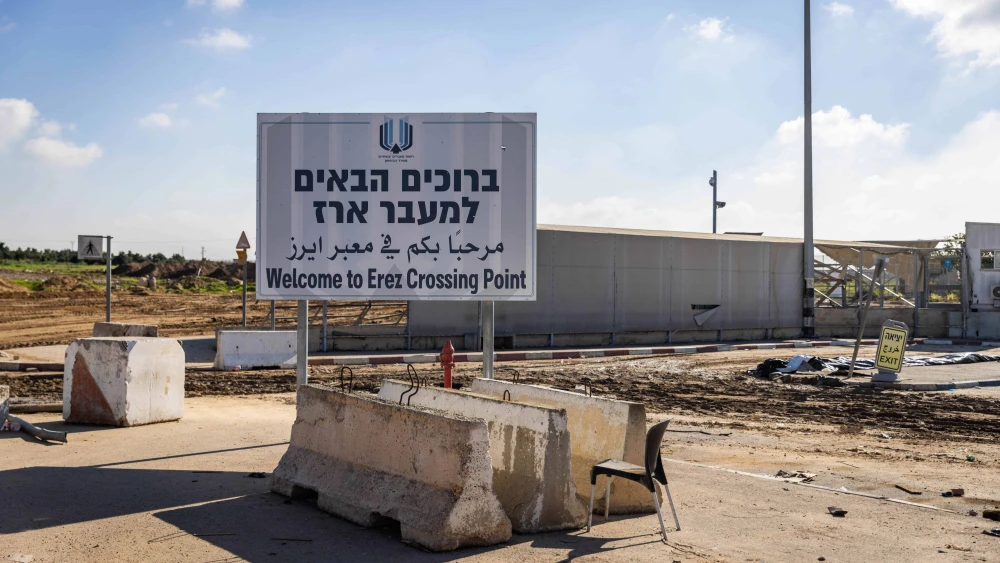
The first aid trucks entered the northern part of the Gaza Strip through the Erez Crossing on Wednesday, seven months after Hamas terrorists destroyed the entry point during their Oct. 7 massacre in Israel.
The convoy of Jordanian trucks, which included assistance from charities based in the United States, crossed into Gaza after being sent off by U.S. Secretary of State Antony Blinken in Amman on Tuesday.
“We’re seeing a direct route from Jordan to northern Gaza through Erez. The first shipments are leaving today,” Blinken said following a visit to the Jordan Hashemite Charity Organization.
“It is real and important progress, but more still needs to be done,” continued Washington’s top diplomat.
“I’m now able to go to Israel tomorrow and go over with the Israeli government the things that still need to be done if the test is going to be met of making sure that people have what they need,” he added.
Before the Oct. 7 terrorist attacks, Erez was used to transfer patients in Gaza to Israeli hospitals, as well as Palestinians into the Jewish state who held Israeli work permits.
Earlier this month, the White House pressured the Israeli government to reopen the devastated border crossing, use Ashdod Port to direct aid shipments into the enclave and increase deliveries via Jordan.
“These steps ... must now be fully and rapidly implemented,” U.S. National Security Council spokesperson Adrienne Watson said at the time.
The Erez Crossing has been opened for the entrance of humanitarian aid for the first time since October 7 when it was raided by Hamas terrorists.
— Israel Defense Forces (@IDF) May 1, 2024
In coordination with @cogatonline , 30 trucks of humanitarian aid including food and medical supplies for the northern part of Gaza… pic.twitter.com/zoNzhw3CgY
‘Very constructive cooperation’
As part of his visit to Israel on Wednesday, Blinken observed aid inspection procedures at the Kerem Shalom Crossing with southern Gaza alongside Israeli Defense Minister Yoav Gallant.
Officials briefed Blinken on the Israel Defense Forces’ humanitarian actions, as well as recent steps taken to prevent unintentional airstrikes on aid workers in Gaza.
Israel recently ramped up efforts to facilitate the delivery of aid to Gaza, opening a new land crossing designed primarily to facilitate the entry of foreign assistance.
Earlier this month, the United States confirmed that the quantity of aid entering the Strip had substantially increased.
Sigrid Kaag, the U.N.'s senior humanitarian and reconstruction coordinator for Gaza, told the Security Council last week that her team has had “very constructive cooperation” with Jerusalem.
A Pentagon spokesman confirmed last Thursday that the U.S. military had started constructing a $320 million pier off the coast of Gaza to boost seaborne aid deliveries. The project reportedly involves 1,000 American soldiers, who will not have boots on the ground in Gaza.


