


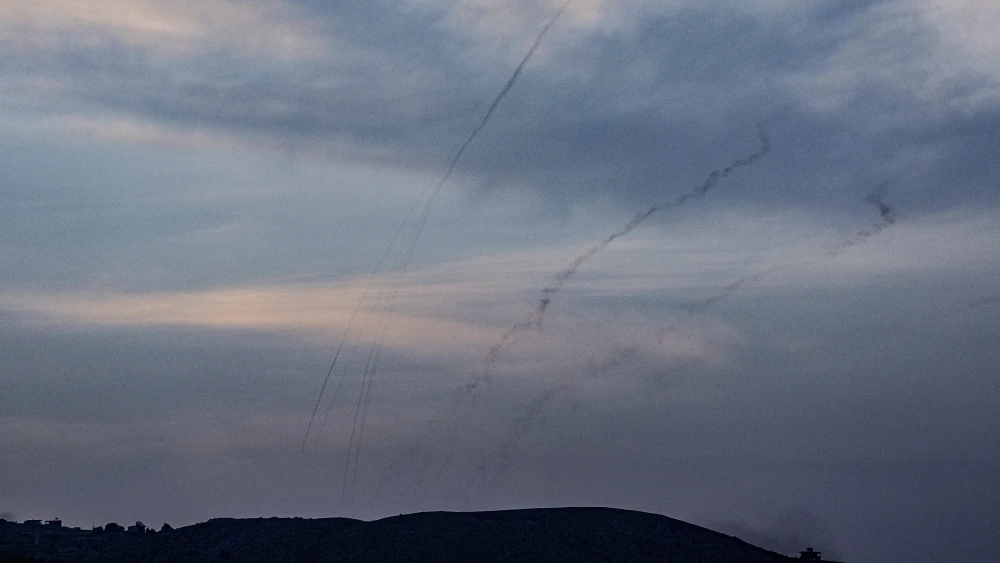

The Iranian regime and its proxy, Hezbollah, are making it abundantly clear, as they have before now, that they have no intention of abiding by any deal—whether a ceasefire or some other grand arrangement. Hezbollah rejected the agreement worked out between Israel and Lebanon at the behest of our administration before the ink was dry.
Before, during and after the agreement, they have not stopped launching missiles into Israel in violation of the so-called ceasefire. No nation can tolerate that, and Israel has not and will not, despite “defensive” handcuffs put on it by us in the past. As best I can tell, Israel, in consultation with our country or not, has had enough.
Make no mistake, Hezbollah is acting at the direction of the Iranian regime. Lebanon’s president is also fed up with the Iranian regime trying to pull his country into the conflict and using Lebanon as a negotiating chip.
He has also made clear that the Lebanese people want to finally be free of Hezbollah. The problem is that his military is not strong enough to deal with Hezbollah, and it’s left for Israel to deal with Hezbollah.
The Iranian regime is demanding nothing less than Israel committing suicide—that is, not responding to Hezbollah’s missile attacks or responding in a way that does not end Hezbollah’s terror against Israeli citizens.
The regime is hoping that U.S. President Donald Trump will intercede and admonish Israel, as the United States has made clear it wants a deal. That deal focuses primarily, if not almost exclusively, on nuclear and enrichment issues.
Meanwhile, most of the Arab leaders (except for the smaller Arab countries, including the United Arab Emirates) fear that their oil fields will be attacked, and Turkey and Pakistan are working to bolster Iran and ensure the regime’s survival, including through diplomatic pressure.
There is no real ceasefire. And the question is: What happens when and if there is a deal? How will it be enforced? Who will enforce it? Iran has now again launched ballistic missiles at Israel, as it has at other nations in the region.
Are Israel and the other nations free to hit back, or are only we free to do so? And what happens if the Iranian regime builds thousands of ballistic missiles, most of which cannot be intercepted?
In the end, the Iranian regime needs to be destroyed. It’ll be much more difficult as time goes on and turns into years.


