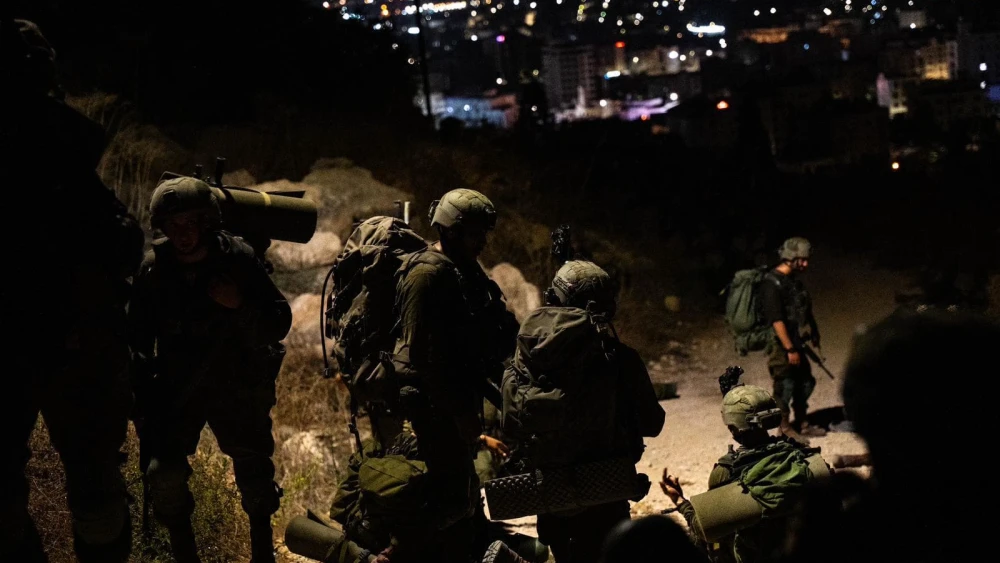
Four Israel Defense Forces soldiers were wounded during counter-terror operations in northern Samaria overnight Monday, the military announced.
One soldier from the IDF’s elite Duvdevan unit was seriously wounded and three others moderately hurt during an exchange of fire with Palestinian terrorists in the Balata camp in Nablus (Shechem).
All four were evacuated to hospital for treatment, according to the IDF.
The soldiers had been conducting an arrest raid when terrorists opened fire on them, according to the military.
One Palestinian was killed and another wounded in the exchange, added the IDF.
Israeli forces located explosive charges, a gun, ammunition and other weapon parts in civilian areas of the camp, including a cafe and shops.
Separately, IDF forces killed Abed Shaheen, accused by Israel of planning and executing attacks on troops in the area. He had recently plotted to create a terror cell to target soldiers around Nablus.
Since the Oct. 7 massacre, Israel has detained over 5,250 Palestinian terror suspects across Judea and Samaria, of whom some 2,050 are affiliated with Hamas.