Newsletter
Newsletter Support JNS

Israel extends COVID-19 state of emergency until Jan. 3

The measure will take effect upon approval by the Knesset Constitution, Law and Justice Committee.

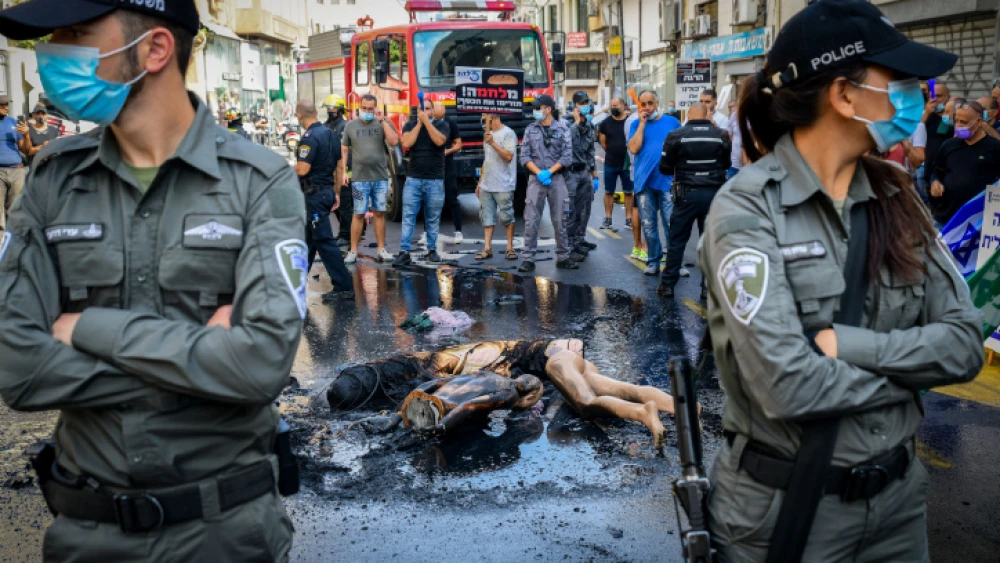
Israeli business owners protest against the COVID-19 emergency regulations in Tel Aviv on Oct. 29, 2020. Photo by Avshalom Sassoni/Flash90.

The Israeli Cabinet on Thursday approved the extension of the COVID-19-spurred state of emergency by 60 days, from Nov. 5 until Jan. 3, 2021.

The measure was approved via conference call and will take effect upon approval by the Knesset Constitution, Law and Justice Committee, according to a joint statement of the Israeli Health Ministry and Prime Minister’s Office.

The “Major Coronavirus Law,” passed on July 22 by a vote of 48-35, grants the government special powers for dealing with the pandemic. Under the law, the government can declare a state of emergency, allowing it to impose restrictions on the public to stem the spread of the novel coronavirus.

Until the law expires on June 30, 2021, the government may extend the state of emergency at 60-day intervals with the approval of the Constitution, Law and Justice Committee. The Knesset may annul the state of emergency, and the government must cancel it if the circumstances justifying it no longer exist.

“The use of looted antiquities for illicit finance and terror-funding is a serious national security concern,” the Pennsylvania senator stated.
With nearly half the vote counted, Rep. Kevin Kiley leads California’s 6th Congressional District primary, followed by Republican Michael Stansfield, who left the Democratic Party over what he called the Gaza “genocide.”
Dan Hotels, which operates Jerusalem’s King David Hotel, alleges that Hotel King David is deliberately continuing to use similar branding despite attempts to secure a cease-and-desist.
Rep. Max Miller accused the Michigan Democrat of backing Hezbollah during debate over her resolution seeking to block U.S. military involvement in Lebanon.
“We have always taken a clear stance on certain issues, and these are positions that not all member states share,” Johann Wadephul said.
Prosecutors allege that Jamshid Ghomi acquired and shipped U.S.-made security and encryption equipment to sanctioned Iranian entities, using the proceeds to build a mansion in California.