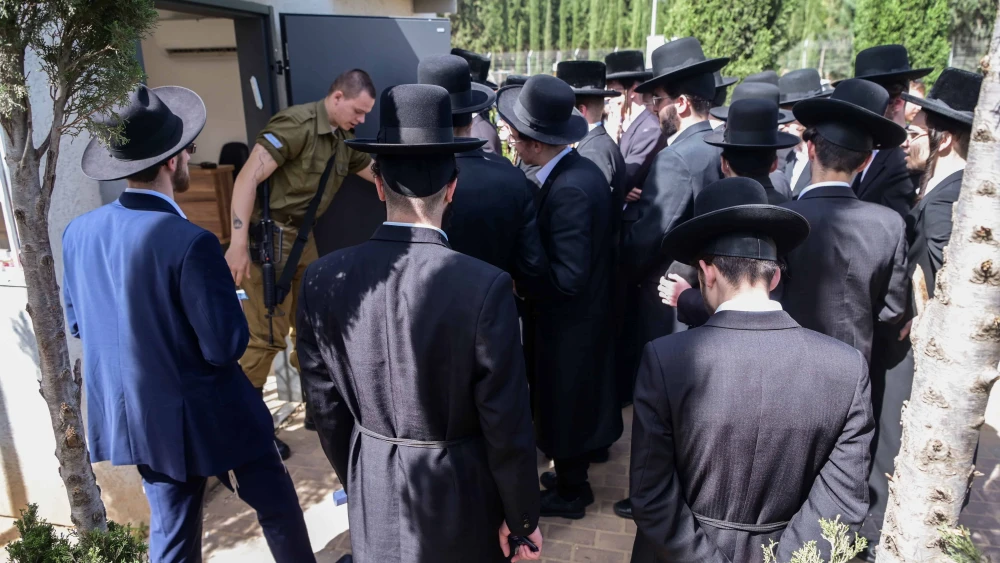
Over the past week, 338 Israeli ultra-Orthodox, or Haredi, soldiers enlisted in military frameworks specially adapted for them, the Israel Defense Forces said on Tuesday.
The IDF Spokesperson’s Unit reported that 211 of the new recruits are combat soldiers and 127 are part of the logistical support array for combat units. Another 7,000 haredi youths who are older than 16 have been summoned for interviews and physical tests ahead of their enlistment.
Of the 211 newly recruited combatants, 50 were drafted into the Israel Defense Forces’ new Hasmonean Brigade on Sunday at the army’s Tel Hashomer induction center in Ramat Gan. The soldiers will form the brigade’s first company.
The annual goal of Haredi enlistment set by the Israeli government is 4,800 recruits by June 2025, representatives of the Attorney General’s office told the High Court of Justice on Wednesday at a hearing convened following petitions by several nongovernmental groups. This week’s draft brings the total of Haredi recruits since July 2024 to 916, or 19% of the goal.
The next goal is to enlist 5,700 men during the July 2025-June 2026 recruitment cycle. As of July 2026, the Attorney General’s office stated, the state will aim to enlist all eligible Haredi men, as it does for the general population. In the years 2019-2022, only about 1,200 Haredi men enlisted annually, according to army data.
In 2023, the IDF exempted about 66,000 Haredi men from conscription. The High Court of Justice ruled in June 2024 that, in the absence of legislation on the Haredi draft, the army must begin enlisting Haredim.
The IDF statement about Haredi recruitment statistics comes amid intense political negotiations over legislation that would regulate the enlistment of tens of thousands of Haredi men who were previously exempt from military or national service. The issue is among the most divisive within Israeli Prime Minister Benjamin Netanyahu’s coalition.
Haredi parties whose support is crucial have spoken out against canceling the exemption, which they say would compromise their constituents’ principles and weaken Jewish identity in Israel overall. Israeli Defense Minister Israel Katz is reportedly negotiating conscription quotas with the Haredi politicians.
The IDF said it will have the logistical capacity to absorb into its ranks all the Haredi men who are fit to serve—a demographic of about 85,000— starting in 2026. The quota to be negotiated in the political establishment will likely be significantly lower. In the interim, pressure by the court and by right-wing politicians who oppose the exemption has led to the nixing of some social benefits previously enjoyed by draft-refusers in Haredi communities.
Successive Israeli governments and the army have attempted to increase Haredi enlistment, largely unsuccessfully. The army does not have a concrete definition of who to include in reporting Haredi recruitment statistics, and critics have argued that many of those counted do not come from mainstream Haredi circles.