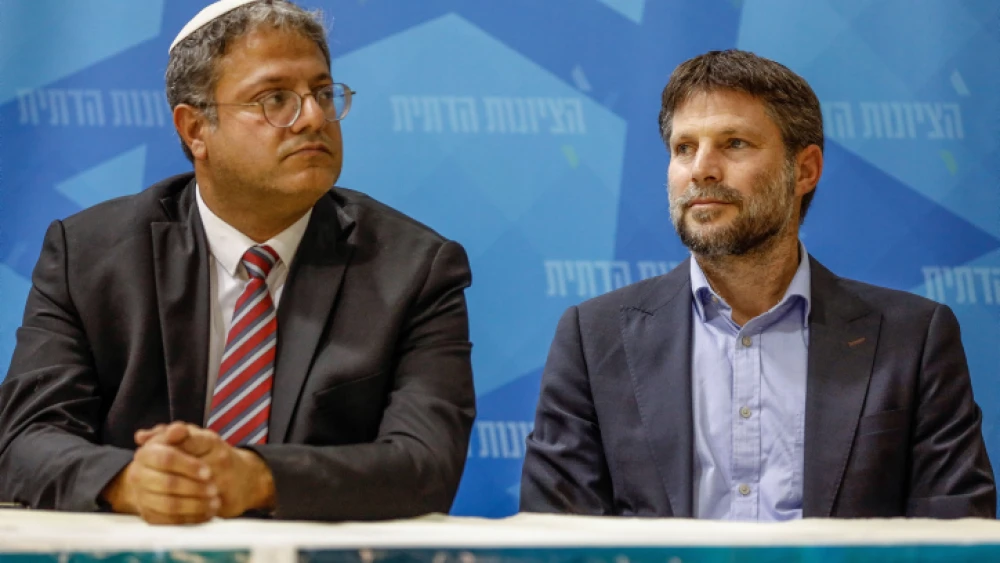
Itamar Ben-Gvir’s Otzma Yehudit faction on Sunday split from the Religious Zionism Party (RZP), in accordance with an agreement signed ahead of Israel’s Nov. 1 election.
Ben-Gvir and RZP head Bezalel Smotrich forged their electoral alliance at the behest of Likud Party leader Benjamin Netanyahu, with a view to ensuring that neither faction fell below the 3.25% electoral threshold for entering the 25th Knesset.
Religious Zionism subsequently won 14 seats in the national vote, making it the third-largest party in parliament.
Now, the RZP will have seven seats in the Knesset, whereas Otzma Yehudit will have six and the Noam faction, which also ran on the RZP slate, one.
During the announcement, Ben-Gvir said that he had pressed Netanyahu to appoint Smotrich defense minister so that a “fully right-wing” government could quickly be inaugurated.
Netanyahu has reportedly balked at giving Smotrich control over the Defense Ministry due to objections from the Biden administration, instead offering Smotrich the foreign affairs portfolio.
Potentially complicating matters, Israeli Attorney-General Gali Baharav-Miara has reportedly told Netanyahu that Shas leader Aryeh Deri may be barred from serving as a minister due to his legal history.
In January, Deri resigned from the previous parliament after agreeing to a plea deal that saw him admit to minor tax offenses and pay a fine in exchange for a 12-month suspended prison sentence.
Israeli law prohibits persons who have been sentenced to jail from serving as ministers for a seven-year period afterwards, although Netanyahu reportedly had a legal opinion drafted arguing that this does not apply to those with suspended sentences.
Baharav-Miara told Netanyahu that he would need the approval of Central Elections Committee head former Supreme Court Justice Yitzhak Amit in order to appoint Deri.
Netanyahu has until Dec. 6, with the possibility of a 14-day extension, to finalize coalition deals with his prospective partners.