Newsletter
Newsletter Support JNS

Court rules Netanyahu exempt from appearance at next hearing

Jerusalem District Court sets the next session of Israeli Prime Minister Benjamin Netanyahu’s corruption trial for July 19.

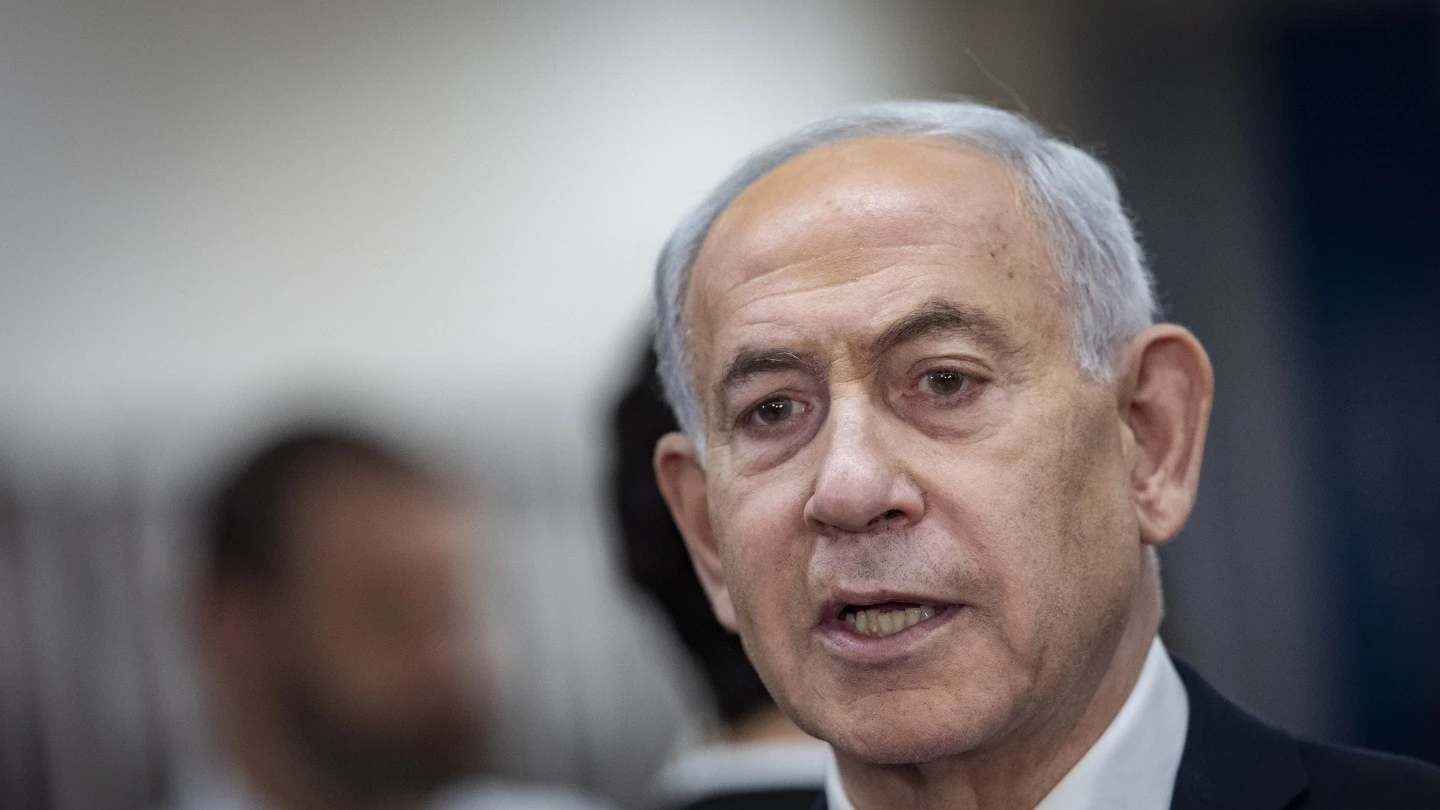
Israeli Prime Minister Benjamin Netanyahu's arraignment hearing at the Jerusalem District Court on May 24, 2020. Photo by Amit Shabi/POOL.
Israeli Prime Minister Benjamin Netanyahu’s arraignment hearing at the Jerusalem District Court on May 24, 2020. Photo by Amit Shabi/POOL.

Israeli Prime Minister Benjamin Netanyahu will not have to attend the next session of his trial on July 19, the Jerusalem District Court ruled on Sunday.

The ruling was handed down by Jerusalem District Court judge Rivka Friedman-Feldman, the head of the three-judge panel overseeing Netanyahu’s trial, at the conclusion of the 50-minute arraignment hearing, during which Netanyahu pleaded innocent to the charges of fraud, bribery and breach of trust.

Dates for subsequent hearings have yet to be determined, according to media reports.

Moments before entering the courtroom Netanyahu made a speech protesting his innocence and accusing law enforcement and the state prosecution of joining forces with the left-wing media to topple not only him in particular, but the country’s right-wing camp in general.

“For more than a decade, the left has failed to accomplish this at the ballot box,” he said. “So in the last few years, they found a new trick.”

During the arraignment hearing, demonstrations on behalf of and against Netanyahu were held outside the courthouse.
In a world full of spin, truth matters.
Help JNS share honest reporting about Israel.
“At a time when antisemitism is on the rise here at home and around the world, the story of the Maccabees reminds us that we have always faced hatred with resolve, and that our endurance is our greatest strength,” Rep. Josh Gottheimer told JNS.
The Yashar party leader responded that he is willing to seriously consider the proposal over the next 24 hours.
The Qatari payments were part of a broader Israeli security policy supported by top military officials and successive governments, based on the mistaken belief that economic assistance could help prevent another war.
More than 250 lone soldiers and National Service volunteers celebrated ‘Friendsgiving’ at the Nefesh B’Nefesh Aliyah Campus.