


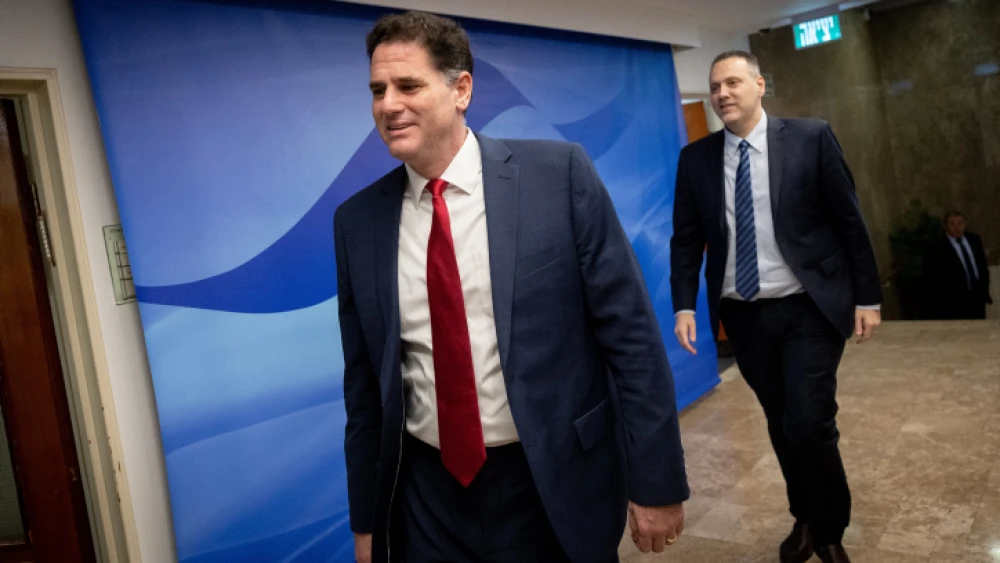
Israeli Strategic Affairs Minister Ron Dermer landed in Washington on Monday evening ahead of high-level meetings with American officials that will focus primarily on Iran’s nuclear program.
Dermer, who served as Israel’s ambassador to the United States from 2013-2021, is the first member of Israel’s new government to travel to Washington, and comes as Jerusalem appears readying to ramp up a pressure campaign on the Islamic Republic.
Earlier on Monday, Israeli Prime Minister Benjamin Netanyahu addressed the AIPAC Political Leadership Forum through a video call from his office in the Knesset, speaking about the importance of U.S.-Israel cooperation on Iran.
“The time has come for Israel and the United States, along with other countries, to stand together, and I look forward to discussing this with President Biden and his team,” said Netanyahu. “Today, more people agree on the issue than ever before.”
U.S. State Department spokesman Ned Price said on Monday that there was “absolute unanimity” with Israel that Iran must be prevented from acquiring a nuclear weapon, but conceded that there were “tactical differences” between the countries on how to go about doing so.
“Now, there is no secret... that when it comes to how we do that, there may be some tactical differences. There are some tactical differences. We’ve made no secret about that,” said Price. “We have a relationship with Israel that is close enough that it allows us to have candid conversations, and when we disagree, we disagree. We tell them what we think; they certainly don’t shy away from telling us what they think. We believe that... diplomacy presents the most viable, durable, sustainable means by which to permanently and verifiably prevent Iran from obtaining a nuclear weapon. That has always been our focus,” he added.
Price nevertheless noted that the Iranians had repeatedly “turned their backs” on the diplomatic process by rejecting a return to the 2015 Joint Comprehensive Plan of Action, more commonly referred to as the Iran nuclear deal.
“They did that most recently in September,” he said. “It hasn’t been on the agenda ever since. We continue to believe that diplomacy presents the most attractive option, but we also agree with our Israeli partners that we shouldn’t take anything off the table. We haven’t taken anything off the table. And as we meet with our Israeli partners, one of the many issues we discuss is the most—the various means by which we can see to it that Iran never acquires a nuclear weapon.”



