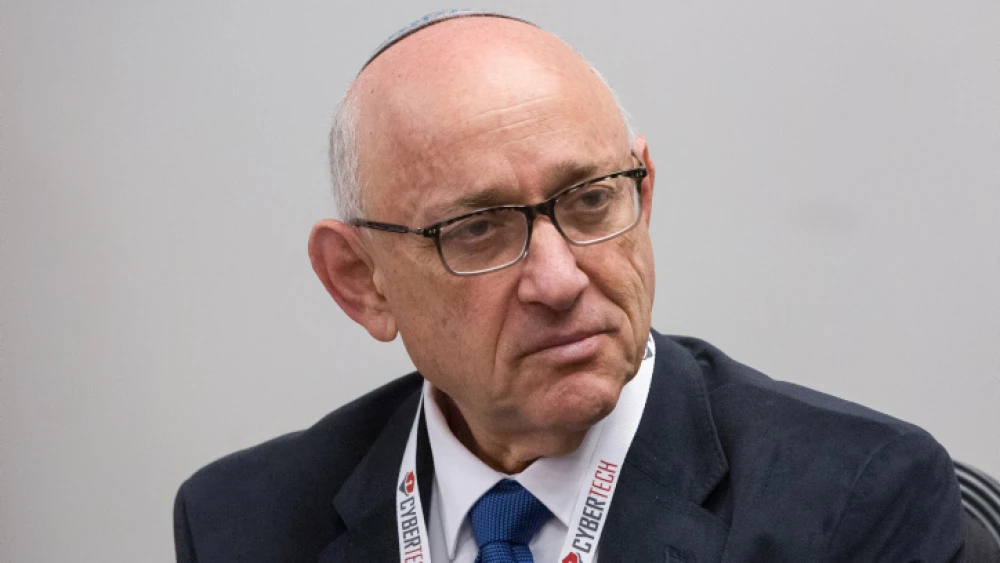
Israel “cannot afford to neglect its fight to change the highly problematic 2015 nuclear deal with Iran,” former Israeli National Security Adviser Jacob Nagel warned on Monday.
Nagel’s remark followed reports that U.S. President Donald Trump may meet with Iranian President Hassan Rouhani.
“The massive, U.S.-led economic pressure on Iran must continue,” said Nagel. “The background noise suggesting conditions for a Trump-Rouhani meeting have matured are very dangerous, and it is important to ensure that the prerequisites for any such progress are met in full.
“These conditions are, of course, based on U.S. Secretary of State Mike Pompeo’s 12 points and the Iranian understanding that in order to return to the negotiation table, it needs to come clean and declare all its past actions, so that we [the international community] can make sure it cannot continue with its efforts to develop and produce nuclear weapons.”
Commenting on the recent developments in the northern sector—the Israeli strike in Syria that foiled an imminent Iranian drone attack in northern Israel, as well as reports that Israel destroyed a terrorist base in Lebanon—Nagel said that even if Israel was involved in the myriad of operations attributed to it by the foreign media, that would still fall in line with the government’s defense policies.
“Israel hasn’t changed its policy,” said Nagel, “the enemy has. Israel has clear red lines, as defined by Prime Minister [Benjamin] Netanyahu years ago, and it enforces them. What happened over the past few days, assuming Israel was really involved, falls within those lines.”
The former national security adviser also dismissed Hezbollah leader Hassan Nasrallah’s assertion that Israel has “changed the rules of the game,” saying “Hezbollah can call it changing the rules, but it’s more likely that one of the red lines with regard to Lebanon was crossed.”
Still, one could argue that if Israel is, indeed, expanding its reach with respect to its efforts to hobble Iran’s entrenchment in the region, that could be called a change in policy.
“Israel is not necessarily the one that will influence the decision of whether to expand this effort,” said Nagel. “Remember, the Iranians are the ones who call for our destruction and not vice versa. I will, however, say this: If we have to fight against Iran, it’s better to do it here and now, and not when they have nuclear weapons, or when they are much stronger. It’s better if we decide the timing.”
As for whether Nasrallah will follow through on his threat to retaliate, said Nagel, “I’m not sure Nasrallah will react, but in any case, he needs Iran’s approval to do so, and I’m not sure Iran wants a flare-up. In a twist on a twist, the Iranians would probably prefer to see the American sanctions eased, so if they decide to retaliate they will do so in a manner that obscures their involvement and allows them to maintain deniability.”
This article first appeared in Israel Hayom.