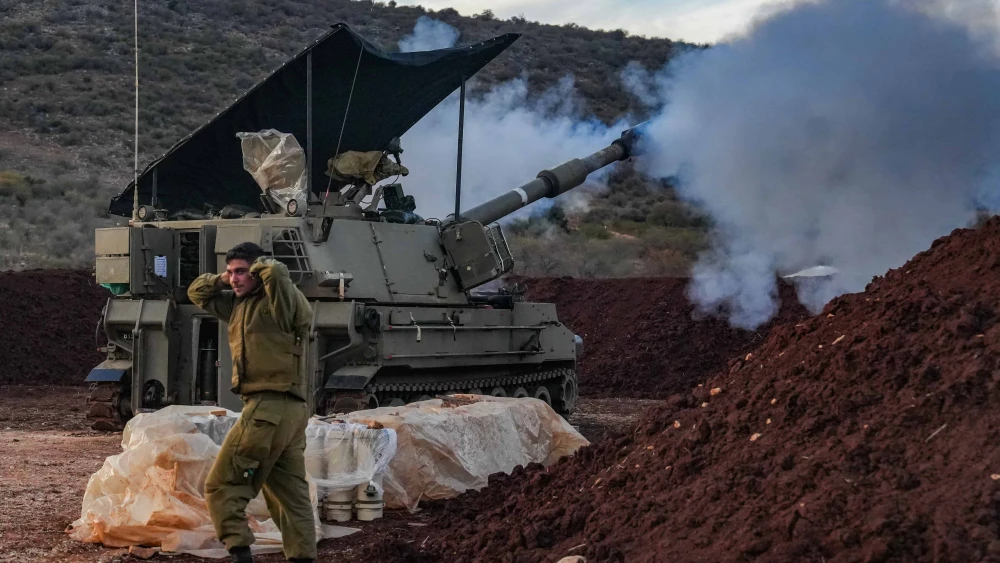
An Israeli attack in Southern Lebanon on Monday killed a senior commander in Hezbollah’s elite Radwan force
“This is a very painful strike,” Reuters reported, citing a security source.
Another security official told AFP that the slain commander “had a leading role in managing Hezbollah’s operations in the south,” adding that he “was killed in an Israeli raid targeting his car in the south.”
According to unofficial reports from Lebanon, the Radwan commander was Jawad al-Tawil and the attack took place in Khirbet Selm.
The Iranian terror proxy has lost more than 130 fighters since the Hamas massacre of Oct. 7. The Lebanese group has been waging a low-intensity conflict against Israel since the invasion of the northwestern Negev.
An Israel Defense Forces soldier was lightly wounded by an anti-tank missile attack in the Mount Dov area and evacuated to the hospital, the military said on Monday afternoon.
The IDF responded by opening fire at the source of the attack as well as additional targets in Lebanese territory.
Earlier on Monday, terrorists in Lebanon fired an anti-tank missile towards the northern Israeli city of Kiryat Shmona.
There were no immediate reports of injuries.
In response, the Israeli Air Force conducted a series of strikes against Hezbollah terrorist sites in Lebanese territory.
מטוסי קרב של חיל האוויר תקפו תשתיות טרור של ארגון הטרור חיזבאללה בשטח לבנון לצד אתרים צבאיים בהם פעלו מחבלי הארגון.
— צבא ההגנה לישראל (@idfonline) January 8, 2024
כמו כן, לפני זמן קצר שוגר טיל נ"ט משטח לבנון לעבר העיר קרית שמונה.
בתגובה, כוחות צה"ל תקפו מרחבים בשטח לבנון. pic.twitter.com/DZvEBGwATq
Overnight Sunday, the IDF attacked a Hezbollah terror compound near the village of Marwahin and a rocket launching site close to the town of Ayita al-Sha’ab.
Earlier, an Israeli helicopter gunship attacked an area from which an anti-tank missile was fired at the Jewish state, and an IAF drone struck a rocket launch site.
The IAF also struck a terror cell and several Hezbollah compounds in Southern Lebanon; secondary explosions were detected, indicating the presence of weapons.
במהלך הלילה צה"ל תקף שורת מטרות של ארגון הטרור חיזבאללה בלבנון.
— צבא ההגנה לישראל (@idfonline) January 8, 2024
מטוסי קרב של חיל האוויר תקפו במהלך הלילה מתחם צבאי של ארגון הטרור חיזבאללה במרחב הכפר מרווחין, וכן משגר רקטי ותשתית טרור במרחב הכפר עייתא א-שעב>> pic.twitter.com/6oCnAlWpsP
The strikes came a day after the Iranian-backed Shi’ite terrorist group fired some 40 rockets into Israel in an “initial response” to last week’s assassination of Hamas terror chief Saleh al-Arouri in Beirut.
The salvo triggered rocket alert sirens in 90 communities across northern Israel, although the military said that only the Mount Meron area was targeted.
There were no reports of injuries.
Al-Arouri was one of the top Hamas leaders on Israel’s target list following the terrorist group’s Oct. 7 massacre.
U.S. Secretary of State Antony Blinken is currently on a whirlwind tour of the Middle East, as Israel’s war with Hamas continues to threaten to escalate into a wider regional conflict, and was expected to arrive in Israel on Monday.
During Sunday’s weekly Cabinet meeting, Israeli Prime Minister Benjamin Netanyahu issued a stark warning to Hezbollah.
“I suggest that Hezbollah learn what Hamas has already learned in recent months: No terrorist is immune. We are determined to defend our citizens and to return the residents of the north safely to their homes. This is a national goal that we all share and which we are all working to achieve responsibly. If we can, we will do so diplomatically, and if not, we will work in other ways,” said Netanyahu.