Families of hostages held by Hamas in Gaza, former captives and supporters gathered in Kibbutz Gat on Thursday to kick off the second day of a four-day protest march to Jerusalem under the banner of “United for the Release of the Hostages.”
The marchers were scheduled to arrive at Kibbutz Beit Guvrin at 4 p.m. for a ceremony and at Branco Weiss High School in Beit Shemesh, the endpoint of Thursday’s leg of the journey, at 7:30 p.m.
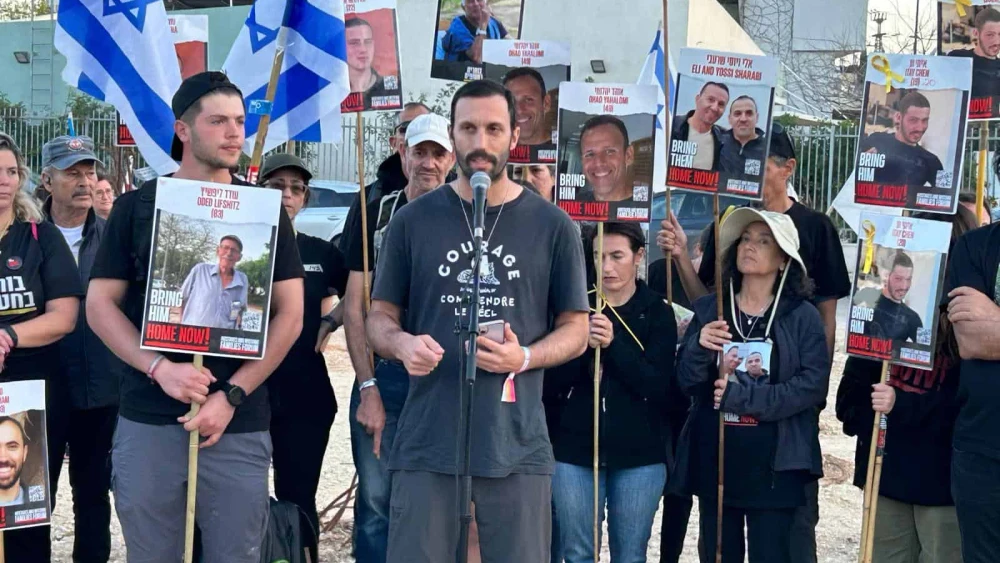
“Like all other initiatives we’ve organized and participated in, this march is aimed to bring about the release of the hostages,” Daniel Lifshitz, whose grandfather Oded Lifshitz, 84, a retired journalist, is being held by Hamas, told JNS on Wednesday after marching 20 kilometers [12 miles] across the country.
Lifshitz’s grandmother Yocheved, Oded’s wife, was released on Oct. 23, after 16 days in captivity.
“This march will show how united the country and all Israeli cities are for the release of the hostages,” said Lifshitz.
The march, which started on Wednesday near Kibbutz Re’im, at the site of the Supernova music festival where Hamas terrorists murdered 364 revelers and kidnapped 40 others on Oct. 7, will conclude on Saturday at Jerusalem’s Paris Square.
“We are calling on the government to finalize an agreement. Bringing back the hostages is part of restoring the country’s hope for a better future,” said Lifshitz.
“If it has to be in stages then so be it. We must bring back all 134 hostages, who have been in the custody of Hamas in Gaza for nearly five months,” he added.
Friday, the third day of the march, will be dedicated to IDF soldiers, both those currently fighting Hamas in Gaza and those being held hostage by the terrorist group.
“Only through the unity of the people of Israel will we be able to bring all the hostages home. I ask you to continue to be united,” freed hostage Yagil Yaakov, 13, said on Wednesday.
Yagil and his brother Or Yaakov, 16, were freed on Nov. 27 as part of a ceasefire agreement between Israel and Hamas that led to the release of 105 hostages, while the remains of their father, Yair, are still being held in Gaza.
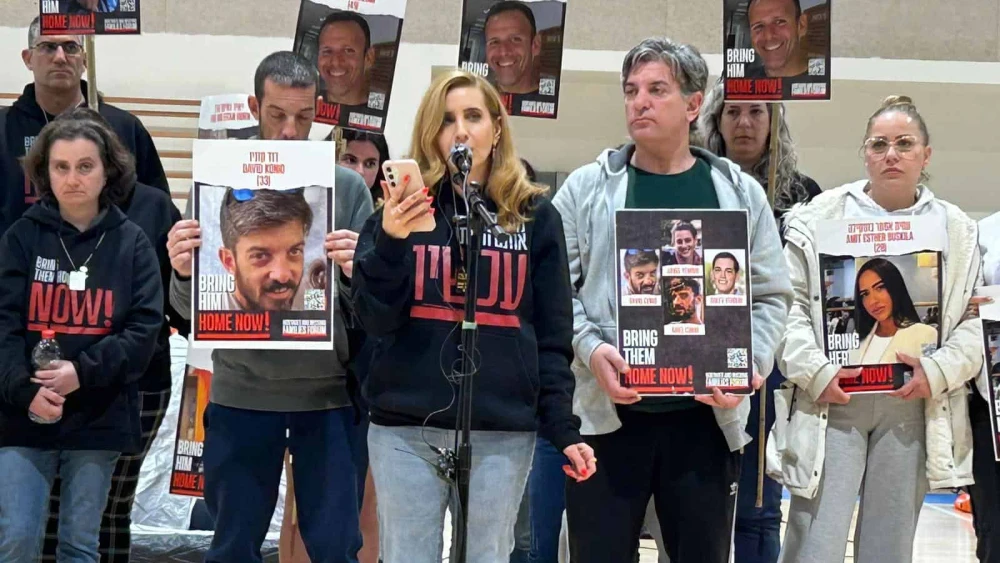
“The hostages remain there, in a place with no air, food or daylight. One hundred and thirty-four of our people,” said Danielle Aloni, who was abducted from Kibbutz Nir-Oz along with her 5-year-old daughter Emilia on Oct. 7. They were both released on Nov. 24 after 49 days in Gaza.
“In captivity, we underwent psychological terror, we were told they [Israel] had given up on us. But here I stand, telling you: I know that’s not true! Today I know that the people of Israel never give up and leave someone of ours behind,” said Aloni.

Amid efforts to reach a hostage-exchange agreement ahead of Ramadan, which begins on March 10, Israel’s War Cabinet on Saturday agreed to dispatch a delegation to Doha, Qatar, after “significant progress” was reported at the hostage negotiations in Paris.
U.S. President Joe Biden expressed hope this week that a deal with Hamas could be reached within a week. “My national security advisor tells me that we’re close. We’re close. We’re not done yet,” said Biden. “My hope is by next Monday, we’ll have a ceasefire.”
However, Prime Minister Benjamin Netanyahu emphasized last week that while Israel was prepared “to go far” to secure the hostages’ release, it was not prepared to pay any price.
On Wednesday, Israel’s Army Radio reported that Hamas was inclined to reject Israel’s proposal as it did not address the implementation of a permanent ceasefire and a full return of displaced Palestinians to northern Gaza, and did not provide for the release of enough Palestinian terrorists.