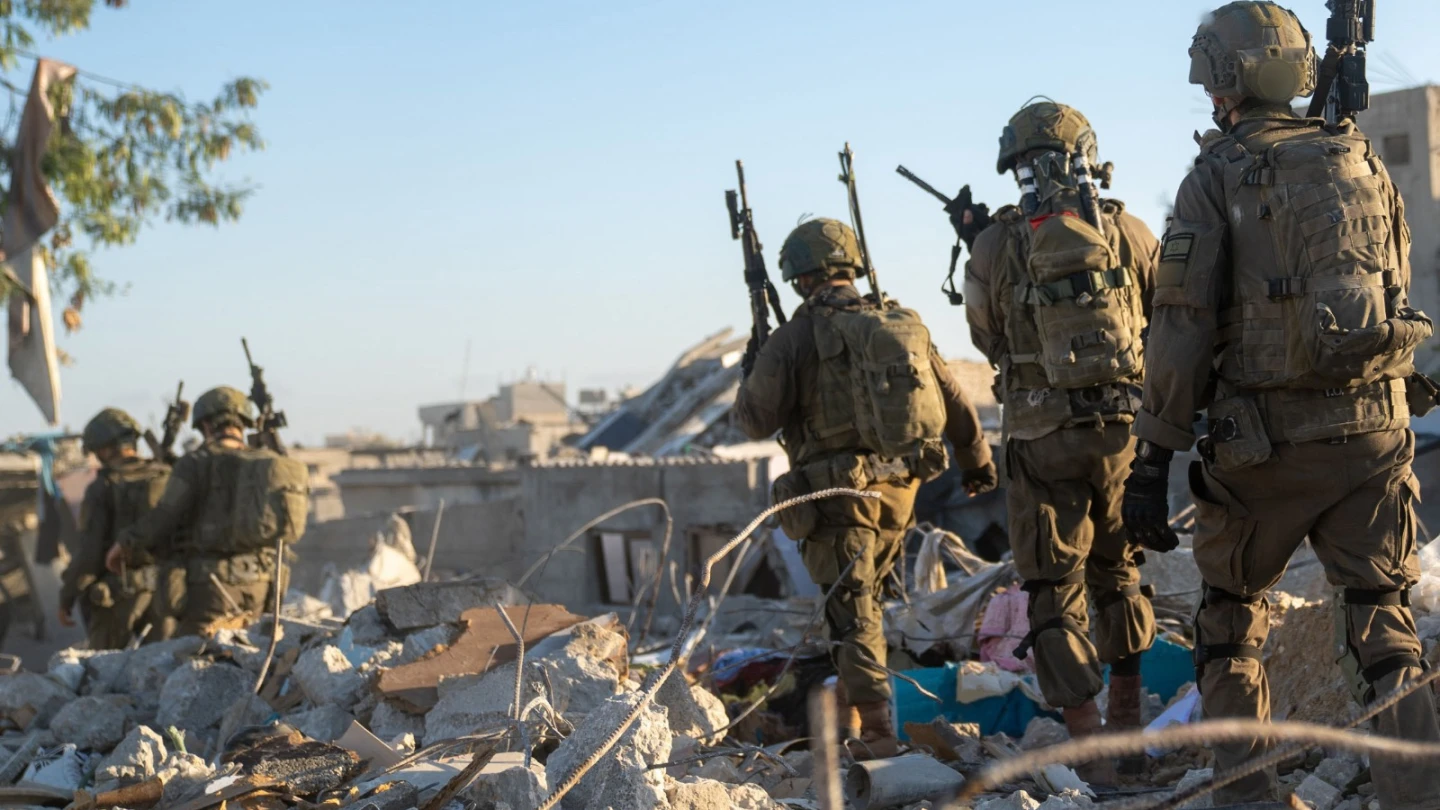
The Israel Defense Forces announced on Tuesday that it killed a group of Hezbollah commanders, including Hashem Safieddine, the head of Hezbollah’s chief executive council.
“The terrorists were eliminated in a strike carried out approximately three weeks ago in the area of Dahiyeh, a key Hezbollah terrorist stronghold in Beirut,” the IDF stated. “The Israeli Air Force conducted a precise, intelligence-based strike on Hezbollah’s main intelligence headquarters, deliberately located underground beneath the civilian population in the Dahiyeh.”
The strike killed 25 Hezbollah terrorists, including Safieddine and Ali Hussein Hazima, commander of Hezbollah’s intelligence headquarters, per the IDF.
Safieddine was a first cousin of Hassan Nasrallah, Hezbollah’s secretary-general who was killed in an Israeli airstrike in September. The IDF said Safieddine frequently served as acting secretary-general of Hezbollah when Nasrallah was outside Lebanon.
Hashem Safieddine’s brother, Abdullah Safieddine, is the terror group’s representative in Tehran. Hashem’s eldest son, Reza, is married to a daughter of former Islamic Revolutionary Guard Corps-Quds Force commander Qassem Soleimani, killed by the United States in a 2020 airstrike in Iraq.
The confirmation of Hashem Safieddine’s death, which Israeli leaders first said was “likely” back on Oct. 8, is the latest blow to Hezbollah’s leadership cadre.
In September, more than 3,000 Hezbollah operatives were wounded when their pagers and walkie-talkies exploded. Jerusalem has neither confirmed nor denied responsibility for that operation, though Israeli Defense Minister Yoav Gallant said the day after the mass beeper explosions that Israel’s security services have achieved “very impressive” results.
On Sept. 27, Israel killed Nasrallah in an airstrike on Hezbollah’s underground headquarters in Dahiyeh, on the same day that Israeli Prime Minister Benjamin Netanyahu addressed the U.N. General Assembly in New York.
Hashem Safieddine was believed to be a potential successor to Nasrallah. With his killing, Gallant said on Oct. 8 that Hezbollah has “no one to make decisions, no one to act.”
“The actions we are taking are being observed all over the Middle East,” Gallant said. “When the smoke in Lebanon clears, they will realize in Iran that they have lost their most valuable asset, which is Hezbollah.”