Newsletter
Newsletter Support JNS

IDF patrol comes under attack on Gaza border

According to army reports, a gunman shot at soldiers from a distance of 30 to 60 feet. Though no soldiers were injured, they returned fire, killing the gunman.

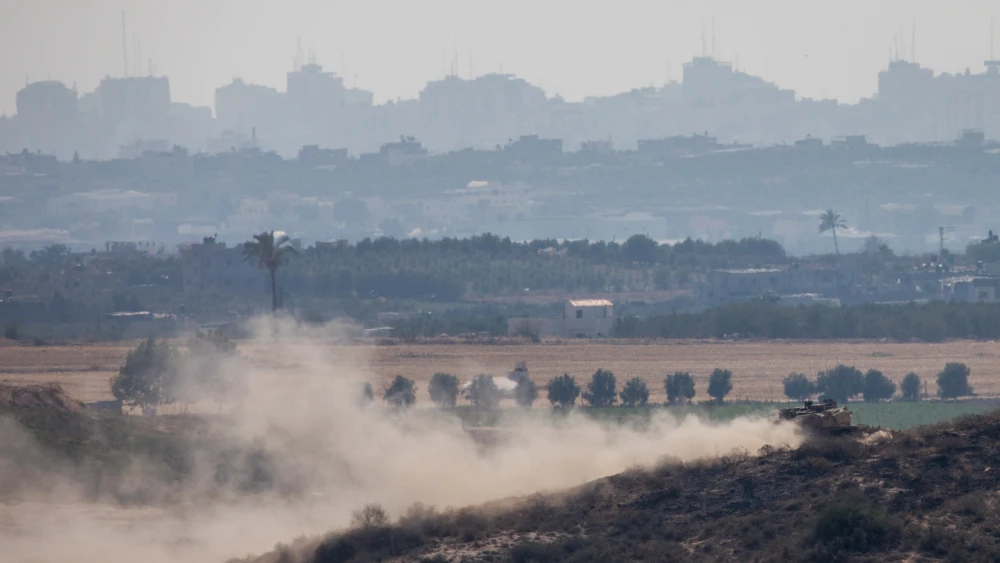
An Israeli tank patrols near the Israeli border with the Gaza Strip on May 29, 2018. Photo by Yonatan Sindel/Flash90.

Israel Defense Forces’s soldiers came under fire on Monday morning during a patrol of the border with northern Gaza.

According to army reports, a gunman shot at soldiers from a distance of 30 to 60 feet. Though no soldiers were injured, they returned fire, killing the gunman.

The attack comes as reports indicate that Israel has reached a ceasefire deal with Hamas wherein Hamas will stop attacking Israel, and Israel will build an Israeli-monitored port for Gaza in Cyprus.

No rockets have been launched since the ceasefire talks began, though Gazans have continued to launch “terror balloons” fitted with incendiary devices into Israeli territory, starting arson fires.

On Friday, thousands of Gazans engaged in violent rioting on the Gaza border as part of the Hamas-run “March of Return” demonstrations. Rioters hurled improvised bombs and Molotov cocktails at IDF forces, and burned tires as a smokescreen.

As a result, the Erez Crossing was closed off except for medical emergencies requiring the transfer of Gazans to Israeli hospitals.

As NATO leaders meet in Ankara, JNS spoke with former U.S. envoy James Jeffrey and JINSA’s Blaise Misztal about why U.S. and Israeli officials disagree about Turkey.
“Iran’s demonstrated aggression was unwarranted, dangerous and a clear violation of the ceasefire,” CENTCOM said.
The organization asked the court to reconsider, arguing that it could be forced to suspend operations in the state and nationwide if the designation takes effect.
The 19-year-old waived trial after prosecutors said that he conspired to join ISIS and communicated about “violence against Jewish people,” per a federal filing.
Rabbi Aaron Starr, rabbi of Shaarey Zedek and president of the Michigan Board of Rabbis, declined to comment directly on Dr. Abdul El-Sayed but told JNS, “look at what he says about ‘genocide’ and who his funders are.”
“Contemporary Antisemitism 2026" explores ways that can influence how cultures identify, understand, and confront anti-Jewish and anti-Israel sentiment.